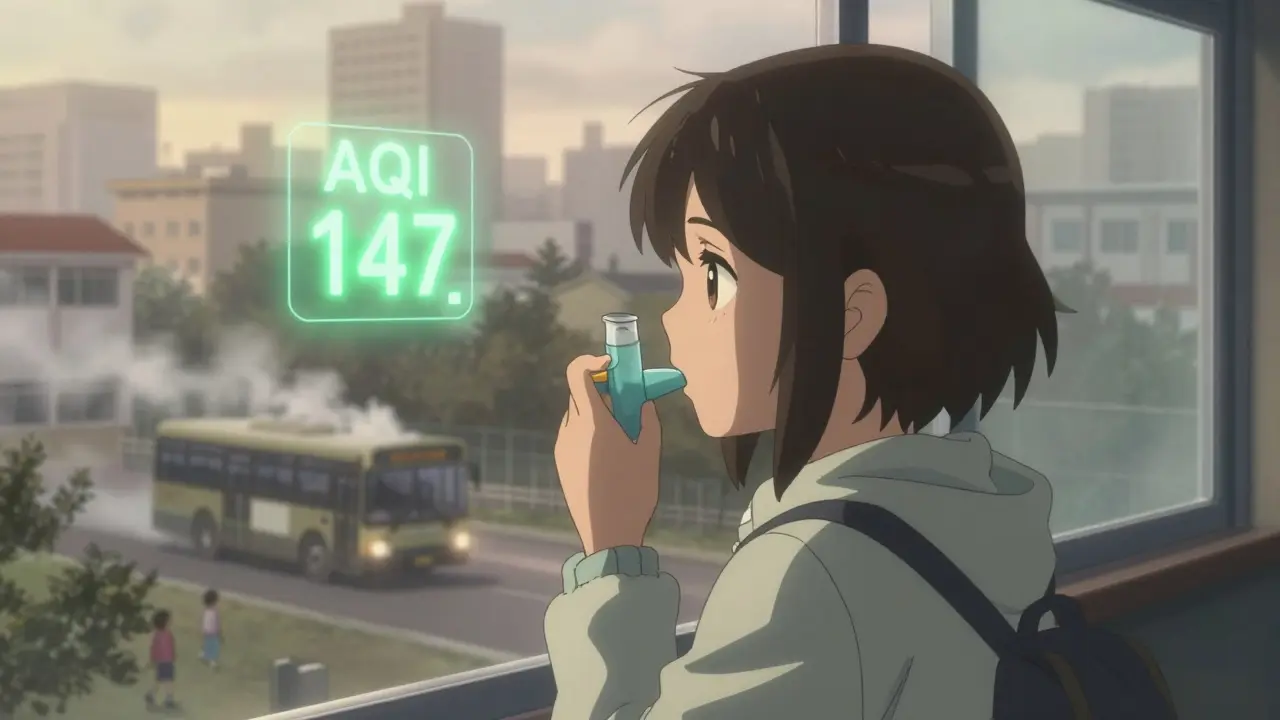
How Air Pollution Makes Asthma Worse
If you or someone you care about has asthma, dirty air isn’t just annoying-it’s dangerous. Every year, air pollution triggers millions of asthma attacks, sends people to the emergency room, and makes daily life harder. The worst offenders? Tiny particles called PM2.5, nitrogen dioxide from cars and trucks, ozone on hot days, and sulfur dioxide from factories. These pollutants don’t just irritate your lungs-they spark inflammation, tighten airways, and make rescue inhalers work harder.
Research shows clear links: when pollution levels rise, so do asthma hospital visits. A 2024 study found that during periods of cleaner air-like during COVID lockdowns-asthma patients saw their symptom control scores jump by nearly 14%. That’s not a small change. It means fewer nighttime coughing fits, less wheezing during walks, and more days without needing an inhaler.
Children are especially vulnerable. Around 4 million new childhood asthma cases each year are tied to air pollution, according to a major 2019 study. That’s not just about breathing-it’s about missing school, parents missing work, and families spending more on medical care.
Check the Air Quality Index (AQI) Before You Head Out
You don’t need to guess whether it’s safe to go outside. The Air Quality Index (AQI) tells you exactly what’s in the air and how it might affect you. It’s simple: 0 to 50 is good, 51 to 100 is moderate, and anything above 101 is unhealthy for people with asthma.
Here’s what to do based on the number:
- AQI 51-100: Reduce long outdoor workouts. Walks are fine, but skip the run.
- AQI 101-150: Avoid prolonged outdoor activity. This includes sports, yard work, or even long walks.
- AQI 151-200: Stay indoors as much as possible. Even light activity can trigger symptoms.
- AQI 201+: Don’t go outside unless it’s an emergency.
Free apps like AirNow.gov or AirVisual give you real-time alerts. One user, 'AsthmaMom2020', saw her daughter’s inhaler use drop by almost half after checking the AQI daily before letting her play outside. It’s not magic-it’s awareness.
Make Your Home a Clean Air Zone
Most of us spend 90% of our time indoors. But if your home isn’t filtered, indoor air can be just as bad as outside-sometimes worse. During wildfires or high-pollution days, even with windows shut, indoor PM2.5 levels can hit 60-80% of outdoor levels within an hour.
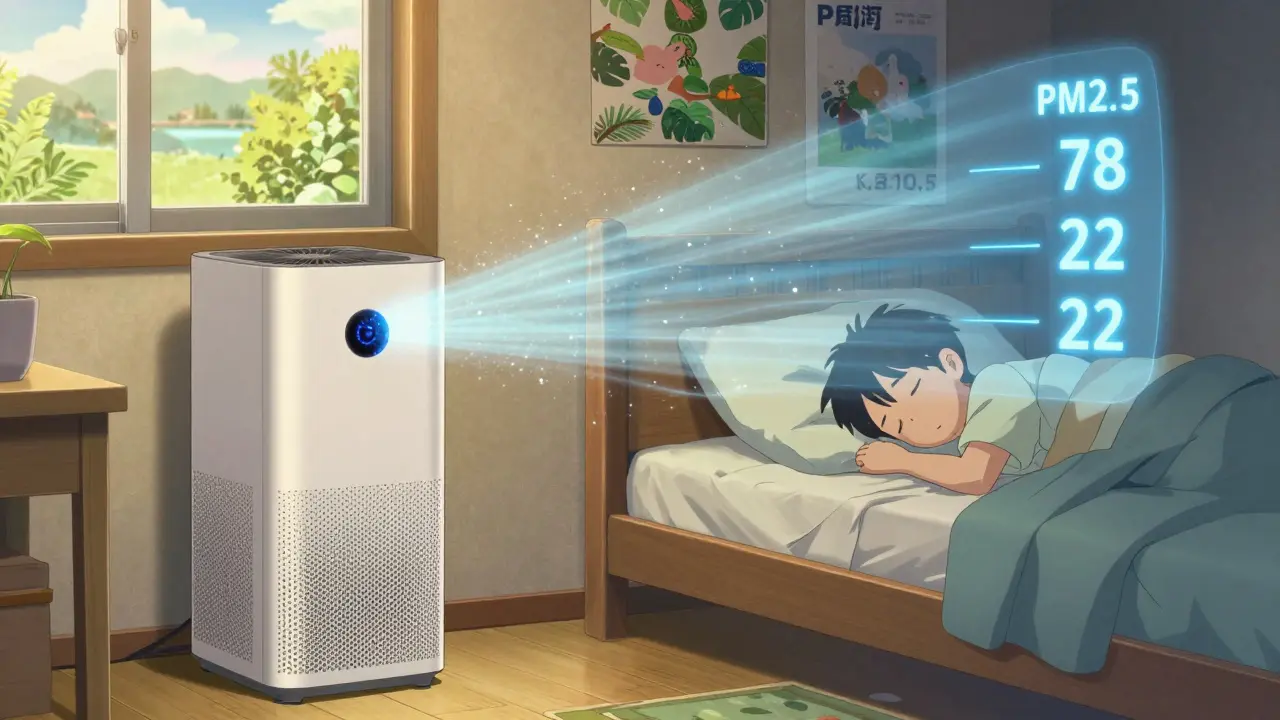
The fix? A good air purifier with a HEPA filter. These filters capture 99.97% of particles as small as 0.3 microns-exactly the size of the worst pollution particles. Look for a Clean Air Delivery Rate (CADR) that matches your room size. For a 300-square-foot bedroom, you need at least a CADR of 200. Bigger rooms need bigger numbers.
Don’t just buy any purifier. Cheap ones don’t work. A 2021 Johns Hopkins study showed HEPA filters reduced indoor PM2.5 by 55-67%. That’s a huge difference. One Reddit user, 'BreatheEasy87', went from using his inhaler 4-5 times a week to just 1-2 times after getting a Coway Airmega 400. The $700 price tag stung, but his sleep and energy improved.
Also, upgrade your HVAC filter. Use a MERV 13-16 rating. These aren’t just for hospitals-they’re affordable upgrades that make a real difference. And replace filters on time. Only 43% of people do. A dirty filter is worse than no filter at all.
What About Masks and Personal Protection?
N95 masks sound like a quick fix, and they can help during wildfires or heavy smoke. But they’re not a long-term solution. The CDC recommends them for short-term use during extreme events, but they only work if they fit perfectly. Many people, especially kids, wear them loosely or never adjust the nose clip. That cuts effectiveness in half.
Dr. John Balmes from UCSF warns that masks can create a false sense of security. If you think you’re protected, you might still go outside during high pollution, thinking you’re safe. That’s risky. For daily use, masks aren’t practical. They’re hot, uncomfortable, and hard to wear while working or taking care of kids.
Instead, focus on cleaner indoor air and avoiding exposure. If you’re stuck outside-like a construction worker or delivery driver-talk to your employer about scheduling shifts during lower-pollution hours. Some cities now offer air quality alerts to workers in high-risk jobs.
Schools and Workplaces Can Make a Big Difference
Asthma doesn’t stop when kids go to school or adults go to work. In fact, many asthma attacks happen during school hours. One major problem? Diesel school buses idling near playgrounds or classroom windows. They pump out NO2 and PM2.5 right where kids breathe.
Massachusetts schools that moved bus drop-off zones away from entrances and banned idling saw indoor PM2.5 drop by 22-35%. Parents reported 41% fewer asthma-related absences. That’s not just better health-it’s better attendance, better grades, and less stress for families.
Workplaces matter too. OSHA recommends keeping indoor humidity between 30-50% to control dust mites and mold. A simple dehumidifier costing $100-$300 a year can help. Employers should also consider air quality monitoring and ventilation upgrades, especially in offices near busy roads or industrial zones.

Policy Changes Are the Real Game-Changer
Individual actions help-but they can’t fix the problem alone. If your city has heavy traffic or factories, no HEPA filter will fully protect you. That’s why policy changes are critical.
The EPA’s current PM2.5 standard is 12 μg/m³ annually. But the American Thoracic Society says it should be 8 μg/m³ to truly protect people with asthma. In 2024, the EPA proposed raising the standard to 9-10 μg/m³. It’s progress, but still not enough.
Meanwhile, cities are making bold moves. London’s Ultra Low Emission Zone cut childhood asthma hospitalizations by nearly 12% in two years. California is replacing all diesel school buses with electric ones by 2035-expected to cut kids’ exposure by up to 60%. New schools in 47 U.S. cities must now be built at least 500 feet from major roads.
These aren’t just environmental wins. They’re health wins. The American Lung Association estimates that stricter pollution controls could prevent 1.7 million asthma attacks every year in the U.S. alone.
Costs, Barriers, and What You Can Actually Do
Let’s be real: not everyone can afford a $700 air purifier or quit their job to avoid outdoor pollution. A 2022 survey found that 68% of asthma patients check air quality, but only 32% change their behavior. Why? Work (78%), childcare (65%), and lack of affordable options (52%).
So what’s realistic?
- Start small: Use free AQI apps every morning. Adjust your plans based on the number.
- Buy one HEPA purifier for your bedroom. Even a $100 model can help you sleep better.
- Ask your child’s school if they have anti-idling policies. If not, push for them.
- Replace your HVAC filter yourself. It’s cheap and easy.
- Join local advocacy groups pushing for cleaner air. Your voice matters.
There’s no single fix. But combining a few simple steps-checking the air, filtering your home, and supporting cleaner policies-can add up to real improvement. One study showed that using mobile alerts for pollution led to a 15.8% improvement in asthma control over just eight weeks. That’s not theoretical. That’s people breathing easier.
What’s Next? Technology and Health Are Connecting
The future is getting smarter. The NIH is testing wearable sensors that track your personal air pollution exposure and send alerts to your phone. Imagine getting a notification: “PM2.5 is spiking near your route. Take the bus instead.” That’s not sci-fi-it’s happening in pilot programs now.
Some hospitals are starting to link air quality data directly to patient records. If your asthma flare-up happens every time the AQI hits 120, your doctor can see the pattern and adjust your treatment plan. This isn’t just about avoiding triggers-it’s about personalizing care.
But none of this matters without action. Climate change will make ozone levels worse by 2050, potentially increasing asthma cases by 10-15%. The window to act is closing. The tools we have now-apps, filters, policy pressure-are enough to make a difference. We just need to use them.

12 Comments
This whole article is just woke propaganda. Air pollution? Nah, it's the vaccines and 5G making kids wheeze. I've had asthma my whole life and never needed a $700 air purifier. Just toughen up and breathe through it. America's getting soft.
In India, we breathe this air every single day and still raise children who run barefoot through smog-filled streets. You people treat asthma like a luxury illness. We don't have HEPA filters-we have hope. And grit. And mothers who hold their kids through coughing fits at 3 a.m. while counting rupees for medicine. Your $700 purifier? That's a luxury. Ours is survival.
So let me get this straight-we’re supposed to buy expensive gadgets and avoid fresh air because… the government won’t fix the real problem? Classic. I’ll just keep breathing. My lungs have survived NYC subway air, BBQ smoke, and my ex’s perfume. A little PM2.5 won’t kill me. Probably.
Bro this is wild 😭 I got asthma since I was 5 and my mom used to burn neem leaves to 'clean the air' 🙃 now I got a $90 purifier from Amazon and my inhaler usage dropped by 70%. I'm not even joking. You don't need to be rich. Just care. 🙏
The EPA is lying. They’ve been hiding the truth since 2016. Air pollution doesn’t cause asthma-it’s the chemtrails. The WHO? Paid off. The study about lockdowns? Fabricated. My neighbor’s kid got asthma after the school installed new LED lights. Coincidence? I think not.
Who even cares? I live in Delhi. My kid’s inhaler is cheaper than my phone bill. You think a filter fixes everything? LOL. Just take the medicine and shut up. This whole post is just clickbait for rich Americans who have too much time and money to worry about breathing
I find it fascinating how the UK’s Clean Air Act of 1956 reduced childhood asthma by over 40% within a decade. We didn’t need fancy apps or $700 purifiers-we needed political will. Maybe we’re focusing too much on individual solutions and not enough on collective responsibility.
HEPA filters don't work. They just redistribute the toxins into your carpet. And AQI? That's all calculated by Big Pharma to sell more inhalers. I've been tracking my symptoms for 12 years and the real trigger is gluten + fluoride + WiFi. You're being manipulated. I'm not paranoid-I'm informed.
Let’s be brutally honest: this entire narrative is a symptom of late-stage capitalism. We’ve outsourced environmental responsibility to individuals while corporations pollute with impunity. The real tragedy isn’t asthma-it’s that we’ve been conditioned to believe that buying a $700 purifier is activism. It’s not. It’s distraction. You’re being sold a Band-Aid while the wound bleeds out.
I love how this article mentions the NIH’s wearable sensors. I actually participated in a pilot program last year-my sensor flagged a spike during my commute, and I switched to biking on a different route. My peak flow improved by 18% in six weeks. It’s not magic, but it’s science. And it’s personal. We’re finally starting to map exposure to individual lives. That’s huge.
I work in public health and I’ve seen this play out in real life. A single HEPA filter in a child’s bedroom can reduce nighttime symptoms by over half. It’s not a cure, but it’s one of the most effective low-cost interventions we have. Pair it with checking the AQI and replacing your HVAC filter-you’re doing more than most. Small steps add up. Don’t underestimate them.
In rural India, we don't have air purifiers. But we plant neem, tulsi, and peepal trees around homes. Natural air filters. No electricity. No cost. And yes, they work. Maybe the answer isn't just tech-it's wisdom we forgot. We need both: policy and tradition.
Write a comment