Imagine you've spent a decade and billions of dollars developing a breakthrough medication. You have a patent, you have the market to yourself, and business is booming. But then, the clock runs out. Your patent expires, and suddenly, every generic manufacturer in the country is ready to swoop in and steal your customers with a cheaper version of your drug. It's a nightmare for a pharmaceutical company's bottom line. To fight this, brands use a clever strategy: they launch their own generic version of the drug before anyone else can. This is the world of authorized generics.
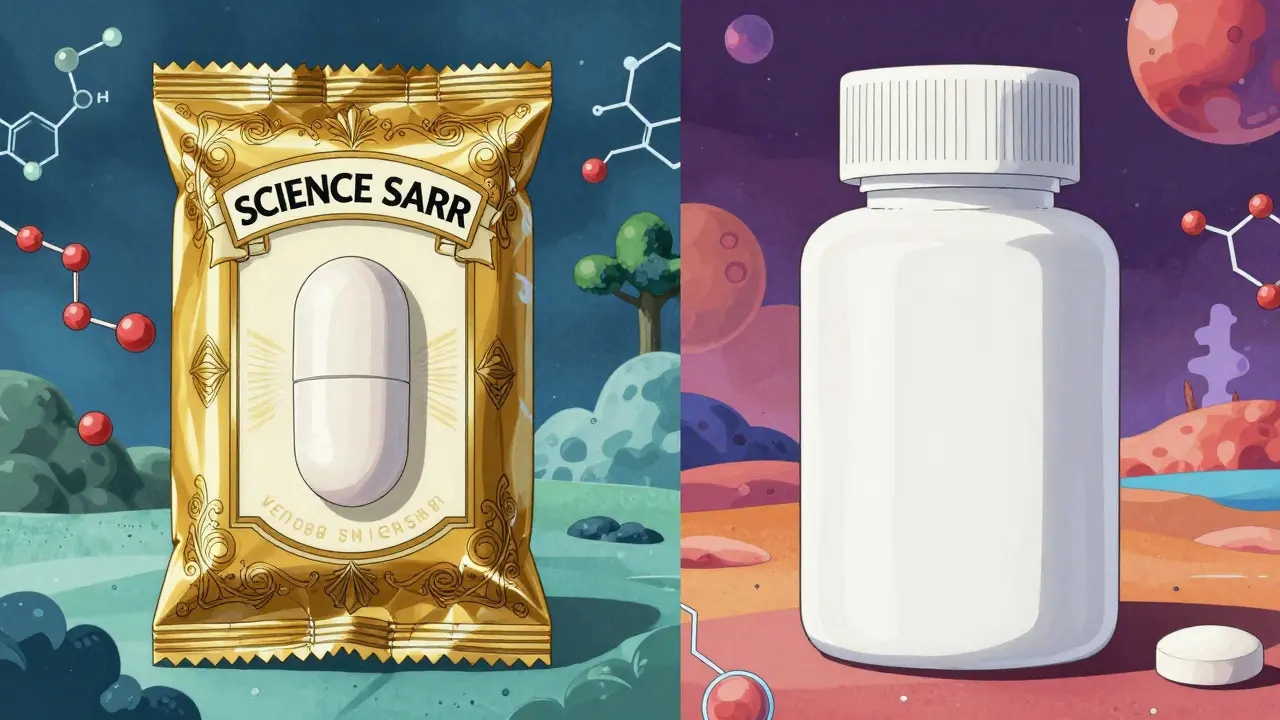
An Authorized Generic is a prescription drug produced by the original brand-name company but sold without the brand name on the label. While it looks like a generic, it is chemically identical to the brand-name drug, including every single inactive ingredient. It's essentially the brand-name drug in a plain white dress, sold at a lower price to keep competitors at bay.
The Strategy Behind the Launch
Why would a company compete with itself? It comes down to the Hatch-Waxman Act, a 1984 US law that balanced the interests of brand-name and generic drug manufacturers. Under this act, the first generic company to successfully challenge a patent usually gets a 180-day window of exclusivity. During these six months, they are the only generic on the market, allowing them to charge a premium price and capture a massive chunk of the market.
Brand companies hate this window. By launching an authorized generic, the original manufacturer can enter that same space. They don't have to wait for a new approval process because the drug is already approved under their original New Drug Application (NDA). This allows them to maintain a revenue stream and keep a foothold in the market while the first generic competitor is trying to establish dominance. In fact, about 70% of authorized generics are launched specifically during or before this 180-day exclusivity window to blunt the impact of the competition.
Authorized vs. Traditional Generics: What's the Difference?
To the average person, a generic is a generic. But in the pharmacy world, there is a massive technical difference. A traditional generic manufacturer must file an Abbreviated New Drug Application (ANDA) to prove their version is bioequivalent to the brand. While they must use the same active ingredient, they can use different fillers or dyes (inactive ingredients).
Authorized generics bypass this entirely. Because they are literally the same product produced by the same company, they don't need an ANDA. They are the only generics that are guaranteed to be 100% identical in every way to the brand-name version. This is a huge deal for people taking drugs with a "narrow therapeutic index," where even a tiny change in inactive ingredients can affect how the drug works in the body.
| Feature | Authorized Generic | Traditional Generic |
|---|---|---|
| Manufacturer | Original Brand Company | Third-party Generic Firm |
| Active Ingredients | Identical to Brand | Identical to Brand |
| Inactive Ingredients | Identical to Brand | Can vary (must be bioequivalent) |
| FDA Approval Path | Original NDA | ANDA |
| Orange Book Listing | Not Listed | Listed |
The Consumer Tug-of-War
Is this a win for the patient or just a trick for the pharma company? The answer is a bit of both. On one hand, the Federal Trade Commission (FTC) reported in 2011 that authorized generics actually lower prices for consumers during that 180-day exclusivity period. When the brand company competes with the first generic, the price drops faster than if the generic company had a monopoly.
On the other hand, critics like those at the Generic Pharmaceutical Association (GPhA) argue that this fragments the market and can actually discourage other generic companies from entering. If a brand company fills the generic gap, other firms might decide the profit margin isn't worth the effort, which could potentially delay the arrival of even cheaper alternatives in the long run.
For patients, the real-world impact is often felt at the pharmacy counter. Some people find that they react poorly to a traditional generic but do perfectly fine on an authorized one because the inactive ingredients haven't changed. However, this creates a lot of confusion. Patients often ask why their "generic" looks exactly like their old brand-name pill, or why the price varies between different generic versions of the same drug.
Real-World Examples in Action
You've likely seen these in the wild without realizing it. Take Greenstone Pharmaceuticals, the authorized generic arm of Pfizer. They produce an authorized version of celecoxib (the generic for Celebrex). Because it's from Greenstone, it maintains the exact same formulation as the branded version, but it's marketed without the Celebrex name to fit into generic pricing tiers.
Other common examples include Prasco Laboratories producing an authorized generic of Colcrys (colchicine) and Jerome Stevens Pharmaceuticals handling the authorized version of Unithroid (levothyroxine). In these cases, the brand owner keeps a slice of the "cheap drug" market instead of handing it all over to a competitor.
The Pharmacy Perspective and Practical Hurdles
If you work in a pharmacy, authorized generics can be a headache. Because they aren't listed in the FDA Orange Book (the official list of approved drug products with patent information), pharmacists can't always use the standard tools to verify therapeutic substitution. They have to rely on internal pharmacy management systems or manufacturer notifications.
Billing is another pain point. About 41% of pharmacies have reported issues where insurance companies struggle to distinguish between a brand, an authorized generic, and a traditional generic, leading to rejected claims. To fix this, software like Epic Systems has introduced specific flags to help technicians identify these drugs, reducing errors by over 60%.
What's Next for the Market?
The trend is only growing. As of October 2025, the FDA's authorized generic listing has climbed to 1,247 products. Analysts predict that by 2027, nearly 45% of major branded drugs will have an authorized generic counterpart. This is especially common in central nervous system drugs, where consistency in inactive ingredients is critical for patient stability.
However, the legal landscape is shifting. There have been legislative proposals, such as the "Promoting Competition in Pharmaceutical Markets Act," which aim to stop brand companies from launching authorized generics during that precious 180-day window. If passed, this would strip brand companies of one of their most effective tools for protecting their revenue after a patent expires.
Is an authorized generic the same as a brand-name drug?
Yes, chemically it is identical. Unlike traditional generics, which only need to match the active ingredients and prove bioequivalence, authorized generics are the exact same formulation (including all inactive ingredients) as the brand-name drug, just sold under a different label.
Why aren't authorized generics in the FDA Orange Book?
The Orange Book is designed to track patents and approved generic alternatives that required a separate Abbreviated New Drug Application (ANDA). Since authorized generics are marketed under the original brand's New Drug Application (NDA), they don't go through the ANDA process and therefore aren't listed.
Do authorized generics cost more than traditional generics?
Are authorized generics safer than traditional generics?
Both are safe and FDA-approved. However, for patients who are extremely sensitive to inactive ingredients (fillers or dyes), authorized generics may be "safer" in terms of maintaining consistency if they were previously stabilized on the brand-name version.
How can I tell if my medication is an authorized generic?
It can be difficult because they are designed to look generic. The best way is to ask your pharmacist. They can check the NDC (National Drug Code) and the manufacturer's information to see if the drug is an authorized generic from the original brand company.

14 Comments
the ontological duality of the authorized generic is truly a testament to the late stage capitalist theater where the brand name is merely a semiotic signifier and the actual chemical compound exists in a state of flux between luxury and utility which is honestly quite fascinatng if you consider how we lauble value in a system that prioritizes the profit motive over the fundamental human right to health care and frankly its just an elaborate shell game played with molecular structures and patent law loopholes that most people dont even realize they are trapped in while they wait in line at the pharmacy
It's actually really heartening to know that there's a way for patients with sensitivities to inactive ingredients to still get the exact same formula they trust without paying the full brand price!
Absolutely disgusting! 😡 So they just trick us into thinking we're getting a generic while they're still the ones cashing the checks? This is corporate greed at its finest and we should be outraged that the law even allows this loophole! 🙄
barely makes a difference if the price is still high lol pharma companies just find new ways to rip us off
Actually... the premise that this "fragments" the market is an oversimplification...!! If one considers the macroeconomic implications of the 180-day window, the brand company is simply optimizing its asset depreciation...!! Most people ignore the inherent nobility of protecting an investment...!!
The sheer arrogance of the American legal system to create the Hatch-Waxman Act just to protect these monopolies is laughable. India's pharmaceutical sector provides far more efficient and ethical generic alternatives than this convoluted "authorized generic" charade. It is a disgrace to global healthcare standards that the US still operates under such a parasitic model!
Listen, if you're still paying full price for brands, you're just doing it wrong. Just tell your pharmacist you want the authorized generic and stop being a sheep to the marketing departments.
I totally agree with the point about narrow therapeutic index drugs! It is a massive win for patient safety when we can ensure consistency in the formulation, even if the corporate side of it is a bit messy. We need more transparency in the pharmacy chain!
This is such a great breakdown! 🌟 I had no idea why my meds looked different sometimes. Thanks for sharing this knowledge so we can all be more informed patients! ✨😊
The fact that these aren't in the Orange Book is exactly why you can't trust them. They are hiding the data in a "black box" so the public doesn't see who's actually controlling the supply chain. Probably just another way for the government to track which pharmacies are skipping the rules.
Glad to see the FDA is expanding the list to over 1,200 products! More options for everyone 💊💪
While I must disagree with the notion that this is purely a "trick," I believe we must acknowledge that the stability of the drug supply chain is paramount. It is imperative that we support the transition to generics while maintaining the rigorous quality standards that the original manufacturers provide, as any lapse in bioequivalence could lead to catastrophic patient outcomes in critical care settings.
Typical US pharma garbage. They just want to keep their monopoly by fakeing a generic version. Its a total scam and they're just laughing at us from their penthouses in NJ
I think the a-g strategy is actually a clever compromise that helps the consumer and the company at the same time. It's a win-win if you look at the price drops during that exclusivity window.
Write a comment