
Imagine stepping out into a brisk winter morning or grabbing an ice-cold drink on a hot day, only to feel your skin suddenly burn and itch. Within minutes, red, raised welts appear exactly where the cold touched you. This isn't just sensitive skin; it is a condition called cold-induced urticaria, also known as cold hives. It is a physical allergy where exposure to cold triggers mast cells in your skin to release histamine, causing inflammation and itching.
You are not alone if this sounds familiar. While rare, affecting about 0.05% of the population, cold-induced urticaria can be dangerous. For some, it causes more than just annoying rashes. Swimming in cold water, for instance, has led to severe allergic reactions and even drowning because the full-body shock triggers widespread swelling and difficulty breathing. Understanding what causes these hives, how doctors diagnose them, and how to manage daily life with this condition is crucial for staying safe and comfortable.
What Is Cold-Induced Urticaria?
Cold-induced urticaria is a type of chronic inducible urticaria. Unlike typical allergies where you react to pollen or peanuts, here the trigger is temperature. When your skin drops below a certain threshold-which varies from person to person-specialized immune cells called mast cells degranulate. They dump chemicals like histamine, prostaglandins, and leukotrienes into your tissue. This chemical cocktail causes blood vessels to leak fluid, creating those characteristic itchy welts.
Most cases, about 95%, are idiopathic, meaning there is no underlying disease causing them. However, sometimes it is secondary to other conditions. Infections, insect bites (like ladybug bites), or even blood cancers can trigger it. There is also a rare genetic form called Familial Cold Autoinflammatory Syndrome (FCAS). If you have FCAS, standard allergy treatments might not work because the mechanism involves different inflammatory pathways, specifically interleukin-1, rather than just histamine.
The symptoms usually start within 5 to 30 minutes of cold exposure. Interestingly, the itching and swelling often get worse when you warm up again. You might notice:
- Localized hives: Red, itchy welts on exposed skin like your face, hands, or legs.
- Swelling: Holding a cold object might make your hand swell. Drinking ice water can cause lip or throat swelling.
- Systemic reactions: In severe cases, especially after full-body cold exposure, you might feel lightheaded, get headaches, wheeze, or even faint.
How Do Doctors Diagnose Cold Hives?
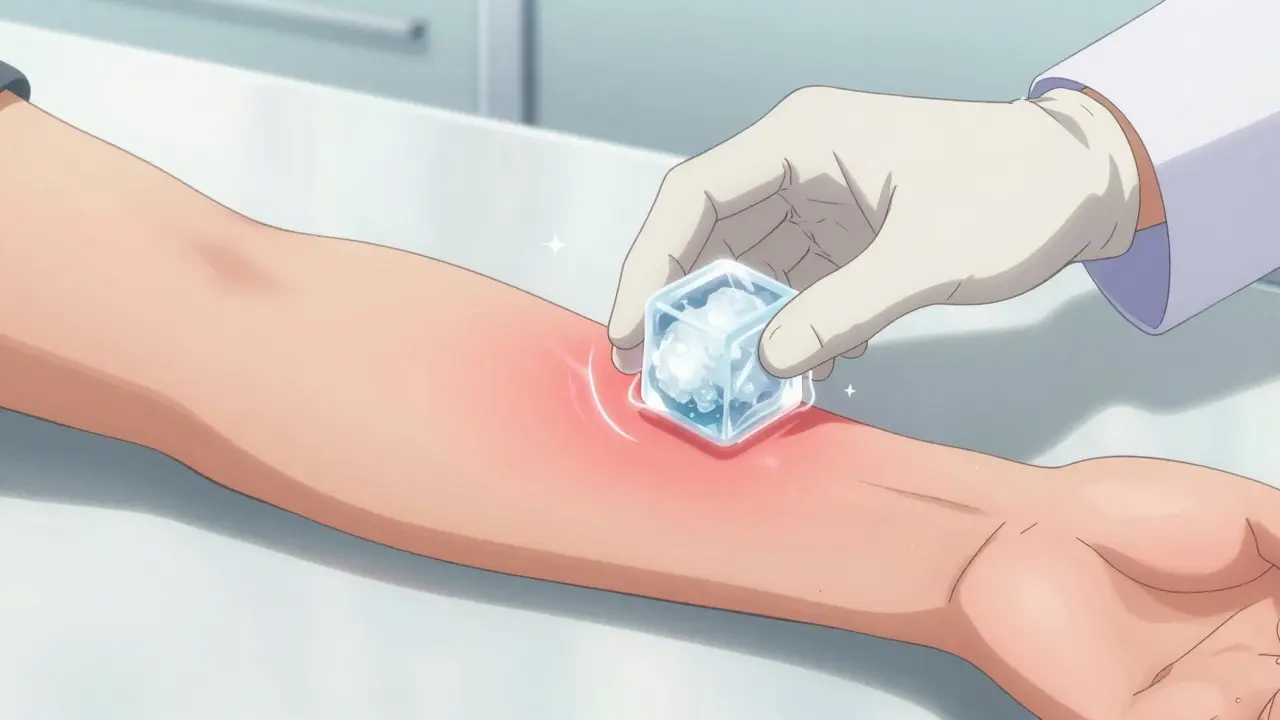
If you suspect you have cold-induced urticaria, do not try to self-diagnose by taking an ice bath. That could be risky. Instead, see an allergist or dermatologist. The gold standard for diagnosis is the ice cube test.
During this simple procedure, a doctor places an ice cube wrapped in a plastic bag on your forearm for 1 to 5 minutes. They then remove it and wait. If you have cold-induced urticaria, a distinct red, swollen welt will appear at the site of the ice cube within 10 minutes of rewarming. This test has a 98% sensitivity rate for acquired cold urticaria, making it highly reliable.
Doctors may also ask you to keep a diary of your symptoms using an urticaria activity score. This helps identify your personal temperature threshold. Some people react to temperatures as mild as 20°C (68°F), while others tolerate much colder air. Blood tests might be ordered to rule out secondary causes like cryoglobulinemia or infections, ensuring the treatment plan targets the right issue.
Treatment Options: From Antihistamines to Biologics
Managing cold-induced urticaria requires a tiered approach. The goal is to block the histamine response and prevent severe systemic reactions.
| Tier | Treatment Type | Examples & Details | Effectiveness |
|---|---|---|---|
| First-Line | Second-Generation Antihistamines | Loratadine, Cetirizine, Desloratadine. Doses can be increased up to 4x standard (e.g., 40mg Cetirizine). | Controls symptoms in 50-60% of patients. |
| Second-Line | Biologic Therapy | Omalizumab (Xolair). A monoclonal antibody injection given monthly. | 60-70% effective in antihistamine-resistant cases. |
| Emergency | Epinephrine Autoinjector | EpiPen. Carried at all times for severe systemic reactions. | Life-saving for anaphylaxis. |
| Emerging | Kallikrein Inhibitors | Berotralstat (Orladeyo). Shown to reduce symptoms by 58% in recent trials. | Promising for refractory cases. |
For most people, non-sedating antihistamines are the first step. Medications like Zyrtec (cetirizine) or Claritin (loratadine) are common. If the standard dose doesn't help, guidelines allow increasing the dose up to four times the normal amount under medical supervision. If pills aren't enough, doctors may prescribe omalizumab (Xolair). This injectable drug blocks IgE, a key player in allergic reactions, and has shown significant success in clinical trials for chronic urticaria.
In rare genetic cases like FCAS, doctors might use interleukin-1 inhibitors such as anakinra (Kineret). These target the specific inflammatory pathway involved in that syndrome, offering relief where antihistamines fail.

Safety First: Avoiding Severe Reactions
The biggest danger with cold-induced urticaria is sudden, full-body immersion in cold water. Dr. Jonathan Bernstein from the University of Cincinnati College of Medicine notes that swimming in water below 20°C (68°F) can trigger rapid anaphylaxis. The combination of cold shock and histamine release can cause your airways to close and your blood pressure to drop, leading to drowning before you even reach the shore.
To stay safe, follow these practical tips:
- The Dip Test: Before entering a pool or lake, dip one hand in the water for 5 minutes. If you develop hives, do not enter. This simple check prevents 85% of severe aquatic reactions.
- Avoid Cold Foods: Be cautious with ice cream, frozen drinks, or cold salads. Eating these can cause swelling in the lips, tongue, or throat, which can obstruct breathing.
- Layer Up: Wear moisture-wicking base layers in winter. Keeping your skin covered minimizes direct exposure to cold air. Studies show proper layering reduces reaction frequency by 60-70%.
- Carry Epinephrine: If you have had systemic symptoms like dizziness or wheezing, always carry an epinephrine autoinjector. Know how and when to use it.
Also, inform any healthcare providers about your condition before surgery or dental work. Anesthesiologists need to know so they can pre-warm IV fluids and maintain operating room temperatures above 21°C (70°F) to prevent intraoperative reactions.
Living With Cold Hives: Daily Management
Living with cold-induced urticaria means becoming aware of your environment. Technology can help. Wearable sensors like the 'Cold Alert' device monitor skin temperature and alert you before it drops below your personal threshold. Additionally, mobile apps like 'Urticaria Tracker' help you log symptoms and identify patterns, giving you better control over your triggers.
Some patients try desensitization therapy, gradually exposing themselves to cold through regular cold showers. While this works for some, it has a high dropout rate (40%) due to discomfort and requires strict medical supervision. Never attempt this without consulting your doctor, as improper exposure can worsen symptoms.
Remember that this condition can change over time. About 35% of patients experience spontaneous remission within five years. Acute-onset cases have a higher chance of resolving (62%) compared to chronic ones. Stay hopeful, but stay vigilant. Regular check-ups with an allergist ensure your treatment plan evolves with your body's needs.
Is cold-induced urticaria permanent?
Not necessarily. While it is classified as a chronic condition, studies show that 35% of patients experience spontaneous remission within five years. Acute cases are more likely to resolve than chronic ones. However, management is essential during active periods to prevent severe reactions.
Can I swim if I have cold hives?
Swimming is risky. Full-body immersion in cold water can trigger anaphylaxis. Always perform a 'dip test' by putting one hand in the water for 5 minutes before entering. If hives appear, do not swim. Never swim alone, and always carry an epinephrine autoinjector nearby.
What is the difference between cold urticaria and frostbite?
Frostbite is tissue damage caused by freezing, resulting in numbness and white/waxy skin. Cold urticaria is an allergic reaction causing itchy, red hives and swelling. Frostbite feels cold and numb; cold urticaria feels hot, itchy, and painful during rewarming.
Do antihistamines cure cold-induced urticaria?
Antihistamines do not cure the condition, but they effectively manage symptoms in 50-60% of patients by blocking histamine release. For those who don't respond, biologic therapies like omalizumab (Xolair) offer further relief. Treatment controls the reaction but does not eliminate the underlying sensitivity.
Is there a genetic link to cold hives?
Yes, in rare cases. Familial Cold Autoinflammatory Syndrome (FCAS) is a genetic disorder linked to mutations in the PLCG2 gene. Unlike typical cold urticaria, FCAS requires different treatments, such as interleukin-1 inhibitors, because it involves a distinct inflammatory pathway.
