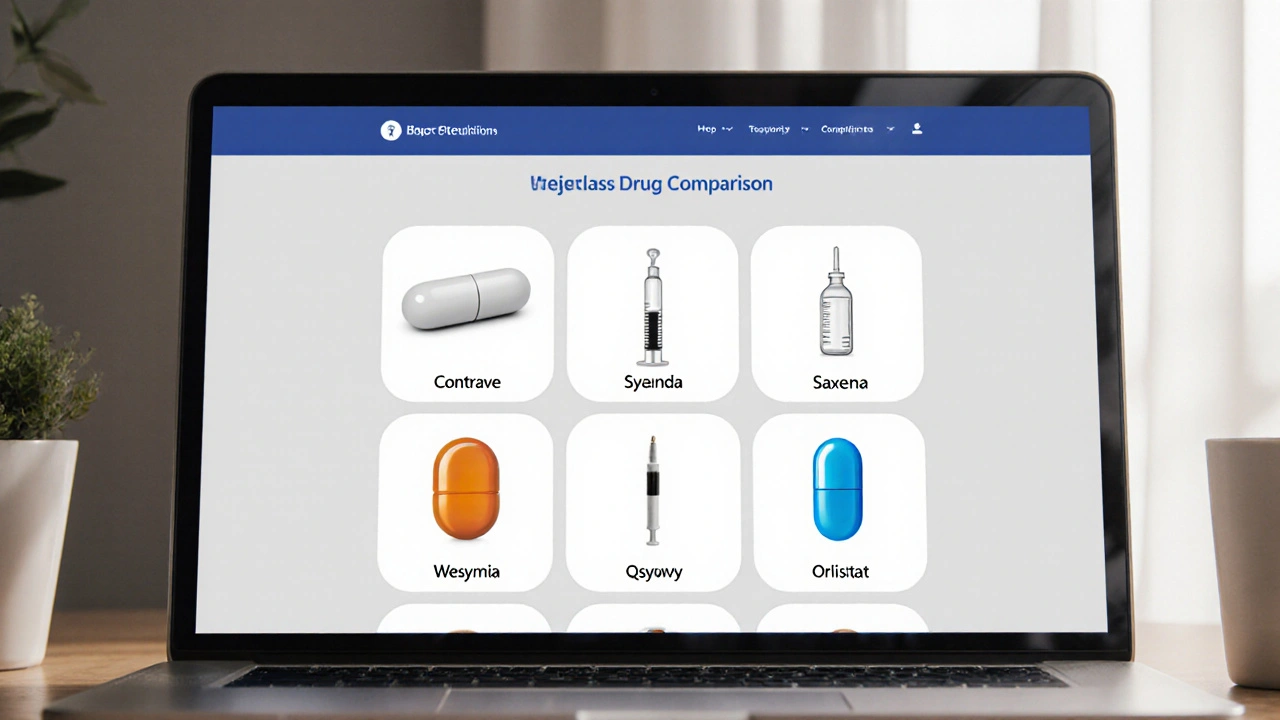
Contrave vs. Weight Loss Drug Comparison Tool
This tool helps you compare key features of Contrave with other popular weight-loss medications. Select a medication below to see detailed information.
Contrave
Naltrexone + Bupropion
Saxenda
Liraglutide
Wegovy
Semaglutide
Qsymia
Phentermine + Topiramate
Orlistat
Orlistat
Phentermine
Phentermine
Quick Decision Guide
Recommended Medications:
Quick Take
- Contrave combines two older drugs-naltrexone and bupropion-to curb appetite and cravings.
- It delivers about 5‑10% body‑weight loss after a year, similar to many FDA‑approved options.
- Alternatives such as Wegovy, Saxenda, Qsymia, Orlistat, and phentermine differ in route (injectable vs. oral), cost, and side‑effect profile.
- Choosing the right pill depends on medical history, insurance coverage, and willingness to use injections.
When you’re hunting for a prescription that can help you drop those stubborn pounds, the market feels crowded. One name that keeps popping up is Contrave. But is it really the best fit, or are there cheaper, safer, or more effective alternatives? This guide walks you through the science, the pros‑and‑cons, and a side‑by‑side look at the most common competitors.
What is Contrave?
Contrave is a combination pill approved by the U.S. FDA in 2014 for chronic weight management. It merges two older drugs with very different actions:
- Naltrexone - an opioid‑receptor antagonist originally used to treat alcohol and opioid dependence.
- Bupropion - a dopamine‑norepinephrine reuptake inhibitor best known as an antidepressant and smoking‑cessation aid.
The two ingredients work together to hit the brain’s reward pathways and the hypothalamic appetite center. In simple terms, they help you feel less hungry and make cravings less rewarding.
How Contrave Works
Imagine your brain as a thermostat for hunger. Bupropion nudges the thermostat down by boosting dopamine and norepinephrine, which reduces the urge to eat. Naltrexone then blocks the “reward” spike that usually follows a binge, so you’re less likely to overindulge again. The synergy is called the “dual‑action” mechanism, and clinical trials show it can lead to a 5‑10% reduction in body weight after 12 months of use.
Benefits and Drawbacks
Pros
- Oral tablet - no injection needed.
- Weight loss comparable to many other prescription options.
- Can improve blood‑sugar control in people with pre‑diabetes.
Cons
- Common side effects: nausea, constipation, headache, dry mouth.
- Contraindicated for patients with uncontrolled hypertension, seizure disorder, or chronic opioid use.
- Cost: $150‑$200 per month without insurance, making it pricey for long‑term use.

Top Alternatives to Contrave
Below are the most frequently prescribed competitors. Each has its own mechanism, dosing schedule, and price range.
Saxenda (liraglutide)
Saxenda is a GLP‑1 receptor agonist administered as a daily injection. It mimics a gut hormone that tells the brain you’re full, leading to an average 5‑10% weight loss over a year.
Wegovy (semaglutide)
Wegovy is the newer, higher‑dose version of the diabetes drug Ozempic. Given once‑weekly, it can produce 10‑15% body‑weight loss, the highest among approved meds. The downside? Injection‑related anxiety and a higher price tag ($1,300‑$1,500 per month).
Qsymia (phentermine/topiramate)
Qsymia blends a stimulant (phentermine) with an anti‑seizure drug (topiramate). It works by cutting appetite and enhancing satiety. Users typically lose 8‑10% of body weight, but the stimulant can raise heart rate and blood pressure.
Orlistat (Xenical)
Orlistat is an over‑the‑counter lipase inhibitor that blocks about 30% of dietary fat absorption. Weight loss averages 3‑5% in the first year. Side effects include oily stools and occasional vitamin‑A depletion, requiring supplemental vitamins.
Phentermine (Adipex‑P)
Phentermine is a short‑term appetite suppressant, similar to a mild amphetamine. It can produce 5‑8% weight loss in three months but is typically limited to 12 weeks due to habit‑forming potential.
Side‑by‑Side Comparison
| Medication | Active Ingredients | Route & Dosing | Typical % Body‑Weight Loss (12mo) | Common Side Effects | Average Monthly Cost (US) |
|---|---|---|---|---|---|
| Contrave | Naltrexone+Bupropion | Oral, 2 tablets daily | 5‑10% | Nausea, headache, constipation | $150‑$200 |
| Saxenda | Liraglutide | Injectable, daily | 5‑10% | Nausea, diarrhea, gallbladder issues | $1,200‑$1,300 |
| Wegovy | Semaglutide | Injectable, weekly | 10‑15% | Nausea, vomiting, constipation | $1,300‑$1,500 |
| Qsymia | Phentermine+Topiramate | Oral, once daily | 8‑10% | Tingling, insomnia, elevated BP | $150‑$250 |
| Orlistat | Orlistat | Oral, 3× daily with meals | 3‑5% | Oily stools, abdominal cramping | $30‑$70 (OTC) |
| Phentermine | Phentermine | Oral, once daily (≤12weeks) | 5‑8% | Dry mouth, insomnia, tachycardia | $30‑$70 |
How to Pick the Right Option
Think of the decision like a checklist. Ask yourself these core questions:
- Do you have any heart‑related conditions or uncontrolled hypertension? If yes, avoid stimulants like phentermine and Qsymia.
- Are you comfortable with injections? If not, stick to oral agents such as Contrave, Qsymia, or Orlistat.
- How important is cost? Over‑the‑counter Orlistat is the cheapest, while GLP‑1 agonists (Wegovy, Saxenda) are the most expensive.
- Do you have a history of seizures or are you on opioid therapy? Naltrexone‑based combos (Contrave) may not be suitable.
- Do you need rapid results? Weekly semaglutide (Wegovy) often shows the biggest early drop.
Match your answers against the table above, and you’ll see a clear pattern emerge - for many users who want an oral pill without stimulant risks, Contrave or Qsymia are logical first picks.
Practical Quick‑Start Checklist
- Schedule a telehealth or in‑person visit with a primary‑care doctor or weight‑loss specialist.
- Bring a list of current meds, blood‑pressure readings, and any history of seizures or liver disease.
- Ask about insurance coverage; many plans cover GLP‑1 drugs only after a trial of oral agents.
- If prescribed Contrave, start with 1 tablet daily and titrate up to 2 tablets over 4 weeks to minimize nausea.
- Track weight, hunger scores, and side effects in a simple spreadsheet or app for the first 12 weeks.
Frequently Asked Questions
How long does it take to see results with Contrave?
Most patients notice a modest drop (1‑2lb) within the first month, and a 5‑10% total loss after a full year if they stick to diet and exercise.
Can I take Contrave with other weight‑loss meds?
No. Combining prescription appetite suppressants can raise safety risks, especially for blood‑pressure or seizure concerns. Always discuss any add‑on therapy with your clinician.
Is Contrave safe for people with diabetes?
It can be helpful because bupropion may improve insulin sensitivity. However, monitor blood‑glucose closely, as any weight‑loss drug can affect medication dosing.
What should I do if I experience severe nausea?
Slow the titration schedule: stay on 1 tablet for an extra week before increasing, take the dose with food, and consider an anti‑emetic after consulting your doctor.
How does Contrave compare to Wegovy in terms of effectiveness?
Wegovy typically yields 10‑15% body‑weight loss, nearly double the average for Contrave. The trade‑off is higher cost and the need for weekly injections.

Next Steps & Troubleshooting
If you’ve started Contrave and the side effects feel too strong, pause the medication and talk to your prescriber. A short break (1‑2weeks) often resets tolerance, after which you can restart at a lower dose.
For anyone who doesn’t hit the 5% weight‑loss threshold after six months, consider switching to a GLP‑1 agent (Saxenda or Wegovy) if insurance permits. Many clinicians view oral combos as a “stepping‑stone” before moving to injectable therapies.
Finally, remember that medication works best when paired with sustainable diet changes and regular movement. Even the most potent drug won’t keep the weight off if old habits return.

17 Comments
Here’s the thing-if you prefer a pill you can pop with a glass of water, Contrave fits the bill without the hassle of needles.
Oh wow this whole weight‑loss drug circus just keeps getting louder and louder the side effects are a nightmare the prices are absurd you think you’re getting a miracle but you’re just buying more anxiety
Let’s get moving you’ve got the tools-pick a regimen that matches your lifestyle and crush those goals!!
While the overview appears comprehensive, it neglects to address the paucity of long‑term safety data that could influence clinical decision‑making.
Ah, the grand quest for the perfect pill-because what we truly need is another synthetic shortcut to replace good old discipline, right?
Honestly, anyone still dreaming of a magic tablet is living in a fantasy land; real results demand sweat, not just a prescription.
Think about it, the body is a complex ecosystem and stuffing it with chemicals is like trying to fix a watch with a hammer.
When you stare at the table of options, you are confronted not only with a list of chemicals but with the echo of countless marketing slogans that promise miracles without effort. The first sentence in any brochure whispers hope, but the second one often hides the reality of side effects that can haunt you for months. Take Contrave, for instance; it combines two drugs that were originally designed for entirely different purposes, hoping their synergy will tame hunger. Yet, the synergy is a delicate dance, and if one missteps, nausea and headaches may follow like unwelcome guests at a party. The oral route is undeniably convenient, sparing you from the daily needle anxiety that injections provoke. However, convenience does not equal efficacy, and the modest 5‑10 % weight loss over a year may leave many feeling underwhelmed. Compare this to Wegovy, which, though pricey and injectable, can push the scale down by double digits, satisfying those who chase dramatic numbers. On the other end of the spectrum, Orlistat offers a cheap, over‑the‑counter alternative, but the trade‑off is its notorious oily stool side effect, which many find socially unacceptable. Then there is Qsymia, blending a stimulant with an anti‑seizure drug, a cocktail that raises eyebrows among cardiologists wary of elevated blood pressure. Each medication brings its own set of contraindications, and the decision matrix becomes a maze of medical history, insurance coverage, and personal tolerance. The truth is, no pill will replace the fundamentals of a balanced diet and consistent exercise; they merely tip the scales slightly in your favor. Ultimately, the “right” choice is a personal calculus that weighs cost, convenience, and your willingness to endure potential side effects. So before you click “order,” pause, reflect, and perhaps consult a trusted healthcare professional who can navigate this labyrinth with you.
Sure, because popping a pill is way easier than actually changing habits.
The key is to match your medical profile with the drug’s mechanism, check insurance formularies early, and monitor blood pressure regularly while on any stimulant‑based therapy.
Its not just about losing weight its about respecting your body and not letting big pharma guile you into endless cycles of pills and side effects
Honestly I dont see the point of writing a whole paragraph about each drug when you can just look at the price tag and pick the cheapest one and hope for the best it seems like everyone is overcomplicating something that could be solved by simply eating less and moving more but then again the marketing machine is so strong that people keep buying into these fancy names and high cost treatments without thinking about the basics of calorie balance and lifestyle changes which are the real drivers of weight loss anyways
Stay positive, it works!
From a pharmacodynamic perspective the purported superiority of GLP‑1 agonists is overstated; receptor desensitization and downstream signaling attenuation render the marginal efficacy gains clinically negligible.
In contemplating the pursuit of weight reduction, one must ask whether the external metric of mass truly aligns with the internal equilibrium of self‑perception, for the body is both a vessel and a narrative, and the drugs we ingest become chapters that may rewrite the story we tell ourselves about control, autonomy, and the very essence of desire.
While each medication has its merits, consider starting with an oral option like Contrave for convenience, then evaluate progress before escalating to injectables if needed-this staged approach respects both budget and personal comfort.
Remember to pair any prescription with a sustainable eating plan and regular activity; the meds are boosters, not substitutes for healthy habits.
Write a comment