
Imagine waking up exhausted, even after eight hours in bed. Your partner complains about your snoring, which sounds like a chainsaw idling. You feel foggy during the day, struggling to focus on work or drive safely. This isn't just bad luck; it might be obstructive sleep apnea (OSA). For millions of people, the solution involves a machine that blows air into their face while they sleep. It sounds unglamorous, maybe even uncomfortable, but CPAP machines are the gold standard treatment for moderate to severe obstructive sleep apnea. They keep your airway open, stopping breathing pauses that starve your brain of oxygen.
Getting a prescription is step one. Finding the right setup and actually using it every night? That’s where most people stumble. About 46% of patients fail to stick with the therapy long-term because it feels awkward, noisy, or claustrophobic. But you don’t have to suffer through a bad fit or guess which machine works for you. Understanding the different types of pressure devices, how to seal a mask properly, and tricks to build a habit can turn this medical device from a nuisance into a life-saver.
Understanding the Four Main Types of Pressure Devices
Not all sleep apnea machines are created equal. While everyone calls them "CPAPs," there are distinct technologies designed for different needs and budgets. Choosing the wrong type can make therapy feel impossible, while the right one makes it nearly invisible.
| Device Type | How It Works | Best For | Typical Cost Range |
|---|---|---|---|
| Traditional CPAP | Delivers one constant pressure level (e.g., 10 cm H2O) all night. | Patient with stable breathing patterns who tolerates steady pressure well. | $500 - $1,000 |
| Auto-Adjusting APAP | Automatically raises or lowers pressure within a set range based on real-time breathing events. | Restless sleepers, side sleepers, or those whose needs change throughout the night. | $1,700 - $3,000 |
| BiPAP (Bilevel) | Provides two pressures: higher for inhaling (IPAP), lower for exhaling (EPAP). | Patients requiring high pressures (>15 cm H2O) or those with COPD/comorbid conditions. | $600 - $1,600 |
| Travel CPAP | Compact, lightweight versions of standard units, often lacking built-in humidifiers. | Frequent travelers who need consistent therapy on the go. | $600 - $900 |
Traditional CPAP machines deliver a single, fixed pressure. If your doctor prescribes 10 cm H2O, you get 10 cm H2O whether you’re dreaming or tossing and turning. These are reliable and usually the cheapest option, costing between $500 and $1,000. Models like the ResMed AirSense 10 are staples in clinics. However, if you shift positions or experience variable congestion, a fixed pressure might feel too strong at times and too weak at others.
Auto-Adjusting Positive Airway Pressure (APAP) devices solve that problem. They monitor your breathing second-by-second and adjust pressure within a prescribed range (for example, 4-20 cm H2O). If you start to snore or choke, the machine nudges the pressure up. When you’re breathing smoothly, it drops down. Studies show APAP users have a 15% higher adherence rate than traditional CPAP users because the comfort level adapts to them. The ResMed AirSense 11 AutoSet is a top contender here, though it comes with a higher price tag, often exceeding $2,000 before insurance.
For those who find exhaling against high pressure exhausting, BiPAP machines offer relief. They provide a lower pressure when you breathe out, making it easier to push air back out of your lungs. This is critical for patients with chronic obstructive pulmonary disease (COPD) or those needing very high pressures. Dr. David White, a developer of BiPAP technology, notes these devices are essential for 10-15% of OSA patients with complex health profiles. Just know that BiPAPs often require an additional titration study to fine-tune the two pressure settings, adding time and cost to your initial setup.
If you travel frequently, consider a Travel CPAP. The ResMed AirMini weighs less than a pound and fits in your palm. It connects to your phone via Bluetooth to sync settings from your home machine. The trade-off? Most travel units lack heated humidification, which can dry out your nose and throat unless you buy separate accessories. Also, they tend to be noisier-around 52 decibels compared to the whisper-quiet 25-30 decibels of full-size units.
Mastering the Mask Fit: The Key to Success
You can have the most advanced machine in the world, but if your mask leaks, the therapy fails. In fact, improper fit causes 60% of all leaks. A leak doesn’t just reduce effectiveness; it creates noise, dries out your eyes, and triggers the machine to blast maximum pressure, which feels terrible.
There are four main mask styles, and choosing the right one depends on your anatomy and sleeping habits.
- Nasal Pillows: These sit gently inside your nostrils. They are the least intrusive, leaving your nose and mouth free. Ideal for side sleepers and active movers. Users report switching to nasal pillows cut their leak rates dramatically overnight.
- Nasal Masks: These cover only your nose. They offer a good balance of security and comfort for people who breathe primarily through their nose. About 45% of users prefer this style.
- Full-Face Masks: These cover both your nose and mouth. Essential for mouth breathers or those with chronic nasal congestion. However, they are bulkier and more likely to cause skin irritation or claustrophobia.
- Hybrid/Oral Masks: Rarely used, these cover the mouth only, suitable for severe nasal obstruction cases.
Fitting isn't a one-and-done task. Your face swells slightly as you sleep, and straps loosen over time. Here is a practical routine to ensure a tight seal without causing sores:
- Measure Correctly: Use the manufacturer’s sizing guide. Measure the width of your nasal bridge and the distance from the bridge to your upper lip. Don’t guess.
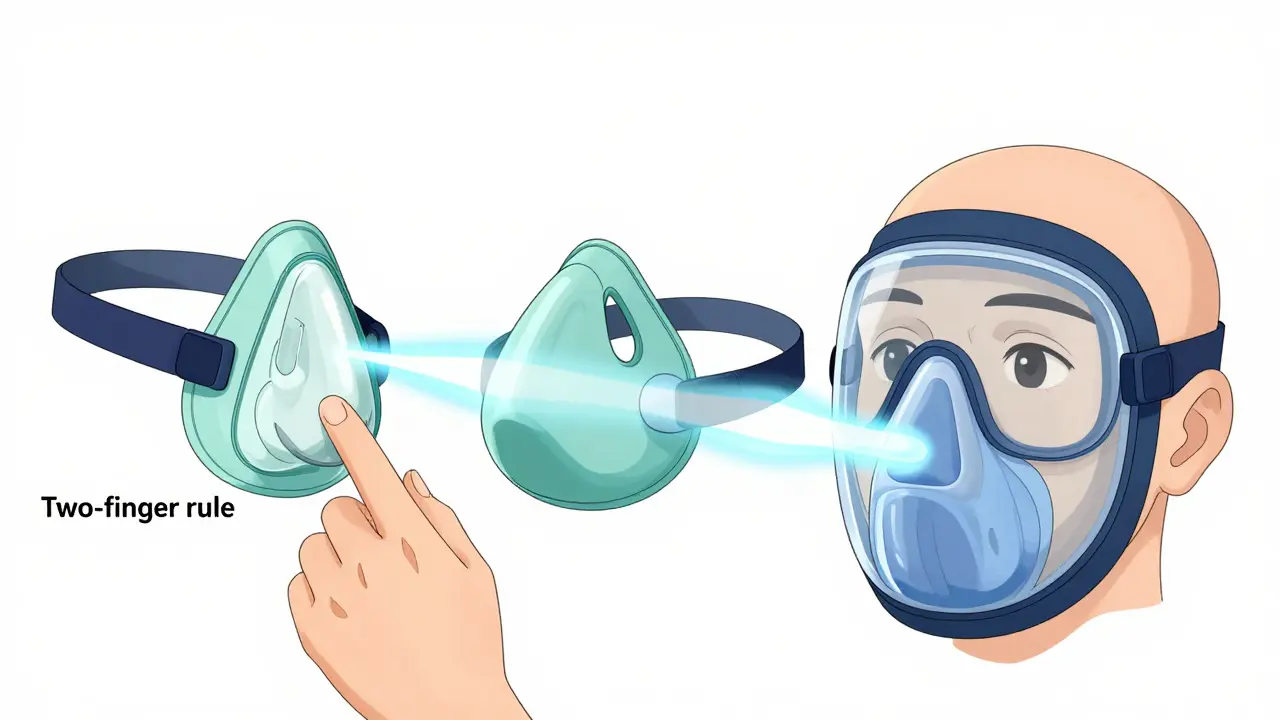
- The "Two-Finger" Rule: Once strapped on, you should be able to slide two fingers under the headgear straps. If you can’t, it’s too tight. If you can slide three or more, it’s too loose.
- Check for Leaks Before Bed: Turn the machine on while sitting upright. Breathe normally. If you feel air blowing into your eyes or hear hissing, readjust. Do not tighten the straps further; instead, reposition the cushion on your face.
- Acceptable Leak Rates: Modern machines tolerate some leakage. ResMed guidelines state that leak rates below 24 liters per minute are acceptable. If your dashboard shows leaks above this, contact your supplier for a new size or style.
Don’t be afraid to experiment. Many suppliers, like CPAP.com, offer a 60-night guarantee allowing multiple exchanges. Try a nasal pillow if you’ve been frustrated with a full-face mask. Switching styles is common and often the difference between quitting therapy and sticking with it.
Strategies to Build Lasting Adherence
Adherence means using your device for at least four hours a night, seven nights a week. Insurance companies like Medicare tie reimbursement to this metric. But beyond billing, consistency is what protects your heart and brain. Consistent use reduces cardiovascular risks by 20-30%. So, how do you make yourself wear it?
Start Slowly with Daytime Desensitization
Don’t jump straight into wearing the mask all night. Start by wearing it while watching TV or reading during the day for 10-15 minutes. Get used to the sensation of air and the weight of the tubing. Gradually increase this time over a week. This builds psychological tolerance before sleep anxiety kicks in.
Utilize the Ramp Feature
Most modern machines have a "ramp" function. This starts the pressure at a low, comfortable level (e.g., 4 cm H2O) and gradually increases to your prescribed therapeutic pressure over 15-45 minutes. Since you fall asleep during this rise, you rarely notice the higher pressure. Enable this feature; it’s used by 75% of successful users.
Add Humidification
Dry air is a major complaint. Heated humidifiers warm the air to around 86°F-95°F, preventing dry mouth and nasal irritation. If you still experience dryness, add a heated tube (often called ClimateLineAir) to prevent condensation (rainout) in the hose. Data shows users with heated tubing have a 78% adherence rate compared to 52% for those without.
Track Your Data
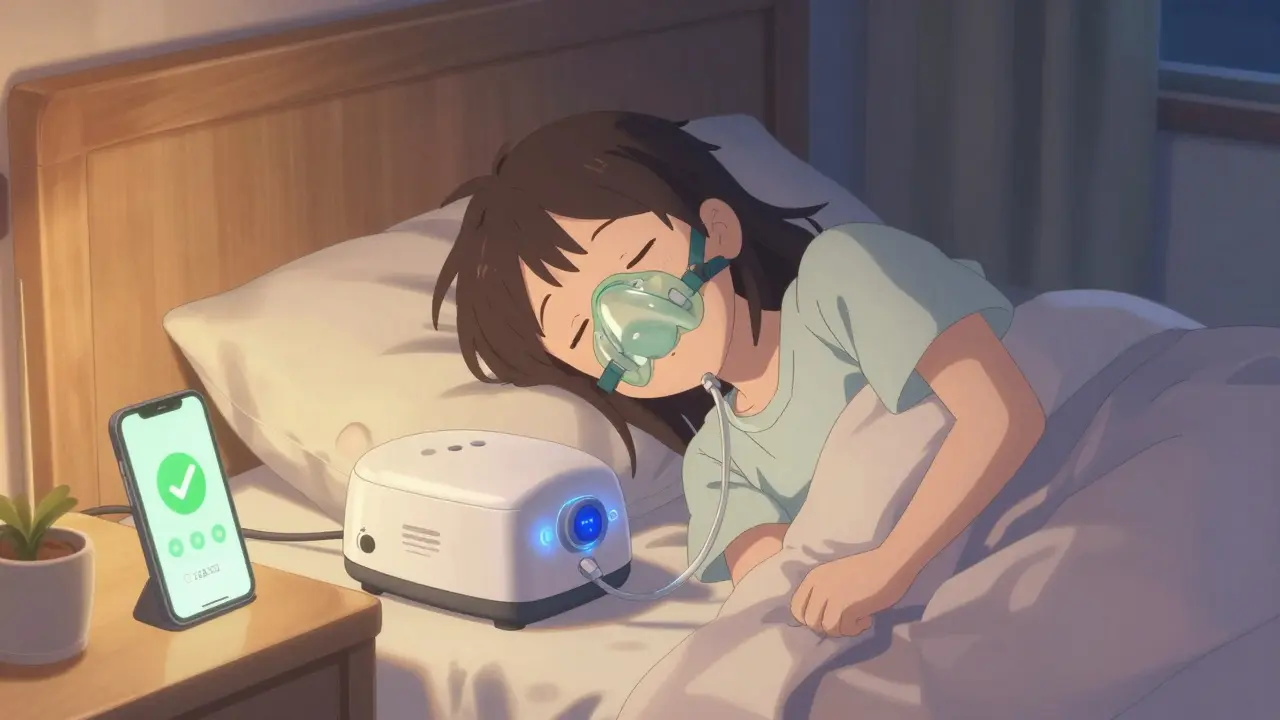
Gamify your progress. Apps like ResMed’s myAir connect to your machine and give you daily scores based on usage and leak rates. Seeing a green checkmark or a high score provides positive reinforcement. One study found that personalized coaching apps increased adherence by 27%. Review your weekly reports with your sleep specialist to troubleshoot issues early.
Invest in Accessories
A standard pillow can crush your mask, breaking the seal. Consider a CPAP-specific pillow with cutouts for your mask. Anti-snore chin straps can help if you’re trying to switch from a full-face mask to a nasal mask. Cleaning cloths and silicone lubricants can also improve comfort and extend mask life.
Troubleshooting Common Issues
Even with the best setup, hiccups happen. Here’s how to handle frequent complaints:
- Mask Sores: If you see red marks in the morning, your mask is too tight or the material is irritating your skin. Try a different cushion material (gel vs. memory foam) or use barrier creams specifically designed for CPAP users.
- Aerophagia (Swallowing Air): Feeling bloated or gassy? You might be swallowing excess air due to high pressure. Talk to your doctor about lowering the pressure slightly or switching to a BiPAP, which makes exhalation easier.
- Noise: If the machine sounds loud, check the filter. A clogged filter forces the motor to work harder. Replace filters every 1-3 months. If the motor itself is noisy, the unit may need servicing.
- Dry Eyes: Air leaking upward into your eyes causes dryness and redness. Adjust the mask angle downward slightly or switch to a mask with a better seal geometry.
Remember, the goal is comfort. If something hurts or feels wrong, fix it immediately. Don’t push through pain hoping it will get better. Contact your durable medical equipment (DME) provider-they exist to help you succeed.
Do I need a prescription for a CPAP machine?
Yes, in the United States and many other countries, you need a valid medical prescription from a licensed physician to purchase a CPAP machine. This ensures the correct pressure settings are determined via a sleep study (polysomnography) or home sleep test. Insurance providers also require this documentation for coverage.
How much does a CPAP machine cost without insurance?
Out-of-pocket costs vary widely. Traditional CPAP machines range from $500 to $1,000. Advanced APAP models can cost between $1,700 and $3,000. BiPAP machines typically range from $600 to $1,600. Travel units are generally priced around $650. Keep in mind that masks, tubing, and filters are recurring expenses, often costing $50-$100 monthly.
What is the difference between CPAP and APAP?
CPAP delivers a single, constant pressure level throughout the night. APAP (Auto-Adjusting Positive Airway Pressure) automatically adjusts the pressure up or down within a prescribed range based on your real-time breathing patterns. APAP is often more comfortable for restless sleepers because it uses the lowest effective pressure needed at any given moment.
Can I use my CPAP machine while traveling?
Yes, but standard machines are bulky. For frequent travelers, compact travel CPAPs like the ResMed AirMini are designed for portability. They weigh under a pound and can be charged via USB-C power banks. Ensure you pack extra masks and filters, as replacements may be hard to find abroad.
How do I clean my CPAP mask and machine?
Clean the mask cushion and headgear daily with mild soap and warm water to remove oils and bacteria. Rinse thoroughly and air-dry. Empty and wash the water chamber in the humidifier daily to prevent mold growth. Replace filters every 1-3 months depending on usage and environment. Never submerge the main machine unit in water.
Why is my CPAP machine making a loud noise?
Loud noises often stem from a clogged air filter, forcing the motor to work harder. Check and replace the filter first. Other causes include loose parts, worn-out motors, or significant air leaks from the mask. If cleaning and tightening don’t help, the unit may need professional repair or replacement.
Is BiPAP better than CPAP?
BiPAP is not inherently "better" but is more specialized. It provides two pressure levels (higher for inhalation, lower for exhalation), making it easier to breathe out against high pressures. It is ideal for patients with COPD, obesity hypoventilation syndrome, or those who cannot tolerate high-pressure CPAP. For most typical OSA patients, CPAP or APAP is sufficient and more cost-effective.
How long does it take to get used to a CPAP?
Most users adapt within 2 to 4 weeks. Initial discomfort is normal as your body adjusts to the airflow and mask presence. Using features like ramp-up, heated humidification, and daytime desensitization exercises can speed up this process. If you struggle beyond a month, consult your sleep therapist for mask adjustments or alternative therapies.
