
Did you know that for people living with type 2 diabetes, the leading cause of death isn't complications from high blood sugar itself? It’s heart disease, specifically cardiovascular disease (CVD). According to the American Heart Association, about 65% of deaths in this group are linked to heart issues. For a long time, the medical advice was simple: lose weight through diet and exercise first. If that didn’t work after six months, maybe try medication. But the rules have changed. In June 2025, the American College of Cardiology (ACC) released new guidance stating that patients should not be forced to "try and fail" lifestyle changes before starting drugs like semaglutide or Wegovy. This is a massive shift. It means we now view obesity and its link to heart health as a chronic disease requiring immediate medical intervention, not just a failure of willpower.
The good news? You don't have to choose between pills and healthy habits. Research shows that combining modern GLP-1 receptor agonists with specific lifestyle tweaks creates a synergy that neither approach can match alone. Let's break down exactly how these tools work together to protect your heart.
Why Diabetes and Heart Health Are Tied Together
To understand the treatment, you first need to understand the problem. High blood sugar damages blood vessels over time. It makes them stiff and prone to plaque buildup. This process, called atherosclerosis, restricts blood flow to the heart and brain. When you add extra weight into the mix, the stress on your heart multiplies. Carrying excess fat increases inflammation and raises blood pressure, forcing your heart to pump harder.
Historically, doctors focused heavily on lowering A1c levels (average blood sugar). While controlling glucose is vital, it doesn't fully address the mechanical strain on the heart caused by obesity. The 2017 guidelines from the ACC and AHA were among the first to formally recognize diabetes as a major CVD risk factor requiring aggressive blood pressure management (<130/80 mm Hg). Today, the focus has expanded. We are looking at total metabolic health. This includes weight, blood pressure, cholesterol, and inflammation. The goal isn't just to lower numbers on a lab test; it's to reduce the physical load on your cardiovascular system.
The Power of GLP-1 Medications
GLP-1 receptor agonists are a class of injectable medications that mimic a hormone your body naturally produces when you eat. They do three main things: they help your pancreas release insulin only when blood sugar is high, they slow down how fast food leaves your stomach (keeping you full longer), and they signal your brain to reduce appetite. But their biggest selling point for heart health is weight loss.
Let's look at the data. In the STEP 1 trial published in the New England Journal of Medicine, participants taking semaglutide (marketed as Wegovy for weight loss and Ozempic for diabetes) lost an average of 14.9% of their body weight. That is significant. Another drug, tirzepatide (Mounjaro/Zepbound), which targets two hormones instead of one, showed even greater results in the SURMOUNT-1 trial, with up to 22.5% weight loss at higher doses.
Why does this matter for your heart? Because losing that much weight reduces the workload on your heart muscle. It lowers blood pressure and improves lipid profiles. The FDA approved Wegovy in 2023 specifically for reducing cardiovascular risk in adults with existing heart disease who are overweight or obese. This was a watershed moment. It meant regulators officially recognized these drugs not just as cosmetic aids, but as life-saving cardiac interventions. John Sharretts, M.D., director of the FDA's Division of Diabetes, Lipid Disorders, and Obesity, noted that this approval addresses a population at high risk for cardiovascular death, heart attack, and stroke.
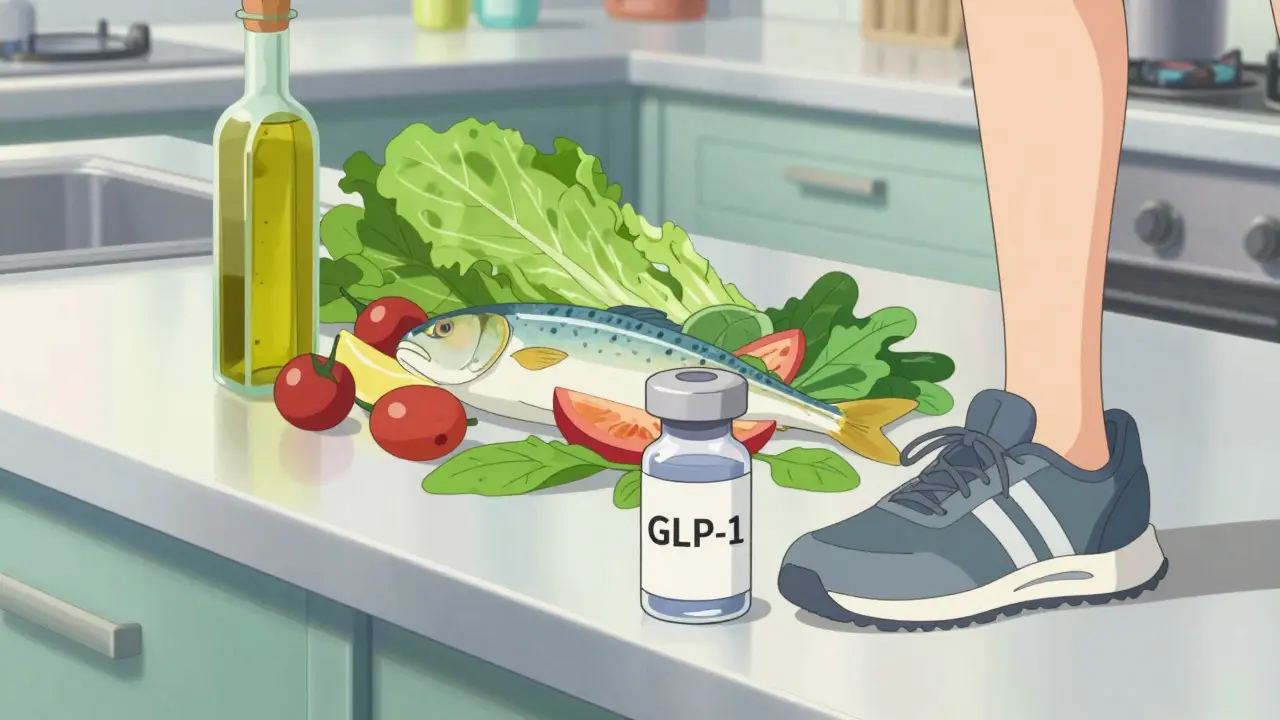
Lifestyle Changes That Actually Move the Needle
Medication gives you a metabolic advantage, but it doesn't fix bad habits. In fact, relying solely on drugs without changing your routine often leads to weight regain once you stop. The American Diabetes Association (ADA) provides clear, actionable targets for lifestyle intervention. These aren't vague suggestions like "eat better." They are specific protocols.
- Dietary Pattern: Focus on Mediterranean, DASH, or plant-based diets. There is no single "perfect" ratio of carbs to fats, but these patterns emphasize fiber, healthy fats, and lean proteins while minimizing processed foods.
- Physical Activity: Aim for at least 30 minutes of moderate-intensity aerobic activity most days of the week. If you're new to exercise, break it into 10-minute increments. Consistency beats intensity here.
- Weight Loss Target: Losing just 7% of your body weight can significantly reduce cardiovascular risk factors. This was proven in the Look AHEAD Trial, although the study showed that lifestyle alone might not be enough to prevent all events in high-risk patients.
- Blood Pressure Control: Keep your BP below 130/80 mm Hg. This requires both dietary sodium restriction and potentially medication.
The CDC emphasizes that eating foods high in fiber and low in saturated fats helps prevent high cholesterol. Exercise interventions are comparable to some medications in terms of mortality benefits for secondary prevention of heart disease. Studies show structured cardiac rehabilitation can reduce mortality by 27%. However, achieving this level of adherence is difficult for many people without pharmacological support to curb appetite and boost energy.
The Synergy Effect: Why Both Work Best Together
Here is where the real magic happens. A study led by Xuan-Mai Nguyen, MD, PhD, from the Department of Veterans Affairs Boston Healthcare System, looked at veterans with type 2 diabetes. They compared those taking GLP-1 RAs against those who weren't. The result? Users had a 20% lower risk of major cardiovascular events. But then they looked at the subgroup of users who also adhered to eight heart-healthy lifestyle habits (like not smoking, exercising, sleeping well, etc.). Their risk dropped by 63%.
This isn't just additive; it's multiplicative. Medication handles the biological drive to eat and the hormonal resistance to weight loss. Lifestyle changes handle the behavioral aspects, stress management, and social connection. Olivia Gilbert, MD, MSc, FACC, chair of the ACC's 2025 guidance panel, stated clearly: "Lifestyle interventions should always be offered in conjunction with obesity medications." The old model of "lifestyle first" is outdated because it ignores the chronic nature of obesity. The new model is "integrated care."
| Intervention | Avg. Weight Loss | Cardiovascular Benefit | Key Limitation |
|---|---|---|---|
| Lifestyle Only | 3-5% | Moderate (improves risk factors) | Hard to sustain long-term; limited impact on severe obesity |
| GLP-1 RA Only | 10-15%+ | High (reduces MACE by ~20%) | Cost/accessibility; potential side effects |
| Combined Approach | 15-22%+ (with tirzepatide) | Very High (up to 63% risk reduction) | Requires commitment to both drug regimen and behavior change |

Navigating Access and Insurance
Even with strong evidence, getting started can be frustrating. Semaglutide prescriptions jumped 317% between 2021 and 2023, but access remains uneven. According to the Obesity Medicine Association, 40% of eligible patients face barriers due to insurance coverage limitations. Many plans still classify these drugs as "weight loss" rather than "cardiovascular protection," even though the FDA has granted the latter indication.
If you are considering this path, talk to your doctor about documenting your cardiovascular risk factors explicitly. Mention your history of diabetes, hypertension, or prior events. This can help justify coverage under broader health categories. Also, be aware that supply shortages have been intermittent. Planning ahead and having a backup plan for lifestyle intensification during gaps in medication is crucial.
Practical Steps to Start Today
You don't need to overhaul your life overnight. Start with small, sustainable shifts that complement medical therapy.
- Consult Your Provider: Ask if a GLP-1 RA or similar agent is appropriate for your specific health profile. Discuss your cardiovascular history openly.
- Audit Your Diet: Swap one processed snack per day for a whole-food alternative rich in fiber, like vegetables or legumes. This supports the medication's effect on satiety.
- Move More, Less Intensely: Instead of aiming for a grueling hour-long workout, aim for three 10-minute walks after meals. This helps regulate blood sugar spikes immediately after eating.
- Track Non-Scale Victories: Monitor your blood pressure, energy levels, and sleep quality. These are often better indicators of heart health improvement than the scale alone.
- Build Support: Join a community or program that focuses on heart-healthy living. Social connection is one of the eight lifestyle factors linked to reduced cardiovascular risk.
The landscape of diabetes and heart disease management has evolved. It is no longer about blaming yourself for not exercising enough. It is about using every tool available-advanced pharmacology and proven lifestyle strategies-to give your heart the best chance to thrive. By combining the power of GLP-1 medications with intentional daily habits, you can drastically cut your risk and take control of your long-term health.
Can I take GLP-1 medications if I don't have diabetes?
Yes. The FDA approved Wegovy (semaglutide) in 2023 specifically for adults with cardiovascular disease who are overweight or obese, regardless of whether they have diabetes. Clinical trials like SELECT showed significant cardiovascular benefits in non-diabetic patients with obesity.
How much weight do I need to lose to see heart benefits?
Research suggests that losing just 5-7% of your body weight can lead to meaningful improvements in blood pressure, cholesterol, and blood sugar control. However, greater weight loss (10-15%+) associated with GLP-1 therapies offers even more substantial reductions in major adverse cardiovascular events.
Is lifestyle change still necessary if I'm on medication?
Absolutely. The American College of Cardiology's 2025 guidance emphasizes that lifestyle interventions should always accompany medication. Data shows that combining GLP-1 RAs with healthy habits reduces cardiovascular risk by up to 63%, compared to 20% with medication alone.
What are the common side effects of GLP-1 medications?
Common side effects include nausea, vomiting, diarrhea, and constipation. These usually occur when starting the medication or increasing the dose. Starting with a low dose and titrating up slowly, as directed by your doctor, helps minimize these effects.
Does insurance cover Wegovy or Ozempic for heart health?
Coverage varies widely. While Ozempic is often covered for diabetes, Wegovy may face stricter criteria for weight-related indications. However, with the new cardiovascular indication, some insurers may approve it for patients with documented heart disease. Check with your provider and insurer about specific codes and documentation requirements.
