Diuretic Drug Interaction Checker
Check Your Diuretic Safety
This tool helps identify dangerous drug combinations that can cause life-threatening electrolyte imbalances. Always consult your doctor before making medication changes.
Select your diuretic and other medications to see potential interactions
Diuretics are among the most common medications prescribed for high blood pressure, heart failure, and fluid retention. But behind their simple purpose-helping the body get rid of excess water-is a complex dance of electrolytes and drug interactions that can turn harmless treatment into a medical emergency. If you're taking a diuretic, or if you care for someone who is, understanding what happens inside the body is not just helpful-it's life-saving.
How Diuretics Work (And Why They Change Your Electrolytes)
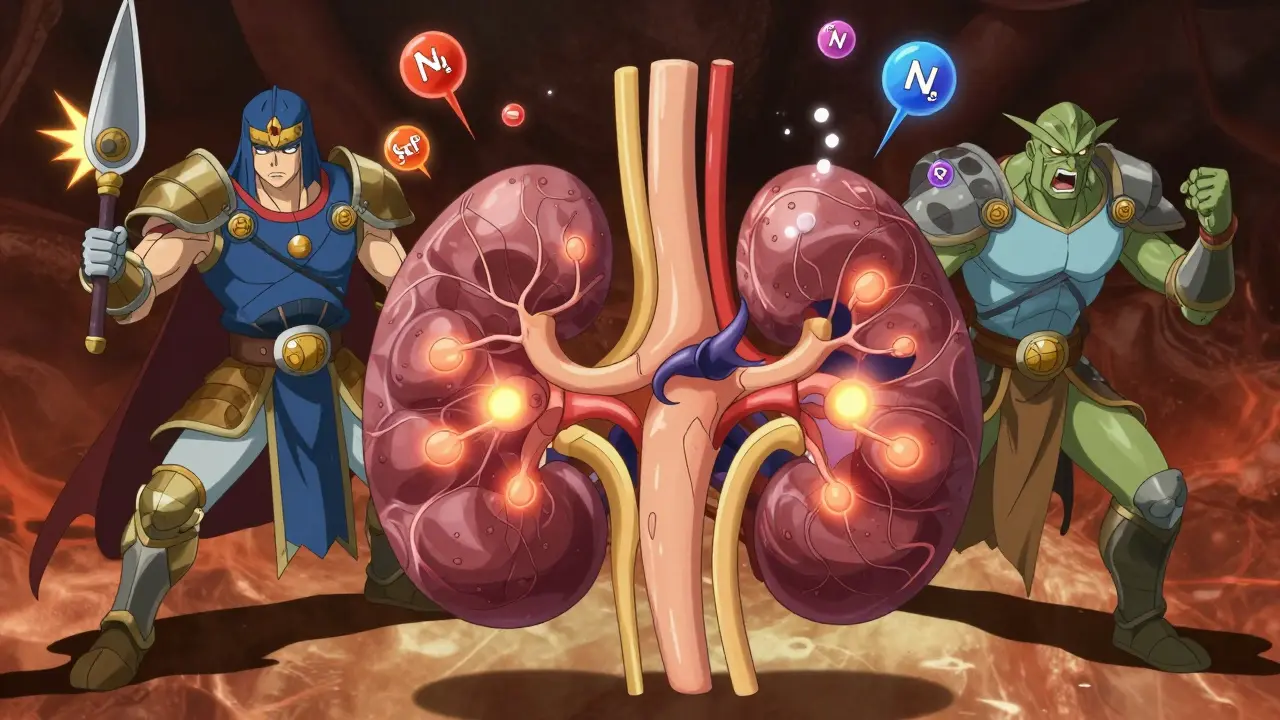
Diuretics don’t just make you pee more. They target specific parts of the kidney to block sodium reabsorption. When sodium doesn’t get reabsorbed, water follows it out of the body. That’s the goal. But sodium doesn’t travel alone-it’s tied to other electrolytes like potassium, chloride, and sometimes calcium. When you mess with sodium, you mess with the whole system.
There are three main types:
- Loop diuretics (like furosemide and bumetanide) act high up in the kidney, blocking the NKCC2 transporter. They’re strong-removing up to 25% of filtered sodium. That’s why they’re used in severe heart failure or kidney disease.
- Thiazide diuretics (like hydrochlorothiazide) work lower down, blocking the sodium-chloride channel. They’re milder, used mostly for high blood pressure. But they’re sneaky: they cause more hyponatremia than any other class.
- Potassium-sparing diuretics (like spironolactone and amiloride) do the opposite-they keep potassium in. They’re often added to other diuretics to balance things out. But they can push potassium too high, especially if you have kidney problems.
The numbers tell the story. A 2013 study of 20,000 ER patients found that people on loop diuretics were more than twice as likely to have dangerously low potassium. Thiazides? They tripled the risk of low sodium. And spironolactone? It made life-threatening high potassium over four times more likely.
Why Electrolyte Imbalances Are So Dangerous
Low potassium doesn’t just mean muscle cramps. It can trigger irregular heart rhythms-some fatal. A potassium level below 3.0 mmol/L can cause ventricular tachycardia. That’s not theoretical. It’s documented in emergency rooms across North America.
Low sodium is even more insidious. It doesn’t always cause obvious symptoms until it’s too late. People feel tired, confused, nauseous. Then they collapse. In the elderly, hyponatremia from thiazides is the most common reason for hospitalization related to diuretic use. One study showed that mild hyponatremia increased death risk by 45%. Severe cases? Nearly tripled it.
High potassium is the silent killer. It often has no warning signs until the heart stops. Spironolactone can raise potassium by 0.5 to 1.0 mmol/L on average. That might sound small. But in someone with kidney disease or on an ACE inhibitor, it’s enough to cause cardiac arrest.
And here’s the kicker: all of these electrolyte shifts independently raise the risk of dying in the hospital. The data doesn’t lie. Even mild imbalances are dangerous. That’s why checking blood levels isn’t optional-it’s mandatory.
Drug Interactions That Can Kill You
Diuretics rarely travel alone. They’re paired with other drugs for heart failure, diabetes, or pain. But some combinations are like lighting a fuse.
NSAIDs (ibuprofen, naproxen, celecoxib) are the silent saboteurs. They cut the effectiveness of loop diuretics by 30 to 50%. Why? They block prostaglandins, which keep blood flowing to the kidneys. Without that, the diuretic can’t reach its target. Patients end up with worsening swelling and no relief. And because the diuretic isn’t working, doctors often increase the dose-making electrolyte problems worse.
ACE inhibitors and ARBs (like lisinopril or losartan) are common in heart failure. They help protect the heart. But when combined with potassium-sparing diuretics, they turn potassium into a ticking bomb. A 2019 meta-analysis of over 12,000 patients showed the combination raised potassium by 1.2 mmol/L-far beyond safe limits. One patient in a 2023 Reddit thread described his 72-year-old father crashing with potassium at 6.8 after starting an antibiotic while on spironolactone. That’s not rare. It’s textbook.
Antibiotics like trimethoprim-sulfamethoxazole (Bactrim) act like potassium-sparing diuretics. They block sodium channels in the kidney-just like amiloride. When added to spironolactone, the effect multiplies. Emergency rooms see this every month. It’s not an accident. It’s predictable. And preventable.
Then there’s the new kid on the block: SGLT2 inhibitors (like dapagliflozin). Originally for diabetes, they’re now used in heart failure. They work in the proximal tubule, forcing sodium out. That sounds good-but it actually boosts the effect of loop diuretics by up to 190%. That’s powerful. But it also means more sodium and water loss, which can trigger dehydration and low blood pressure. The key? Use them together, but monitor closely.

When Diuretics Stop Working (And What To Do)
Many patients start on a diuretic and feel better. Then, after a few days or weeks, the swelling comes back. This isn’t “resistance.” It’s biology.
When you block sodium reabsorption in one part of the kidney, the rest of the nephron compensates. Loop diuretics trigger a 40% increase in sodium reabsorption downstream within 72 hours. That’s called the “braking phenomenon.”
The solution? Sequential nephron blockade. Combine a loop diuretic with a thiazide. Furosemide plus metolazone is a classic combo used in hospitals for severe fluid overload. The DOSE trial showed 68% of patients responded to this combo versus only 32% on loop diuretics alone.
But here’s the catch: this combo is dangerous. A 2017 study found 22% of patients on high-dose furosemide and metolazone developed acute kidney injury. Another 15% had severe hyponatremia. It’s not a DIY fix. It requires hospital-level monitoring.
That’s why guidelines now say: don’t escalate doses blindly. Add a second agent instead. And always check potassium and kidney function before and after.
What You Need to Do Right Now
If you’re on a diuretic, here’s what matters:
- Get your electrolytes checked-within 3 to 7 days of starting, then every 1 to 3 months if stable. More often if you’re on multiple drugs or have kidney disease.
- Avoid NSAIDs unless absolutely necessary. Use acetaminophen for pain instead.
- Never start a new medication-especially antibiotics or blood pressure pills-without asking your doctor about interactions.
- Know the warning signs: muscle weakness, irregular heartbeat, confusion, extreme fatigue, or swelling that won’t go down.
- Don’t skip follow-ups. Many people feel fine and stop going to the doctor. That’s when things go wrong.
For older adults, start low. A 12.5 mg dose of hydrochlorothiazide is often enough. Higher doses increase hyponatremia risk, especially in women over 65.
And if you’re on spironolactone? Make sure your kidney function and potassium are checked weekly for the first month. After that, every 3 months. The European Medicines Agency made this mandatory after seeing 14% of patients develop dangerous hyperkalemia.

The Future: Smarter Diuretic Use
The future isn’t about stronger diuretics. It’s about smarter ones.
In January 2024, the FDA approved a new fixed-dose combo: furosemide 40mg plus spironolactone 25mg. Called Diurex-Combo, it’s designed to reduce electrolyte swings. The DIURETIC-HF trial showed it cut 30-day heart failure readmissions by 22% and halved the rate of electrolyte emergencies.
And SGLT2 inhibitors are changing the game. They’re not diuretics-but they make diuretics work better, with fewer side effects. The 2023 ACC/AHA guidelines now recommend adding dapagliflozin to loop diuretics for heart failure patients. It reduces the need for high-dose diuretics by nearly a third.
Soon, AI-driven dosing tools will analyze your kidney function, urine markers, and medications to predict the best diuretic combo before you even start. Mayo Clinic’s pilot study showed this could cut electrolyte emergencies by 40%.
But for now, the best tool is still knowledge. Diuretics are powerful. They save lives. But they can also take them-if you don’t understand how they work, what they change, and what they clash with.
Can I take ibuprofen while on a diuretic?
No, not safely. NSAIDs like ibuprofen reduce blood flow to the kidneys, which makes loop and thiazide diuretics much less effective. This can lead to worsening fluid retention and higher doses of diuretics, increasing the risk of electrolyte imbalances. Use acetaminophen for pain instead, and always check with your doctor before taking any over-the-counter anti-inflammatory.
Why does my doctor keep checking my potassium levels?
Because potassium levels can swing dangerously with diuretics. Loop and thiazide diuretics lower potassium, which can cause heart rhythm problems. Potassium-sparing diuretics like spironolactone raise potassium, which can stop your heart. Regular blood tests catch these changes before they become emergencies. Most guidelines recommend checking potassium within the first week of starting or changing a diuretic, then every 1-3 months if stable.
I feel fine on my diuretic-do I still need blood tests?
Yes. Electrolyte imbalances often have no symptoms until they’re severe. You can have dangerously low sodium or high potassium without feeling sick. Many patients only realize something’s wrong after collapsing in the ER. Blood tests are the only way to catch these issues early. Even if you feel fine, stick to your monitoring schedule.
Can I switch from furosemide to a natural diuretic like dandelion root?
No. Natural products like dandelion root are not regulated, and their strength varies wildly. They can still cause electrolyte imbalances and interact with your other medications. More importantly, they don’t have the predictable, proven effect of prescription diuretics. Stopping your prescribed medication without medical supervision can lead to dangerous fluid buildup, high blood pressure, or heart failure flare-ups.
What should I do if I miss a dose of my diuretic?
If you miss a dose, take it as soon as you remember-unless it’s close to your next scheduled dose. Don’t double up. Missing one dose won’t cause immediate harm, but consistent missed doses can lead to fluid buildup and worsening symptoms. If you frequently forget, ask your doctor about a once-daily option or a pill organizer. Some newer combos, like Diurex-Combo, are designed for once-daily use to improve adherence.
Final Takeaway
Diuretics are not just pills. They’re tools that reshape how your body handles water and salt. Used right, they prevent hospitalizations. Used wrong, they cause them. The key isn’t avoiding them-it’s understanding them. Know your type. Know your risks. Know your interactions. And never skip the blood tests. Your heart-and your kidneys-depend on it.

10 Comments
Honestly, if you're taking diuretics without knowing the electrolyte risks, you're just playing Russian roulette with your heart. 🤡 I've seen too many patients in the ER because their PCP just 'prescribed and forgot.' This post? 10/10. The data is brutal, and the ignorance is lethal.
I'm a nephrology nurse, and I can't stress this enough: thiazides + elderly women = hyponatremia time bomb. We check sodium within 72 hours of starting, and we don't budge on that. If your doctor skips it, ask why. It's not optional-it's standard of care.
I used to think diuretics were just 'water pills' until my dad almost died from hyperkalemia after starting spironolactone and an antibiotic. He felt fine. No symptoms. Just... stopped breathing in his sleep. That’s not a scare tactic. That’s medicine. If you're on any of these, get your labs. Not next month. Not when you 'feel off.' Now.
I'm British, and I'm appalled that American doctors still prescribe NSAIDs with diuretics like it's nothing. Over here, we have clear guidelines-NICE says 'avoid entirely.' It's not even a debate. You wouldn't mix bleach and ammonia, so why mix ibuprofen and furosemide? This is basic pharmacology. What are they teaching in med school these days?
Wait-so you're telling me the FDA approved a combo drug... and it's called 'Diurex-Combo'? That sounds like something a pharmacy chain would slap on a discount bottle of herbal tea. And AI dosing tools? Please. Big Pharma is just trying to lock us into their ecosystem. They don't care if you live or die-they care if you keep buying. Check your potassium? Sure. But also check your trust in the system.
This is one of the clearest, most vital explanations of diuretic risks I’ve ever read. Thank you for taking the time to lay out the science without fluff. Many people don’t realize how quickly a routine medication can become a crisis. I’ll be sharing this with my aging parents. Knowledge truly is the best protection.
Ugh, I just had to drag my 70-year-old mom to the ER because she was on hydrochlorothiazide and took Advil for her arthritis. She thought 'it was just one pill.' One pill. One trip to the ICU. One near-death experience. And now she's got a 'medication coach' (me). If you're reading this and you're over 60-stop being lazy. Stop taking OTC painkillers without asking. Your kidneys aren't 25 anymore.
I'm curious-has anyone seen data on SGLT2 inhibitors reducing diuretic dependence in real-world settings outside clinical trials? The ACC/AHA guidelines sound great, but do they hold up when patients miss doses, have inconsistent diets, or can't afford the meds? I'd love to see a longitudinal study.
There's something poetic about how our bodies try to compensate for every intervention-like the kidney saying, 'You blocked sodium here? Fine, I'll just absorb it over there.' It's not defiance. It's survival. That's why medicine needs humility. We think we're fixing things, but we're just nudging a system that's been fine-tuned over millions of years. Maybe the real solution isn't more drugs... but better timing, better monitoring, and more listening to what the body's telling us through labs and symptoms. Diuretics aren't the enemy. Arrogance is.
I'm so tired of people saying 'natural remedies' are safe. Dandelion root? It's a diuretic. It has potassium-depleting effects. It interacts with blood thinners. It's not 'herbal'-it's pharmaceutical-grade chemistry you're too lazy to understand. If you're going to self-medicate, at least learn the pharmacokinetics. Otherwise, you're not being 'natural'-you're being reckless. And you're putting your family through trauma.
Write a comment