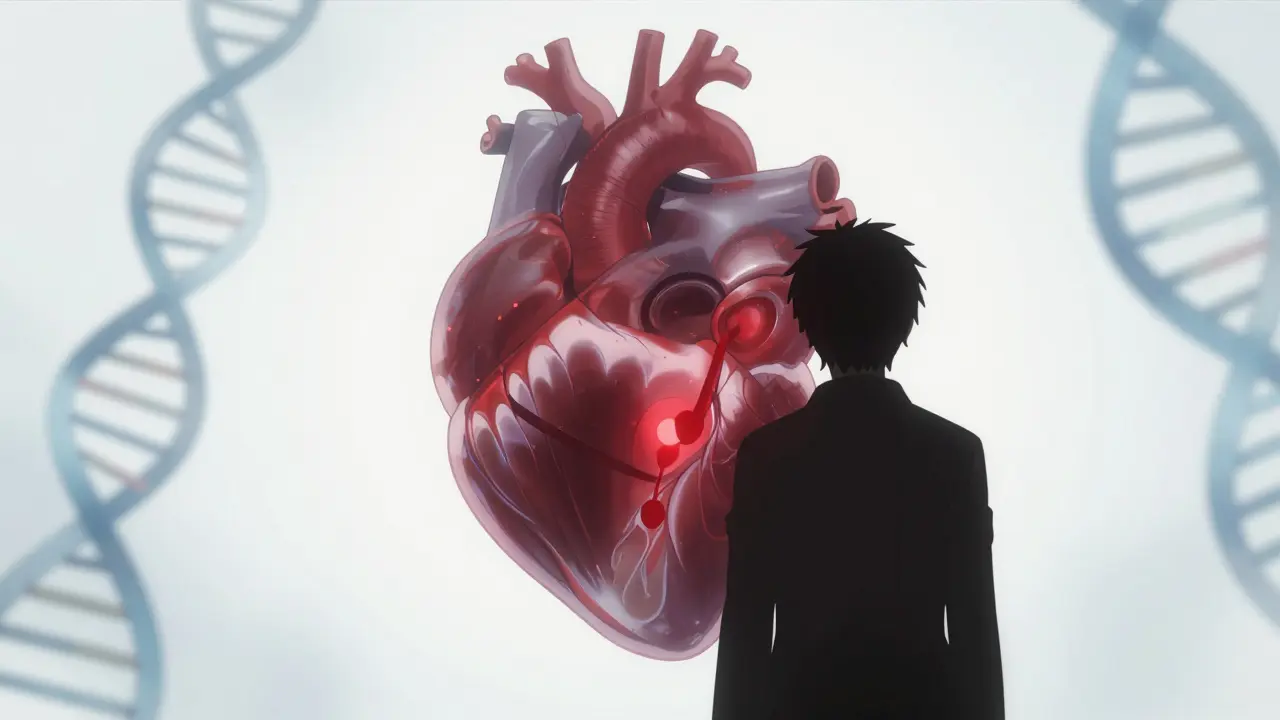
Imagine carrying a genetic time bomb that raises your risk of a heart attack by ten times compared to the average person. You wouldn’t know it was there until it went off. This is the reality for millions of people living with Familial Hypercholesterolemia, also known as FH. It is an inherited genetic disorder that causes dangerously high levels of low-density lipoprotein (LDL) cholesterol from birth. If left untreated, this condition leads to premature heart disease and can shorten life expectancy by decades. The good news? We know exactly how to stop it. With early detection and aggressive treatment, people with FH can live normal, healthy lives.
The problem isn't a lack of medical knowledge. It’s a massive gap in diagnosis. In the United States, only about 6% to 10% of people with FH are even aware they have it. That leaves roughly 1.3 million Americans walking around with undiagnosed, sky-high cholesterol levels. This article breaks down why this happens, how you can spot the signs, and what aggressive treatment actually looks like in 2026.
The Silent Threat: Understanding Familial Hypercholesterolemia
To understand FH, you have to look at your genes. Most people get high cholesterol from diet or lifestyle choices. People with FH get it because their body lacks the ability to remove LDL cholesterol from their blood efficiently. It’s an autosomal dominant disorder, which means you only need to inherit one faulty gene from one parent to develop the condition.
There are two main forms of this condition:
- Heterozygous FH (HeFH): This is the more common form, affecting about 1 in 200 to 250 people worldwide. You inherit the gene from one parent. Your LDL cholesterol levels are high from birth, often exceeding 190 mg/dL in adults and 160 mg/dL in children.
- Homozygous FH (HoFH): This is rare and much more severe, affecting about 1 in 160,000 to 1 million people. You inherit the faulty gene from both parents. LDL levels can exceed 400 mg/dL. Without extreme intervention, heart attacks can occur in childhood.
The scary part? HeFH often has no physical symptoms in young people. You might look and feel perfectly healthy while plaque builds up in your arteries. By the time symptoms like tendon xanthomas (lumps on elbows or knees) or corneal arcus (a white ring around the eye) appear, significant damage may have already occurred.
Why Early Detection Is Non-Negotiable
Time is artery tissue. Every year you spend with untreated high LDL in FH is a year of accelerated plaque buildup. Research from the Netherlands and South Africa shows that if you start treating FH early-sometimes as early as age 2-you can achieve a nearly normal life expectancy. Wait until adulthood, and the clock ticks faster.
So, how do we find these cases before the first heart attack? There are two primary strategies: universal screening and cascade screening.
Universal Screening for Children
The American Heart Association and the American Academy of Pediatrics recommend universal lipid screening for all children between ages 9 and 11. This doesn’t mean every child needs genetic testing. It means a simple blood test to check total cholesterol and LDL levels. If a child’s LDL is above 160 mg/dL, it triggers further investigation. This method catches cases where family history is unknown or incomplete.
Cascade Screening: The Family Ripple Effect
If one person is diagnosed with FH, their family members are at immediate risk. Since FH is autosomal dominant, each sibling and child of an affected person has a 50% chance of having it too. Cascade screening involves testing first-, second-, and third-degree relatives.
This is incredibly efficient. According to the Centers for Disease Control and Prevention (CDC), cascade screening is one of the most cost-effective public health interventions available. However, implementation is lagging. In the US, only 2.9% of adults diagnosed with FH have their relatives screened. Compare that to the Netherlands, where systematic programs have identified over 18,000 cases since the 1990s. The difference is policy and awareness.
| Feature | Universal Screening | Cascade Screening |
|---|---|---|
| Target Group | All children aged 9-11 | Relatives of diagnosed patients |
| Efficiency | Low yield per test, but catches unknown cases | High yield; 50% of first-degree relatives affected |
| Cost-Effectiveness | Moderate | Very High ($13,500 per QALY gained) |
| Current Adoption in US | Low (only 12% of pediatricians screen routinely) | Very Low (30-40% of eligible families tested) |
Diagnosis: Beyond the Blood Test
A high LDL number is a red flag, but it’s not proof. Many people have high cholesterol due to diet or other conditions. To confirm FH, doctors use clinical criteria and genetic testing.
Clinical tools like the Dutch Lipid Clinic Network (DLCN) criteria help doctors assess likelihood based on blood levels, physical signs, family history, and age of onset. But the gold standard is molecular genetic testing. This identifies the specific mutation in genes like LDLR, APOB, or PCSK9. While expensive, genetic confirmation is crucial for cascade screening because it allows precise DNA testing for relatives rather than just repeated blood tests.
New technology is helping here too. A 2023 study published in the Journal of the American Heart Association showed that machine learning algorithms analyzing electronic health records can identify potential FH cases with 92% sensitivity. These AI tools look at patterns in age, sex, LDL levels, and family history to flag patients who should be referred for genetic testing. This could revolutionize case-finding in busy clinics.

Aggressive Treatment: Lowering LDL to Safe Levels
Once diagnosed, the goal is clear: lower LDL cholesterol drastically and keep it there. For FH patients, “normal” cholesterol ranges don’t apply. The European Society of Cardiology recommends getting LDL below 100 mg/dL in adults and below 135 mg/dL in children, with at least a 50% reduction from baseline.
Achieving this usually requires a multi-drug approach:
- High-Intensity Statins: Drugs like atorvastatin or rosuvastatin are the foundation. They block the liver’s production of cholesterol. For FH patients, maximum tolerated doses are often needed.
- Ezetimibe: Added if statins alone aren’t enough. It blocks cholesterol absorption in the intestines.
- PCSK9 Inhibitors: These injectable drugs (like evolocumab or alirocumab) boost the liver’s ability to clear LDL from the blood. They are highly effective for FH patients who don’t reach targets with oral meds.
- Inclisiran: Approved by the FDA in 2021, this is a game-changer. It’s a small interfering RNA injection given only twice a year. It silences the gene that produces PCSK9, leading to sustained LDL lowering. This improves adherence significantly compared to weekly injections.
Lifestyle changes matter, but they aren’t enough on their own. A heart-healthy diet and regular exercise support medication, but they cannot fix the genetic defect causing FH. Don’t let anyone tell you to “just eat better” instead of taking prescribed medication. That advice is dangerous for FH patients.
Who Is at Higher Risk?
FH affects all ethnicities, but certain populations have higher prevalence rates due to founder effects (where a mutation spreads through a small ancestral group). If you belong to any of these groups, be extra vigilant:
- Afrikaners: 1 in 70
- French Canadians: 1 in 80
- Ashkenazi Jews: 1 in 67
- Lebanese Christians: 1 in 85
Knowing your ancestry can be a critical clue. If you have family history of early heart disease (men under 55, women under 65) or stroke, ask your doctor about FH screening immediately.

Overcoming Barriers to Care
Despite clear guidelines, barriers remain. Many primary care physicians aren’t aware of FH or how to diagnose it. There’s a shortage of lipid specialists-only one per 1.5 million people in the US. Insurance coverage for genetic testing and newer drugs like PCSK9 inhibitors can also be inconsistent.
Patient advocacy plays a huge role. Organizations like the FH Foundation report that 72% of diagnosed individuals experience delays of five or more years. Average age of diagnosis is still 44, despite recommendations for childhood screening. Educating yourself and pushing for testing when your numbers are high is essential.
The economic argument is strong too. Untreated FH costs the healthcare system billions in emergency care and procedures. Preventive screening saves money. A 2021 study calculated that cascade screening costs $13,500 per quality-adjusted life year gained, well below the $50,000 threshold considered cost-effective in US healthcare.
What You Can Do Today
If you’re worried about FH, take action now. Check your latest lipid panel. If your LDL is above 160 mg/dL as a child or 190 mg/dL as an adult, talk to your doctor. Ask about genetic testing. If you’ve been diagnosed, ensure your family members are screened. Share your results. You might save a relative’s life.
Familial Hypercholesterolemia is serious, but it’s manageable. With early detection and aggressive treatment, the genetic time bomb can be defused. Don’t wait for symptoms. High cholesterol doesn’t hurt. Heart attacks do.
What is the difference between heterozygous and homozygous familial hypercholesterolemia?
Heterozygous FH (HeFH) is caused by inheriting one faulty gene from one parent. It affects about 1 in 250 people and typically presents with LDL levels over 190 mg/dL in adults. Homozygous FH (HoFH) is rarer (1 in 160,000+) and occurs when a person inherits faulty genes from both parents. HoFH causes extremely high LDL levels (over 400 mg/dL) and can lead to heart attacks in childhood without intensive treatment.
At what age should children be screened for familial hypercholesterolemia?
The American Heart Association and American Academy of Pediatrics recommend universal lipid screening for all children between ages 9 and 11. If a child has a strong family history of FH or early heart disease, screening can begin as early as age 2.
Is genetic testing necessary for diagnosing familial hypercholesterolemia?
Genetic testing is considered the gold standard for confirming FH because it identifies the specific mutation. However, many patients are diagnosed clinically using criteria like the Dutch Lipid Clinic Network score based on blood tests and family history. Genetic testing is especially important for cascade screening to accurately test relatives.
Can diet and exercise cure familial hypercholesterolemia?
No. FH is a genetic disorder, so lifestyle changes alone cannot normalize cholesterol levels. While a heart-healthy diet and exercise are beneficial for overall health, FH patients require medication such as statins, ezetimibe, or PCSK9 inhibitors to lower LDL cholesterol to safe levels and prevent heart disease.
What is cascade screening and why is it important?
Cascade screening is the process of testing family members of a person diagnosed with FH. Since FH is autosomal dominant, each first-degree relative has a 50% chance of having the condition. Cascade screening is highly cost-effective and helps identify undiagnosed cases early, allowing for timely treatment to prevent premature heart attacks.
How effective is inclisiran for treating familial hypercholesterolemia?
Inclisiran is a twice-yearly injection approved by the FDA in 2021 that significantly lowers LDL cholesterol by silencing the PCSK9 gene. It is highly effective for FH patients who struggle with adherence to daily pills or weekly injections, providing sustained LDL reduction and improving long-term cardiovascular outcomes.
