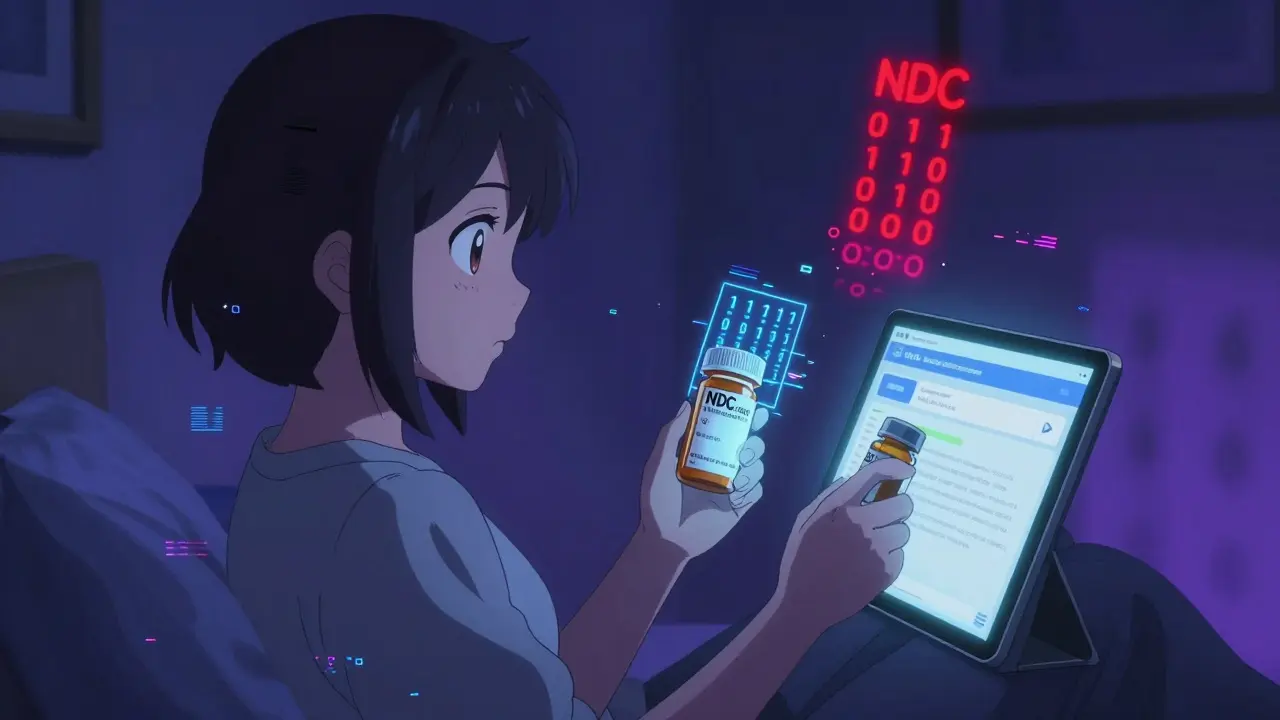
Every year, millions of people in the U.S. take prescription meds without knowing if they’re real or fake. Counterfeit drugs don’t just miss the active ingredient-they can contain rat poison, cement, or toxic chemicals. The FDA doesn’t hand out public checklists for this, but it does run powerful databases that let you verify if a drug is legitimate. You don’t need to be a pharmacist to use them. You just need to know where to look.
What the FDA Databases Actually Do
The FDA doesn’t just approve drugs. It tracks every single prescription medication sold in the U.S. through three main systems: the NDC Directory, the Drug Establishments Current Registration Site, and the Electronic Drug Registration and Listing System (eDRLS). Together, they form a digital paper trail for every pill, injection, and capsule.
The NDC Directory is the heart of it all. Every approved drug has a unique 10- or 11-digit number called the National Drug Code. That number breaks down into three parts: who made it (labeler code), what the drug is (product code), and how it’s packaged (package code). If the NDC on your bottle doesn’t match what’s in the FDA’s database, it’s not legitimate.
These aren’t static lists. The NDC Directory updates every single day. If a company stops making a drug, it gets removed. If a new generic hits the market, it shows up within 24 hours. That’s why you can’t trust Google results or random pharmacy websites-only the FDA’s official database gives you real-time accuracy.
How to Check If a Drug Is Real
Here’s how to verify a medication in under five minutes:
- Find the NDC on the drug packaging. It’s usually printed near the barcode, sometimes labeled “NDC.”
- Go to the FDA’s NDC Directory (you can search by NDC, drug name, or company).
- Enter the full NDC number. Don’t guess. If it’s 10 digits, don’t add a zero. If it’s 11, don’t drop one.
- Check the results. If the drug shows up with the correct manufacturer, strength, and dosage form-it’s verified.
- If nothing comes up, or the details don’t match your bottle, stop using it.
Let’s say you bought a bottle of metformin from an online pharmacy with no physical address. The label says NDC 0054-4567-89. You search that in the NDC Directory. The FDA shows that NDC belongs to a company called “PharmaCo Solutions” that stopped listing that product in 2021. That’s a red flag. Either the bottle is expired, fake, or stolen.
Another check: look at the manufacturer. If the company name looks weird-like “MediCare USA LLC” instead of “Teva Pharmaceuticals”-search the company name in the Drug Establishments Current Registration Site. If the company isn’t registered with the FDA, it’s not legal. And if it’s registered but not active? That’s another warning.
Spotting Fake Drugs in the Wild
Counterfeiters don’t just sell pills in back alleys anymore. They mimic real packaging, print fake barcodes, and even fake FDA logos. But they can’t fake the NDC system.
Here are five signs a drug might be fake:
- The NDC doesn’t match the FDA’s database.
- The packaging has blurry text, misspelled words, or mismatched colors.
- The pill looks different than the last bottle you had-different shape, color, or imprint.
- The pharmacy doesn’t have a physical address, or won’t let you speak to a pharmacist.
- The price is way too low. A 30-day supply of insulin for $15? That’s not a deal. That’s a trap.
One real case from 2022 involved fake versions of Eliquis (apixaban). The counterfeit pills had the right color and shape, but the NDC was copied from a different drug entirely. People took them thinking they were getting blood thinners. Instead, they got sugar and chalk. One patient had a stroke.
The FDA doesn’t just track these cases-they use the data to shut down operations. In 2022, they seized over 1.2 million fake pills from online sellers. Most came from overseas labs in China and India. The FDA’s databases helped trace them back to the source.
Why the System Isn’t Perfect
Yes, the FDA’s system is the best in the world. But it’s not foolproof.
First, the NDC doesn’t track individual pills. It tracks product types. So if a legitimate bottle gets tampered with-say, someone swaps out 10 pills and puts in fakes-the system won’t catch it unless the whole batch is flagged.
Second, not everyone plays by the rules. In 2021, only 67% of pharmacies had systems that could talk to manufacturers’ verification networks. That means if you buy from a small clinic or an unlicensed online seller, there’s no digital handshake to confirm the drug’s origin.
Third, compounded drugs-meds mixed by a pharmacist for a specific patient-don’t have to go through the same registration process. That’s a loophole. Counterfeiters have started selling fake compounded insulin and hormone treatments, knowing they’re harder to trace.
And while 98% of big manufacturers comply, only about 65% of small pharmacies and mail-order outlets do. That’s where most fake drugs slip through.
What You Can Do Beyond Checking the NDC
Use the FDA’s tools, but don’t stop there.
- Buy only from licensed U.S. pharmacies. Look for the VIPPS seal (Verified Internet Pharmacy Practice Sites).
- Ask your pharmacist to confirm the NDC matches the manufacturer’s label.
- Don’t buy from websites that sell drugs without a prescription. That’s illegal-and almost always fake.
- Report suspicious drugs to the FDA’s MedWatch program. You can do it online in 10 minutes.
One patient in Florida noticed her blood pressure pills looked different. She checked the NDC, found it didn’t match, and called the FDA. They traced it to a shipment from a warehouse in New Jersey that had been hacked. The company was shut down. Three weeks later, another batch of the same fake pills was found in California.
That’s how the system works: one person checking, one person reporting, and the FDA acting.
What’s Changing in 2025 and Beyond
The FDA is upgrading the system. By 2026, all NDCs will be 12 digits long. That means more precision, fewer errors, and better tracking.
By 2025, every prescription bottle will need a unique serial number-like a barcode that’s different for each pill. That’s the final step of the Drug Supply Chain Security Act. It won’t stop every fake, but it will make it 10 times harder to get away with.
AI tools are also being tested. IBM and Google are training algorithms to spot fake packaging by analyzing images of pill bottles. The system compares the label’s font, color shade, and barcode structure to the FDA’s database. Early tests show 99% accuracy.
But the biggest change? Transparency. The FDA plans to add photos of real pills to the NDC Directory by late 2024. So you won’t just see a code-you’ll see what the real drug looks like. No more guessing if your pill matches the picture online.
Final Takeaway: Your Safety Is in Your Hands
Counterfeit drugs are a growing threat. But you’re not powerless. The FDA built these systems so you can protect yourself. You don’t need a degree in pharmacology. You just need to know how to use the tools they’ve already given you.
Next time you pick up a prescription, take 60 seconds. Find the NDC. Go to the FDA’s site. Confirm it’s real. That’s not paranoia. That’s how you stay alive.
Can I trust online pharmacies that offer cheap medications?
No, not unless they’re VIPPS-certified. Most cheap online pharmacies sell fake or unapproved drugs. The FDA estimates over 96% of websites selling prescription drugs without a prescription are illegal. Even if the packaging looks real, the NDC won’t match in the FDA’s database. Always buy from licensed U.S. pharmacies with a physical address and a licensed pharmacist on staff.
What if the NDC on my pill bottle doesn’t show up in the FDA database?
Stop taking the medication immediately. It could be expired, counterfeit, stolen, or mislabeled. Contact your pharmacist and report it to the FDA’s MedWatch program. You can file a report online at fda.gov/medwatch. The FDA uses these reports to track fake drug patterns and shut down operations. Even if you’re not sure, report it-better safe than sorry.
Are generic drugs safe to use?
Yes, if they’re FDA-approved. Generic drugs must meet the same strict standards as brand-name drugs in strength, purity, and effectiveness. Check the NDC in the FDA’s database to confirm the generic manufacturer is listed. If it’s not, it’s not legal. Some generics come from overseas facilities with poor quality control-always verify the NDC before taking it.
How do I report a suspicious drug to the FDA?
Go to fda.gov/medwatch and click “Report a Problem.” You can file a report online in under 10 minutes. You’ll need the drug name, NDC, lot number, and where you bought it. You don’t need to know if it’s fake-just that something seems wrong. The FDA investigates every report. In 2022, over 3,000 reports led to 147 major drug recalls.
Do I need to check every prescription I get?
If you’re getting a new prescription, especially from a new pharmacy or online source-yes. If you’ve been taking the same drug for years from the same pharmacy, and the packaging looks the same, you can skip it. But if anything changes-the color, the shape, the taste, the NDC-check it. Counterfeiters often target drugs with high demand: insulin, heart meds, antibiotics, and painkillers.
Is the FDA’s NDC Directory free to use?
Yes, completely free. The FDA’s NDC Directory, Drug Establishments site, and eDRLS are public tools. No sign-up, no login, no fees. You can search from any device, anytime. These are taxpayer-funded tools built for your safety. Use them.
Next steps: Bookmark the FDA’s NDC Directory now. Keep it open on your phone. The next time you pick up a prescription, don’t just take the pill-verify it. That one habit could save your life.

14 Comments
The FDA doesn't care about you unless you're rich enough to afford their system
They track pills but not the people who need them
My grandma took fake metformin for six months before anyone noticed
Who's gonna check the NDC when you're on a fixed income and the pharmacy is 40 miles away?
They give us tools but no access
That's not safety
That's a luxury
This is so important and I’m so glad someone laid it out like this
I showed my mom how to check her blood pressure med last week and she cried because she didn’t know she could do it
Thank you for making this feel doable
Not everyone has a pharmacist in the family
But everyone can type a number into a website
You just need to know it’s possible
Oh, so the FDA is our savior now, are they?
Let me guess, next you’ll tell me the CDC isn’t hiding the truth about insulin prices, and the NIH isn’t secretly owned by Big Pharma, and the FDA’s database isn’t just a PR stunt to make you feel safe while they let Chinese labs flood the market with counterfeit pills that contain fentanyl-laced chalk and asbestos dust-yes, ASBESTOS-because they’re too busy giving awards to pharmaceutical CEOs who donate to their retirement funds
And don’t even get me started on the fact that the NDC system was hacked in 2020 and no one told you because the FDA’s ‘real-time updates’ are just automated bots that republish old data from 2018
They’re not protecting you-they’re controlling you
And if you believe this is the whole story, you’re the real counterfeit drug
Excellent breakdown. Truly. The NDC Directory is one of the most underutilized public health tools in modern America.
And yes, I'm being sarcastic when I say 'underutilized'-because if 10% of Americans used it, the counterfeit market would collapse overnight.
But here we are, trusting Amazon sellers with $5 insulin and wondering why people are dying.
Also, the 2026 12-digit NDC upgrade? Brilliant. It’s like giving every pill a Social Security number.
Finally, someone in government thought ahead.
...I’m still waiting for them to fix Medicare, but hey, progress is progress.
Man, I used to think checking pills was overkill
Then my buddy’s dad took a fake Xanax that had lead in it
Now I check every script like it’s my own life on the line
It’s not paranoia
It’s just… knowing how the game’s rigged
And if you’re not checking, you’re playing Russian roulette with your organs
One minute you’re fine
Next minute you’re in the ER wondering why your kidneys hate you
It is amusing how Americans believe that their government is capable of protecting them from foreign corruption.
India and China produce 80% of the world’s pharmaceuticals.
Yet you trust a database built by a bureaucracy that cannot even fix its own postal service?
How naive.
The FDA is a political instrument, not a guardian.
True safety lies in self-reliance and rejecting Western dependency.
Why not grow your own herbs? Why not learn Ayurveda?
Or are you too addicted to your plastic pill bottles?
My aunt in Mumbai gets her meds from a local clinic and never checks anything
She’s fine
Maybe the system isn’t broken, maybe we’re just overthinking it?
Not everyone has the time or tech to look up NDCs
And not every country needs to play by your rules
So the FDA’s got a database, cool
Meanwhile, my cousin’s kid got fake antibiotics from a Walmart pickup and ended up in ICU
And the pharmacy? ‘Sorry, we didn’t know’
Guess what? They don’t care
And neither does the FDA until someone dies
So yeah, check the NDC
But don’t expect justice
Just expect to be the only one looking
Y’all need to stop waiting for someone else to save you
Grab your phone. Open the FDA site. Type in that NDC.
It takes 30 seconds.
That’s less time than you spend scrolling TikTok
And if you do it once, you’ll do it every time
It’s not hard
It’s just habit
And habits save lives
So go do it. Right now. I’ll wait.
I love how this post doesn’t just give info-it gives power
Like, you’re not just telling people how to check a code
You’re saying: ‘You are not helpless’
And that matters
Because when you’re sick, scared, and broke
Knowing you can verify your own medicine?
That’s not just safety
That’s dignity
Thank you for writing this like someone who actually cares
Minor correction: The Drug Establishments Current Registration Site is not the same as the eDRLS. The latter is the submission portal; the former is the public-facing registry. They’re linked but distinct. Also, the NDC Directory does not include OTC drugs unless they’re part of a prescription combo. Important distinction for accuracy.
Let’s be real-NDCs are a joke. They’re just alphanumeric cookies slapped on pills by manufacturers who don’t even know what’s inside. The FDA doesn’t test the drugs-they just approve the paperwork. The whole system is a shell game. You think you’re verifying a pill? You’re verifying a spreadsheet. And if the manufacturer lied on Form 2654? Congrats, you just verified a lie. The only real check is a lab test-and no one’s got time for that. So yeah, check the NDC. But know you’re being played.
People die because they trust machines
Not because they don’t check NDCs
They die because they forgot how to listen to their bodies
Medicine is not a barcode
It is a covenant between soul and science
And when you reduce life to a number, you lose the meaning
Check the code if you must
But pray for wisdom too
It is with profound sorrow and a sense of moral urgency that I address this matter.
The FDA, while ostensibly a guardian of public health, operates under the shadow of corporate influence, regulatory capture, and bureaucratic inertia.
The NDC system, though technically robust, is rendered impotent by the very entities it seeks to regulate-pharmaceutical conglomerates who exploit loopholes in the Drug Supply Chain Security Act.
Moreover, the proposed 12-digit NDC and serialized barcodes, while technologically impressive, are merely digital veneers over a system fundamentally compromised by profit motives.
And yet, we are told to ‘trust the system’-as if trust, not transparency, is the cornerstone of public safety.
This is not progress.
This is performance.
And the people? We are the unwitting subjects in a pharmacological theater of the absurd.
Write a comment