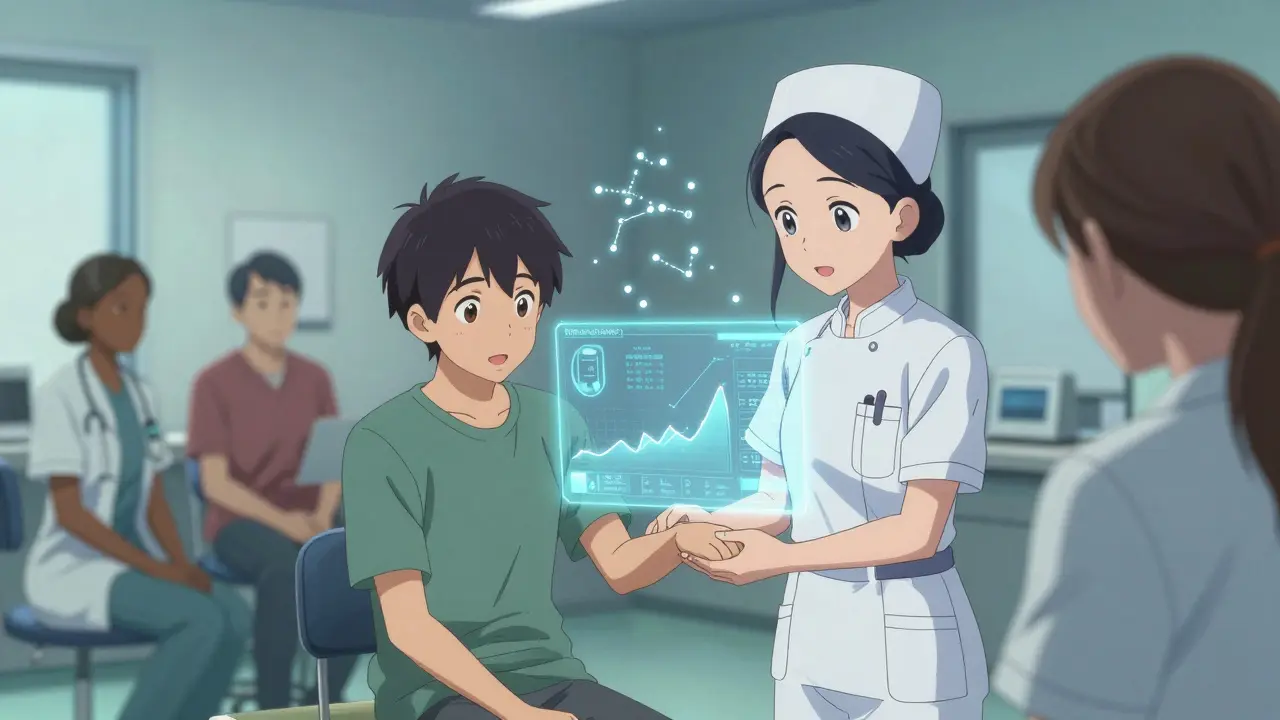
Healthcare providers aren’t just adapting to change-they’re redefining what it means to care for people. By 2025, the attitudes of doctors, nurses, and allied health staff have shifted in ways that would’ve seemed impossible a decade ago. It’s no longer about doing more with less. It’s about doing different-with new tools, new teams, and a new understanding of who holds the power in the patient-provider relationship.
Patients Are Showing Up With Data-Providers Have to Keep Up
Five years ago, a patient might walk into an appointment with a list of symptoms: "My knee hurts," or "I’m tired all the time." Today, they arrive with a full report: step counts from their Apple Watch, overnight oxygen levels from a Fitbit, glucose trends from a Continuous Glucose Monitor, and even notes from a mental health app tracking mood swings. This isn’t the future anymore. It’s Tuesday. Providers who resist this shift are falling behind. Those who embrace it are seeing faster diagnoses, fewer repeat visits, and stronger trust. A 2025 study from the NIH found that physicians using integrated consumer health data made treatment decisions 40% faster than those relying solely on patient recall. Why? Because the data doesn’t lie. It doesn’t forget. It doesn’t get nervous and downplay symptoms. This isn’t just about gadgets. It’s about mindset. Providers are moving from being the sole experts to being guides who interpret real-time, personalized health signals. That means learning how to read wearables like a chart, asking questions like, "What did your sleep tracker say last week?" instead of "How well did you sleep?" And it means accepting that patients are now co-authors of their own care plans.AI Isn’t Coming-It’s Already in the Room
The big fear five years ago was that AI would replace clinicians. The reality? AI is replacing the boring stuff so clinicians can focus on what matters. Today, AI handles prior authorizations, flags abnormal lab results before a doctor even opens the chart, and even drafts initial patient summaries based on voice notes from the visit. In emergency rooms, AI triage tools now help nurses prioritize cases with 92% accuracy, based on real-time vitals and symptom patterns. But here’s the catch: providers aren’t being trained to fear AI. They’re being trained to use it. Forrester’s 2025 report found that clinics with strong AI governance-clear rules on fairness, privacy, and accountability-saw 35% higher staff satisfaction. Why? Because when AI is used responsibly, it doesn’t replace people. It empowers them. The key shift? From "Is this AI reliable?" to "How do we make sure our team knows how to use it right?" Hospitals are now running weekly AI huddles-not to fix bugs, but to share stories: "This tool flagged a hidden infection in a patient who didn’t even mention fever. Here’s how we followed up."
Workforce Changes Aren’t Just About Hiring-They’re About Valuing
There’s a quiet revolution happening in the back offices and break rooms of clinics across the country. Allied health professionals-medical assistants, pharmacy techs, phlebotomists-are no longer seen as support staff. They’re being treated as essential partners. According to the National Healthcareer Association’s 2025 outlook, 70% of employers now require certifications for these roles. And it’s not just a box to check. Over 71% of employers have raised pay for staff who earn credentials. Some clinics now offer $2,000 bonuses for completing a phlebotomy certification. Others give paid time off for continuing education. This isn’t charity. It’s strategy. With 53% of healthcare employers saying employee retention is their biggest challenge, investing in staff isn’t optional-it’s survival. And it’s working. Clinics that tied certification to career paths saw 28% lower turnover in 2024 than those that didn’t. The new model? Teams that work together, not in silos. A nurse practitioner doesn’t just consult a medical assistant-they co-design patient flow. A pharmacist doesn’t just fill scripts-they sit in on chronic care meetings. The provider’s role is no longer to direct every move. It’s to enable the whole team.Care Is Moving-And Providers Are Following
The clinic isn’t the center of care anymore. It’s just one node in a much bigger network. Patients want care where they are: at home, at work, in the car. Providers are responding with virtual visits that feel personal, mobile health units that show up in underserved neighborhoods, and AI-powered chatbots that guide diabetics through insulin adjustments between appointments. PwC’s 2024 analysis calls this the "digital front door"-a single portal where patients can schedule, pay, message their care team, and upload data. And it’s changing how providers think about time. Instead of measuring productivity by how many patients they see in a day, they’re measuring outcomes: Did the patient’s blood pressure drop? Did they refill their meds? Did they feel heard? This shift is hardest for older providers who grew up in the paper-chart era. But the ones who’ve adapted say the same thing: "I used to feel like I was rushing. Now I feel like I’m actually helping."
It’s Not About Tech-It’s About Trust
Here’s the paradox: the more tech we add, the more we need humanity. IPG Health’s 2025 research found that 68% of patients say they’d rather talk to a real person-even if it takes longer-than get a perfectly worded AI-generated response. They don’t want robots. They want someone who understands their fear, their frustration, their hope. That’s why transparency is now a competitive edge. Providers who say, "This tool helped me spot something you missed," build more trust than those who pretend they didn’t use AI at all. Patients appreciate honesty. They want to know when technology is helping, not hiding. The most successful providers in 2025 aren’t the ones with the fanciest tech. They’re the ones who use tech to deepen human connection. They ask, "What did this data tell you about your week?" instead of just, "What’s your A1C?"What’s Next? The Quiet Transformation
The biggest change isn’t flashy. It’s quiet. It’s the nurse who now starts every visit by asking, "What’s one thing you want to fix this month?" instead of "What’s wrong?" It’s the doctor who spends 10 minutes explaining how the AI flagged a potential issue-not to scare the patient, but to show them how technology can be a partner in care. It’s the clinic that pays for its front desk staff to get certified in basic EKG interpretation because they noticed those staff members were the first to spot when a patient looked pale or shaky. This isn’t about keeping up with trends. It’s about redefining purpose. Providers aren’t just treating illness anymore. They’re helping people live better, longer, and with more control over their own health. The ones who succeed won’t be the ones with the most AI. They’ll be the ones who remember that behind every data point is a person trying to make sense of their body, their life, and their future.
13 Comments
So now we’re glorifying wearables like they’re holy scrolls? My grandma’s knee pain didn’t need an Apple Watch to be real. This whole thing feels like tech bros trying to sell us a new religion with more data points and less human touch.
While the article presents a compelling narrative regarding the integration of consumer-generated health data and artificial intelligence into clinical practice, it is imperative to acknowledge the structural and ethical challenges that accompany such a paradigm shift. Without robust regulatory oversight, equitable access, and standardized interoperability protocols, these advancements risk exacerbating existing disparities in healthcare delivery.
AI is already being used to manipulate patient records to justify insurance denials. You think those "flags" are for care? Nah. They’re for cost-cutting. The same companies that sell you Fitbits are the ones writing the algorithms that decide who gets treatment. This isn’t progress-it’s surveillance with a stethoscope.
they say patients are co authors but honestly most of em just copy paste reddit threads and think its medical advice. i had a guy come in with a 12 page google doc on why his headache was a brain tumor. i said no. he said i was ai trained. i said no im human and you need to chill
kinda reminds me of when we all thought smartphones were gonna make us smarter but really they just made us scroll more. same thing here. tech gives us more data but does it make us better at listening? i dont know. i just know my last doc spent more time staring at a screen than at me
What’s fascinating isn’t just the tech-it’s the quiet recalibration of identity. Providers are no longer oracles. They’re translators. Interpreters between the cold logic of algorithms and the messy, emotional reality of being human. That shift from authority to ally is profound. It’s not about replacing intuition with data-it’s about expanding intuition with data. And that requires humility. The best providers I’ve met? They don’t say "I know what’s wrong." They say "Let’s figure this out together." That’s not a trend. That’s evolution.
you think this is progress? you think your fancy watch and ai are saving lives? look at the real world. people are dying because they can't afford insulin while some doctor in california is checking their sleep score like it's fantasy football. this is capitalism dressed in scrubs. they want you to think tech is the solution when the real problem is greed
i think the wearables are cool but like i had a guy in my office last week who had 14 different apps tracking his heart rate and he was panicking because one app said he had atrial fibrillation and the other said he was fine and he was crying in my office and i had to explain to him that his phone is not a cardiologist
everyone’s acting like this is revolutionary. it’s not. it’s just corporate healthcare with more buzzwords. they call it "co-authoring" but really they’re outsourcing diagnosis to consumers so they can charge more for less work. the real win here? insurance companies. they’re the ones who funded all this tech so they can deny care faster.
oh my gosh this made me cry. i work in a rural clinic and we got a mobile unit last year and last week a little girl who hadn’t seen a doctor in two years came in with her mom and the nurse used the AI tool to spot her asthma early and now she’s breathing better and her mom said "i didn’t know we could get help like this" and i just… i just want more of this. this is why we do it. not the tech. the connection. the hope.
The romanticization of the "quiet transformation" is dangerously naive. The article ignores the systemic burnout of frontline staff who are now expected to become data analysts, tech trainers, and emotional counselors-all while being underpaid and understaffed. This is not empowerment. It is exploitation dressed in mindfulness jargon. The real question is: who is bearing the psychological cost of this "human-centered" revolution?
we dont need all this fancy stuff. we need more american doctors. not foreign certs and not ai bots. we need people who know this country and its people. this is why our hospitals are failing. too much tech too little patriotism
you know what’s wild? in Nigeria we don’t even have reliable electricity but we’ve got people using solar-charged pulse oximeters and WhatsApp groups to track hypertension. the future isn’t in Silicon Valley. it’s in the back alleys where people just… figure it out. tech is just a tool. the real magic? community.
Write a comment