
When a patient picks up their prescription and sees a pill that looks completely different from what they’ve been taking, panic can set in. Generic medications aren’t just cheaper-they’re the same medicine. But patients don’t always know that. That’s where nurses come in.
Why Generic Medications Cause Confusion
Patients often think a pill’s color, shape, or size tells them something about its strength or quality. A white oval pill becomes a blue capsule, and suddenly, they’re convinced it’s weaker. Or worse-they think it’s fake. The truth? The FDA requires generic drugs to have the exact same active ingredient, strength, dosage form, and route of administration as the brand-name version. They must also prove they’re absorbed into the body at the same rate and to the same extent-within 80% to 125% of the brand. That’s called bioequivalence. It’s not a guess. It’s science. But patients don’t hear about bioequivalence from the pharmacy label. They hear about cost savings. And when they see their insurance switching them to a cheaper version, they assume the trade-off is effectiveness. A 2021 FDA survey found 68% of patients believe generics are less effective. Nurses are the ones who have to fix that misunderstanding, often in under five minutes.What Nurses Actually Say During Counseling
There’s no one-size-fits-all script, but the most effective nurses follow a clear pattern. First, they start with what the patient already knows. "You’ve been taking Lipitor for your cholesterol, right?" Then they pivot: "The new pill you’re holding now is atorvastatin-that’s the generic version. Same medicine. Same dose. Same effect. Just a different name and look." They don’t stop there. They show it. Many nurses now carry tablets or tablets on their phones-photos of the brand versus the generic side by side. Some use the FDA’s "It’s the Same Medicine" handouts, which are free and available in multiple languages. They point to the active ingredient listed on the bottle: "See? Atorvastatin calcium. That’s the only thing that matters. The rest-dyes, fillers, coating-that’s just what holds it together. Doesn’t change how it works." For patients on narrow therapeutic index drugs-like warfarin, levothyroxine, or lithium-the conversation is longer. These drugs have a tiny window between too little and too much. A nurse might say: "I know your pill changed color. We’re keeping you on the same manufacturer this time because your levels have been stable. If we ever switch manufacturers again, we’ll check your blood work right away." The teach-back method is non-negotiable. After explaining, the nurse asks: "Can you tell me in your own words why this new pill is safe to take?" If the patient says, "Because it’s cheaper?"-the conversation isn’t over. They keep going.When Time Is Short and Stress Is High
In a busy emergency room, nurses might have just 90 seconds to explain a switch from brand-name insulin to its generic version. That’s not enough time for a lecture. So they focus on the one thing that matters most: safety. They use simple, direct language: "This is the same insulin. You’ll get the same results. If you feel shaky, dizzy, or confused, call us right away. That’s the same as before." They don’t say "bioequivalence." They don’t mention the Hatch-Waxman Act. They don’t cite the FDA Orange Book. They don’t need to. What they do say is: "This is your medicine. It’s not different. You’re still you. And you’re still safe." In acute care, where patients are on five, six, even ten medications, nurses connect the dots. "You’re on this generic blood pressure pill, and now your heart pill is switching too. Both are the same as before. We’re just making sure you get what works, without paying more." It’s not about being perfect. It’s about being present.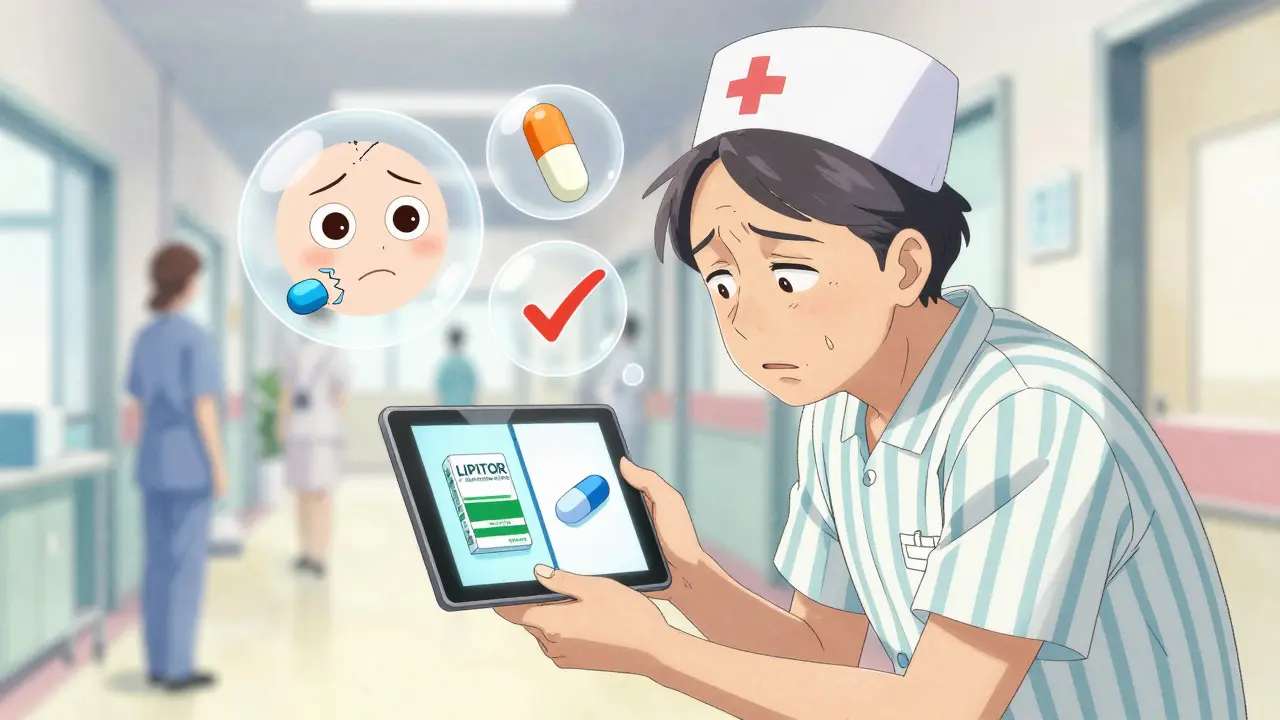
Where Nursing Counseling Beats the Pharmacist
Pharmacists do great work. They spend 8 to 12 minutes at the counter explaining substitutions. But by the time a patient gets to their hospital bed, the pharmacist’s advice is already fading. Nurses are there when the pill is in hand, when the IV bag is hanging, when the patient wakes up confused after surgery. A 2022 study in the Journal of Advanced Nursing found nurses had a 94% success rate in answering immediate administration questions: "Do I take this with food?" "Can I crush it?" "Will it make me sleepy?" Pharmacists, even with more time, only hit 82%. Why? Because nurses are embedded in the patient’s daily rhythm. They see the same faces. They notice when someone hesitates before swallowing a pill. They catch the glance at the label and the sigh. Patients who see the same nurse over days or weeks are 44% less likely to worry about generics, according to a 2023 study. Trust builds over time. A nurse who remembers your name, your dog’s name, and that you hate bitter-tasting pills becomes the person you believe.The Hidden Gaps in Training
Not all nurses are prepared for this. A 2023 survey by the National Council of State Boards of Nursing found 41% of new graduate nurses felt unprepared to counsel on generics. They knew the facts-but not how to explain them. They didn’t know how to handle a patient who cried because they’d been on the same brand for 15 years. Hospitals are fixing this. Magnet-designated hospitals now require nurses to use the teach-back method in 92% of cases. Electronic health records like Epic and Cerner now have built-in prompts: "Did you explain why this generic is safe?" "Did the patient confirm understanding?" Still, many nurses rely on informal learning. They watch their preceptors. They copy what works. They use the same phrases: "It’s the same medicine. Just a different look."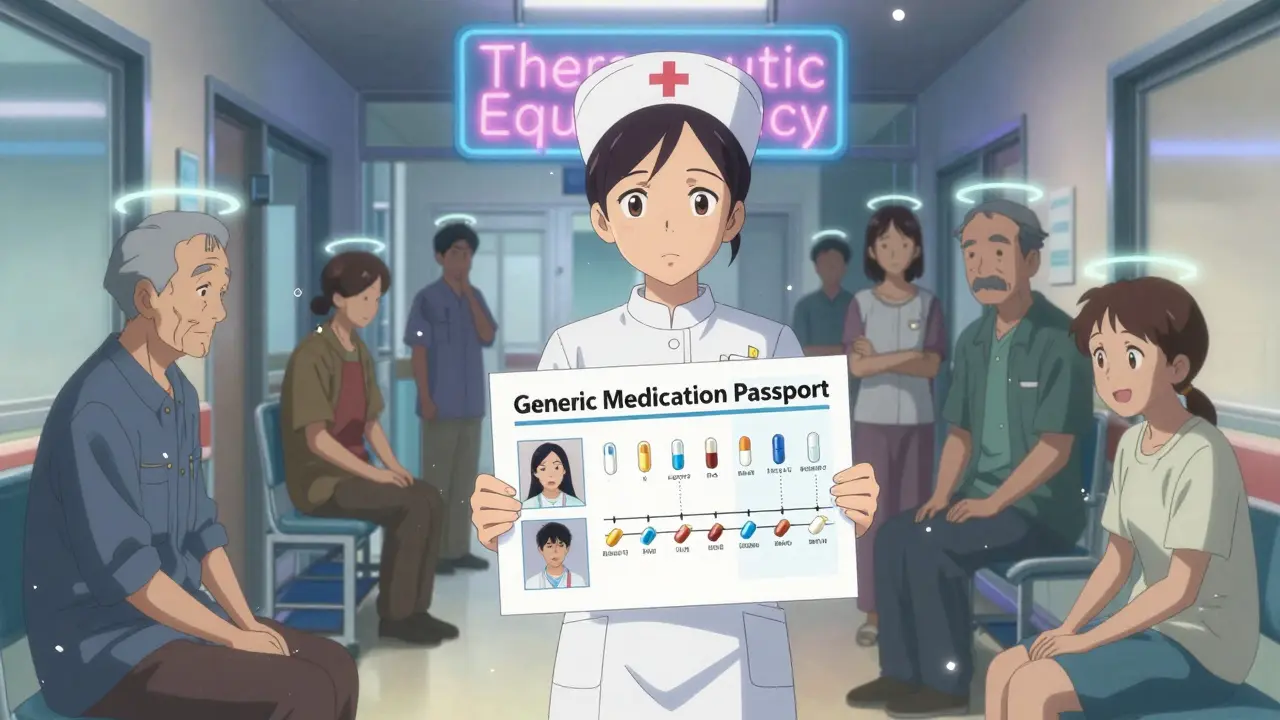
What Nurses Wish Patients Knew
Nurses don’t want patients to be grateful for generics. They want them to be confident. They wish patients understood that generic drugs are made in the same FDA-inspected factories as brand-name ones. That the same quality controls apply. That the same scientists review them. They wish patients knew that switching to generics doesn’t mean lowering standards-it means saving money without sacrificing safety. That 90% of all prescriptions in the U.S. are filled with generics-and that’s because they work. And they wish patients would speak up. If you’re scared, say so. If you don’t recognize the pill, ask. If you feel different after the switch, tell your nurse. That’s not being difficult. That’s being smart.What’s Next for Nursing and Generics
The future is here. Biosimilars-complex, biologic generics-are starting to replace expensive drugs like Humira and Enbrel. These aren’t simple pills. They’re injectables made from living cells. The science is harder. The confusion is greater. Nurses are already preparing. The American Association of Colleges of Nursing now requires all nursing graduates to demonstrate competency in explaining therapeutic equivalence. New tools are rolling out: AI-powered apps that show real-time FDA Orange Book data at the bedside. "Generic Medication Passports"-printed cards with photos of each medication a patient has taken, brand and generic versions side by side-are being piloted at Mayo Clinic and other major hospitals. By 2026, the Nursing Generic Medication Education Collaborative plans to standardize counseling across 500 hospitals. That means every nurse, in every unit, will be using the same clear, evidence-based approach. It’s not about pushing generics. It’s about protecting patients from fear. And that’s what nursing has always been about.Are generic medications really as good as brand-name drugs?
Yes. The FDA requires generics to contain the same active ingredient, strength, dosage form, and route of administration as the brand-name drug. They must also prove they’re absorbed into the body at the same rate and to the same extent-within 80% to 125% of the brand. This is called bioequivalence. Generics are tested in the same labs, made in the same FDA-inspected facilities, and held to the same quality standards.
Why do generic pills look different from brand-name ones?
By law, generic drugs can’t look exactly like the brand-name version, so manufacturers change the color, shape, or size to avoid trademark infringement. These differences are only in inactive ingredients-dyes, fillers, coatings-that don’t affect how the medicine works. Nurses often show patients side-by-side photos to help them recognize the change isn’t a change in effectiveness.
Can switching to a generic cause side effects?
Rarely. For most medications, switching to a generic causes no difference in side effects. But for drugs with a narrow therapeutic index-like warfarin, levothyroxine, or phenytoin-even tiny changes in absorption can matter. Nurses monitor these patients closely and often stick with the same manufacturer after a switch until levels stabilize. If a patient feels different after switching, they’re encouraged to report it immediately.
Do nurses get enough training to explain generics?
Not always. A 2023 survey found 41% of new nurses felt unprepared to counsel on generics. Hospitals are improving this with mandatory orientation modules, annual competency checks, and standardized scripts. Many now use visual aids and FDA-approved materials. The goal is for every nurse to confidently explain therapeutic equivalence using plain language and teach-back methods.
What should I do if I’m worried about my generic medication?
Speak up. Ask your nurse or pharmacist: "Is this the same as what I was taking?" Show them the pill if you’re unsure. Ask if you need a blood test, especially if you’re on a drug like warfarin or thyroid medicine. Don’t stop taking it because you’re worried-call for help instead. Your nurse is there to make sure you’re safe, not just to hand you a pill.

11 Comments
As someone who’s been on generic levothyroxine for 8 years, I can say with absolute certainty: it’s the same medicine. My TSH levels haven’t budged since the switch. What changed? My wallet. And my peace of mind, because now I know the FDA didn’t cut corners-my pill was tested just as rigorously as the brand. Nurses who show the side-by-side photos? That’s the gold standard. I wish every pharmacy had those handouts.
Same medicine. Different look. Done. 🙌
i had a patient cry last week because her generic blood pressure pill was a different color. she said her mom took the same blue pill for 30 years and now it was green and she was scared she was gonna die. i showed her the label, pointed to 'amlodipine besylate' and said 'same word, different crayon'. she smiled and said 'ohhh, like when you change your hair color but still you?' i cried a little too. nurses are the real magic here.
It’s fascinating how the most critical part of modern healthcare-ensuring patients trust their medication-isn’t handled by pharmacists, doctors, or ads. It’s nurses. In the quiet moments between vitals and meds, they’re the ones holding the patient’s hand and saying, ‘This is still you.’ No jargon. No charts. Just presence. And that’s worth more than any patent.
I’ve worked in med-surg for 17 years, and I’ve seen patients refuse to take generics because they ‘look wrong’-even after we’ve shown them the FDA data, the active ingredient, the bioequivalence percentages. And yet, when a nurse says, ‘I’ve been taking this same generic for my cholesterol for 12 years,’ and they pull out their own pill bottle? That’s when it clicks. Trust isn’t taught in textbooks. It’s modeled.
ok but let's be real here-how many times have you seen a patient get switched to a generic and then have weird side effects that weren't there before? like, i had a friend who went from brand-name citalopram to generic and started having night terrors and shaking. the doctor said 'it's the same thing!' but she felt different. so what's the real science behind that? maybe the fillers are different and some people are just sensitive? and why aren't hospitals tracking this better? also, why do they always switch to the cheapest one, not the one that works best for the person? this whole system feels like a gamble with people's lives. and nurses are just the messengers.
Oh wow, so now nurses are the new pharmaceutical sales reps? 🤡
in india, generics are the only option. no one pays for brand. we trust them because they work. my dad took generic metformin for 10 years, no issues. the problem is when people think ‘cheap’ = ‘bad’. it’s not true. same science, same factory rules. nurses just need to say it like it is.
How utterly charming. A 94% success rate? How noble. How quaint. I suppose next you'll tell me nurses also file taxes and fix the plumbing. But let's not forget: the real hero here is the FDA, the scientists, the regulatory bodies-none of whom are wearing scrubs. Nurses are the messengers, yes. But the message was written by others. Let's not confuse execution with innovation.
Actually, I must respectfully point out that the FDA’s bioequivalence range of 80%–125% is not a guarantee of identical pharmacokinetics across all individuals, and there are documented cases of therapeutic failure with certain generics, particularly in geriatric populations with altered metabolism. While the data is statistically sound, individual variability remains a clinical concern that is often underemphasized in public messaging.
I’ve been a nurse for 12 years. I’ve never once had a patient’s condition worsen because of a generic switch-unless they stopped taking it because they were scared. The real issue isn’t the pill. It’s the fear. And we fix that one quiet conversation at a time. No fanfare. No headlines. Just a nurse, a pill, and a person who needed to hear, ‘You’re still safe.’
Write a comment