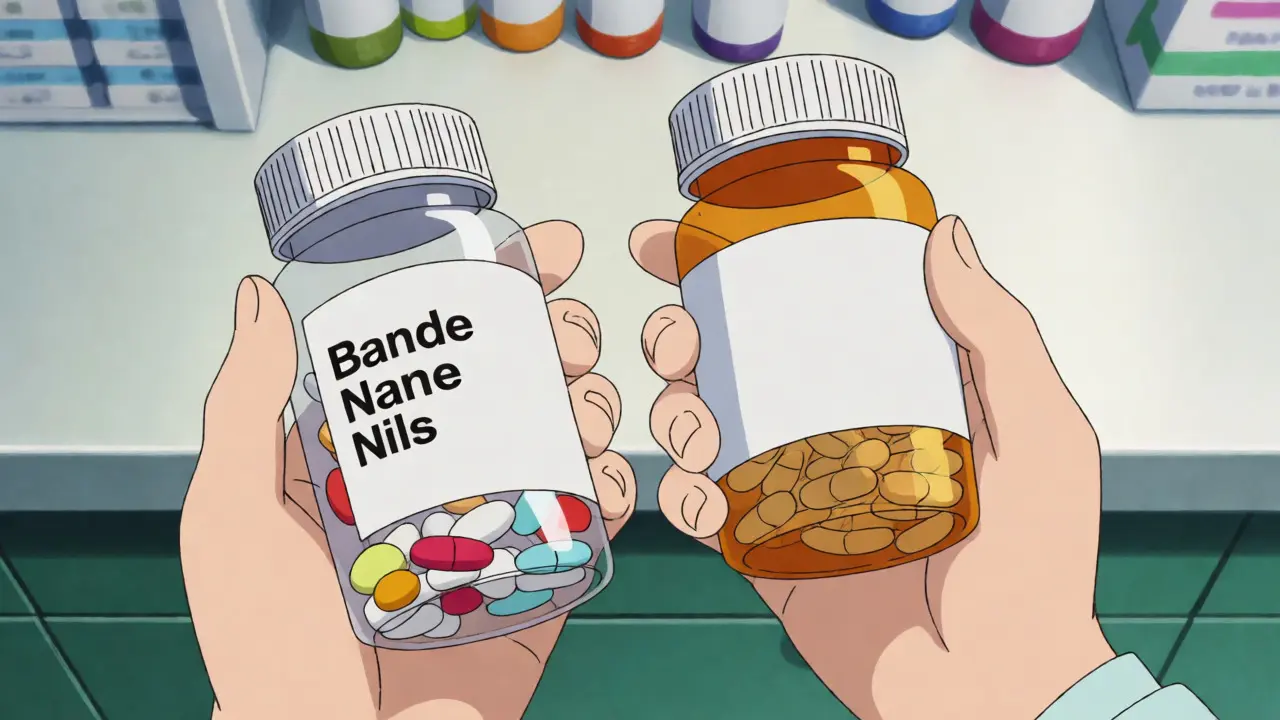
You just handed over your prescription, and the pharmacist hands you a bottle of pills that look nothing like what you usually take. The color is different. The shape is weird. Maybe it even tastes off. Your gut tells you something is wrong, but you also know generic drugs are supposed to be cheaper and chemically identical. So, how do you tell if you’re getting a legitimate, safe medication or a sketchy knockoff? It’s not about trusting your eyes alone; it’s about knowing exactly what to check before you walk out the door.
Why Generics Look Different (And Why That’s Okay)
First, let’s clear up the biggest misconception: legitimate generic drugs often look completely different from their brand-name counterparts. This isn’t a sign of fraud; it’s a legal requirement. Brand-name manufacturers own trademarks on specific pill shapes, colors, and imprints. To avoid infringing on those trademarks, generic makers must use different inactive ingredients (fillers, dyes, binders) and thus different physical appearances. As long as the active ingredient is the same, these visual differences are normal.
However, there’s a line between "different" and "suspicious." A legitimate generic will have a factory-made appearance-consistent edges, uniform color, and crisp imprinting. If the tablets look crumbly, have bubbled coatings, or show inconsistent scoring lines, that’s a red flag. According to Pfizer Global Security, real pills always have a precise, machine-made finish. Counterfeits often suffer from poor manufacturing quality, leading to cracked tablets or uneven powder distribution.
The 5-Step Verification Checklist
Don’t rely on guesswork. Use this practical checklist every time you pick up a new generic prescription. It takes less than two minutes but saves you from potential health risks.
- Check the Label Details: Every legitimate package must list the manufacturer’s name, drug name, strength, lot number, and expiration date. If any of these are missing, blurry, or misspelled, ask questions immediately. Crooked labels are a common trait in counterfeit products, appearing in 78% of reported cases.
- Verify the Manufacturer: Stick to known, reputable generic manufacturers like Teva, Sandoz, Mylan (now Viatris), or Lupin. These companies undergo rigorous FDA inspections. If the label lists an obscure company you’ve never heard of, check its reputation online or ask your pharmacist for their confidence level.
- Inspect the Packaging Integrity: Ensure the seal is intact. For bottles, the shrink wrap should be tight and unbroken. For blister packs, each pod should be sealed properly without air gaps. Broken seals suggest tampering or improper storage conditions, which can degrade drug potency.
- Cross-Reference with the Orange Book: The FDA maintains the Orange Book database, which lists all approved generic drugs and their therapeutic equivalence ratings. You can search by drug name to confirm that the specific product you received is actually approved for sale in the U.S.
- Ask About Storage Conditions: Most medications need to be stored between 20-25°C (68-77°F). If the pharmacy seems hot, or if the pills feel sticky or smell unusual, they may have been exposed to excessive heat or humidity. Proper chain-of-custody documentation helps ensure this hasn’t happened.
Understanding Bioequivalence: The Science Behind the Swap
You might wonder: "If it looks different, does it work the same?" Yes, because of strict bioequivalence standards. Before the FDA approves a generic, the manufacturer must prove that their drug delivers the same amount of active ingredient into your bloodstream at the same rate as the brand-name version. Specifically, the generic’s performance must fall within an 80-125% confidence interval of the reference drug’s pharmacokinetic profile.
In practice, this means most generics are nearly identical in effect. A 2021 study in JAMA Internal Medicine found that 98.7% of approved generics met these standards, with median concentration ratios hovering around 99.7%. So, while the filler dyes might change, the therapeutic impact remains consistent. Counterfeits, however, often fail basic quality tests, with deviations from labeled active ingredient content ranging from 30-60%.
| Feature | Legitimate Generic | Brand Name | Counterfeit/Fake |
|---|---|---|---|
| Active Ingredient | Identical | Identical | Incorrect, absent, or wrong dose |
| Appearance | Different color/shape (legal reasons) | Trademarked design | Poor quality, inconsistent, messy |
| Labeling | Complete, clear, FDA-approved format | Complete, clear, branded | Misspellings, foreign text, missing lot # |
| Source | FDA-registered facility | Original manufacturer | Unregulated labs, illegal imports |
| Cost | Significantly lower | Highest | Varies (often suspiciously low) |
Red Flags: When to Question Your Medication
Sometimes, the warning signs are subtle. Here’s what experts recommend watching for:
- Unusual Taste or Smell: While some meds naturally taste bitter, a sudden change in flavor profile across refills can indicate a formulation change or degradation. Report any "chemical" or "metallic" aftertastes that weren’t present before.
- Texture Changes: Pills should be smooth and hard. If they feel chalky, powdery, or sticky, moisture may have compromised them. In counterfeit cases, tablets often crumble easily when handled.
- Foreign Language Text: If you see non-English text on a product sold in the U.S., it likely entered through illegal importation channels. While not always dangerous, it bypasses FDA supply chain controls, increasing risk.
- Generic Baggies: Legitimate pharmacies dispense meds in proper vials or blister packs. Medications loose in plain ziplock bags are a major red flag, seen in 63% of counterfeit reports.

Leveraging Technology for Peace of Mind
Gone are the days when you had to trust solely on visual inspection. New tech makes verification easier. Since November 2023, the Drug Supply Chain Security Act (DSCSA) requires unique serial numbers on prescription drug packages. Many major manufacturers now include 2D data matrix codes that you can scan with apps like MediSafe or dedicated pharmacy scanners. This allows you to trace the drug’s journey from factory to shelf, ensuring it wasn’t diverted or tampered with along the way.
If you buy online, stick to sites verified by the National Association of Boards of Pharmacy (NABP). Look for the VIPPS accreditation or the .pharmacy domain extension. Ninety-six percent of websites selling counterfeit drugs operate outside these legal frameworks, so avoiding unverified online sellers is your best defense against fakes.
What to Do If Something Seems Off
If you suspect your medication isn’t right, don’t just throw it away. Follow these steps:
- Do Not Stop Abruptly: Unless you have severe allergic reactions, keep taking the med until you speak with a professional. Stopping certain drugs suddenly can be dangerous.
- Contact Your Pharmacist: They have access to manufacturer databases and can verify lot numbers against recall lists. Bring the bottle and remaining pills.
- Report to MedWatch: The FDA’s MedWatch program tracks adverse events and product complaints. Reporting discrepancies helps authorities identify emerging counterfeit trends. You can file a report online within 24 hours.
Remember, identifying a legitimate generic drug isn’t about paranoia; it’s about informed participation in your own healthcare. By checking labels, understanding normal variations, and using available verification tools, you ensure you’re getting the safe, effective treatment you paid for.
Are generic drugs really as effective as brand-name drugs?
Yes. The FDA requires generic drugs to demonstrate bioequivalence, meaning they deliver the same amount of active ingredient into the bloodstream at the same rate as the brand-name drug. Studies show that over 98% of approved generics meet these strict standards, resulting in nearly identical therapeutic effects.
Why do my generic pills look different from the brand-name ones?
Brand-name manufacturers hold trademarks on specific pill shapes, colors, and imprints. To avoid trademark infringement, generic manufacturers must use different inactive ingredients (like fillers and dyes), which changes the physical appearance. This is normal and does not affect the drug's efficacy.
How can I check if a generic drug is FDA-approved?
You can use the FDA’s Orange Book database online. Search for the drug name to find the Reference Listed Drug and its corresponding Abbreviated New Drug Application (ANDA) numbers. Approved generics will have a therapeutic equivalence rating (usually AB or BX).
What are the most common signs of a counterfeit drug?
Common signs include poor packaging quality (crooked labels, broken seals), unusual tablet texture (crumbly, bubbled coating), incorrect imprinting or misspellings, and unexpected changes in taste or smell. Also, be wary of medications sold without a prescription or from unverified online sources.
Is it safe to buy generic drugs online?
It can be safe if you choose verified pharmacies. Look for the NABP Verified Internet Pharmacy Practice Sites (VIPPS) seal or use websites ending in .pharmacy. Avoid sites that offer prescription drugs without requiring a valid prescription, as 96% of such sites sell counterfeit products.
