The Hidden Risks of Shared Medicine Cabinets
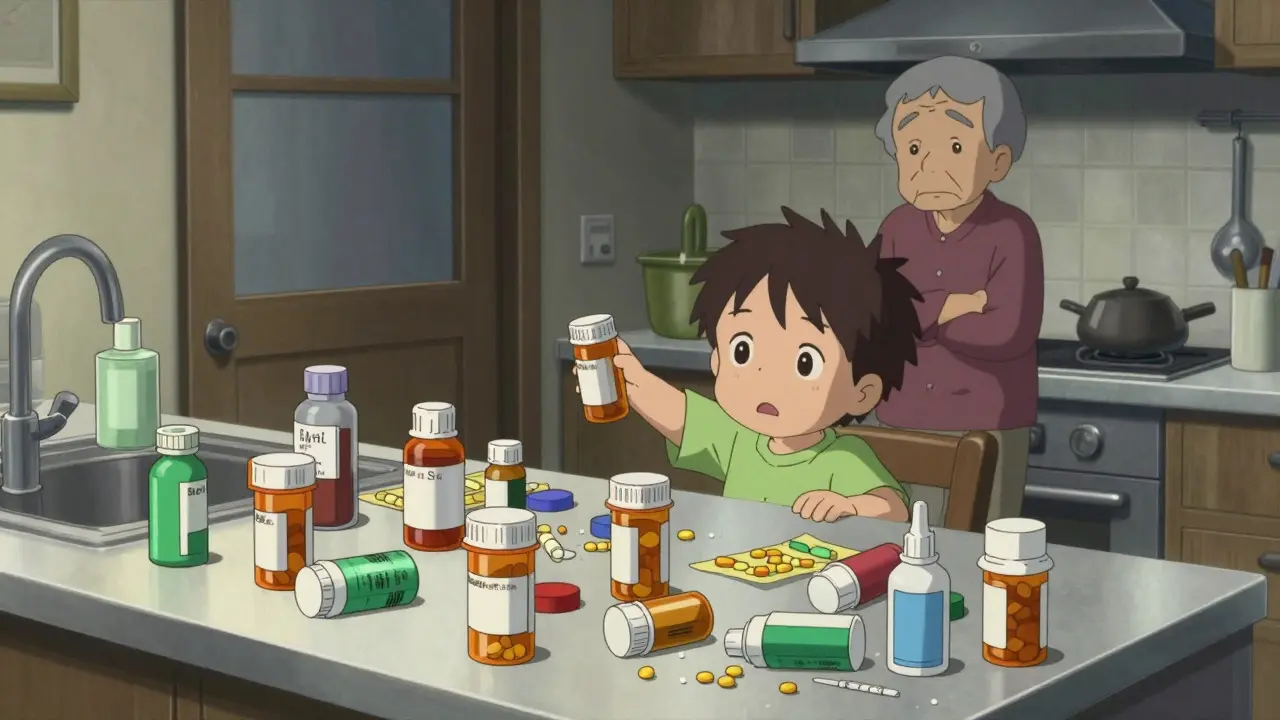
Imagine walking into a kitchen where three different people’s prescriptions are mixed together on the counter. One bottle is for high blood pressure, another for anxiety, and a third for diabetes. Now imagine a curious toddler or a confused elderly relative reaching for the wrong one. This isn’t just a hypothetical nightmare; it’s a daily reality for millions of households and care facilities across the United States.
Managing medication storage in environments where multiple individuals reside, such as multi-generational homes, group homes, and assisted living facilities is more than just tidying up a bathroom cabinet. It is a critical safety protocol that prevents accidental ingestion, drug interactions, and loss of efficacy. With the number of multi-generational households in the U.S. jumping from 51.4 million in 2020 to nearly 60 million in 2024, the stakes have never been higher. You need a system that works for everyone, not just one person.
Setting Up Secure Zones: Locks and Locations
The first rule of thumb is simple: if it’s medicine, it needs to be locked away. Whether you are running a small assisted living home or caring for your aging parents in your own house, accessibility should be limited to authorized personnel only. The National Center for Biotechnology Information notes that regulations require medications to be kept under lock and key at all times, regardless of where they are stored.
In professional settings like large assisted living facilities, this often means dedicated medication rooms or carts. However, in a family home, a dedicated room might be overkill. Instead, consider these practical setups:
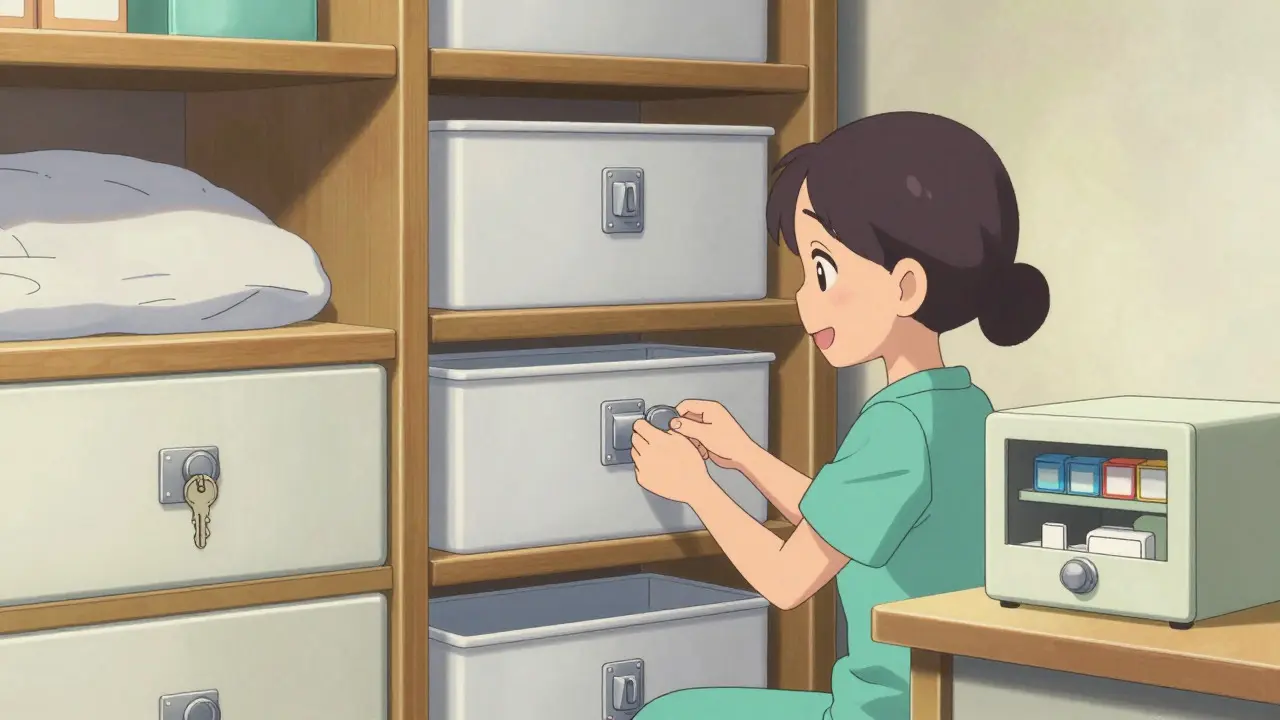
- Bedroom Drawers: For seniors living with family, a locked drawer in their bedroom offers privacy and security. It keeps meds out of the main traffic areas like the kitchen or bathroom.
- High Shelving with Childproof Locks: If space is tight, use high shelves equipped with magnetic locks or combination latches. This deters children while remaining accessible to adults.
- Dedicated Medication Safes: Small, portable safes can sit on a countertop but remain secure. Sales of these devices have risen by 27% year-over-year, reflecting growing awareness of household risks.
Avoid storing medications in bathroom cabinets unless they are specifically designed for humidity control and security. Bathrooms are often hot, humid, and easily accessible to kids. A survey found that 42% of medication incidents in families involved children accessing drugs mistakenly stored in bathrooms.
Temperature Control: Keeping Drugs Effective
You might think putting insulin or liquid antibiotics in the fridge is enough, but location matters immensely. Temperature excursions-fluctuations outside the recommended range-can degrade certain antibiotics by up to 30% within just 24 hours. Dr. Jane Smith from Johns Hopkins Hospital emphasizes that storage conditions directly impact drug stability.
Here is how to manage temperature correctly:
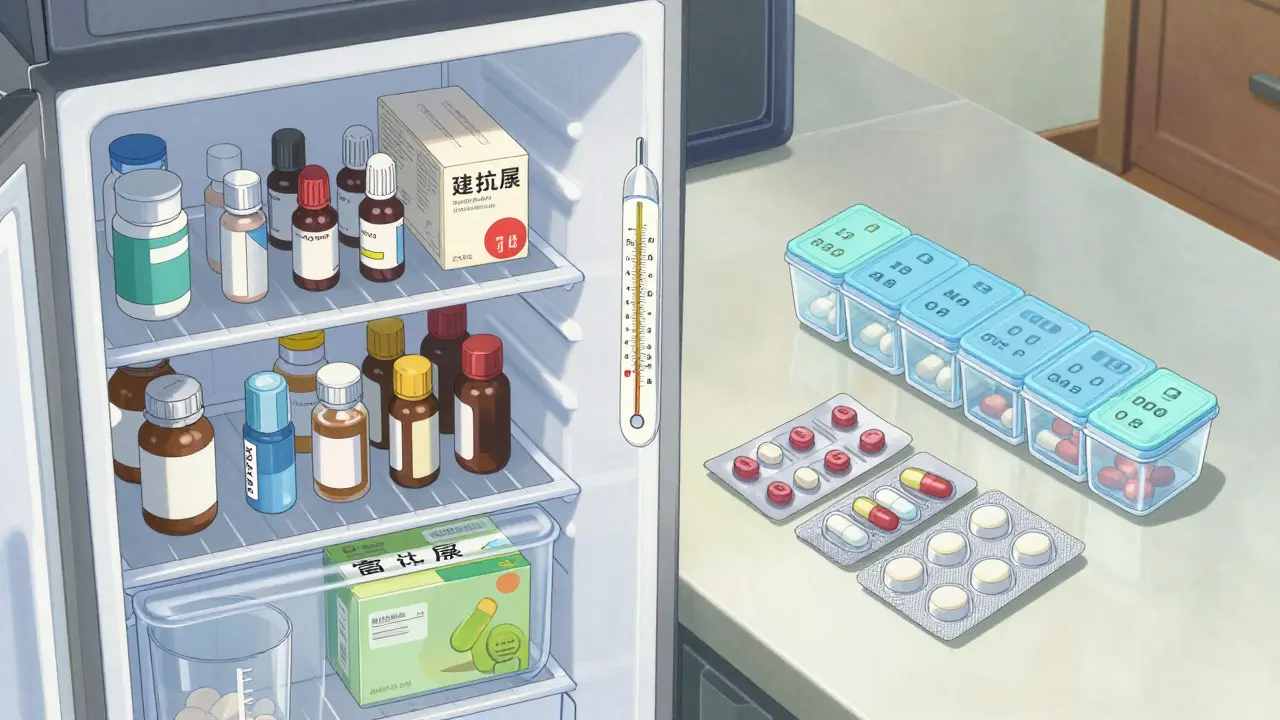
- Use the Center of the Fridge: Never store temperature-sensitive medications in the door shelves. The door opens frequently, causing temperatures to swing wildly. The center of the refrigerator maintains a stable environment between 36-46 degrees Fahrenheit.
- Dedicated Fridges for Facilities: In care homes, use refrigerators exclusively for medications. Mixing food and meds increases contamination risk and makes it harder to monitor exact temperatures.
- Monitor Regularly: Use a simple thermometer inside the storage area. Check it daily. If the temperature goes out of range, document it and move the medication immediately.
For those managing complex regimens, smart storage systems with integrated sensors are becoming available. These devices automatically log environmental conditions, alerting you if the humidity or temperature drifts too far from safe levels.
Organization Systems: Bubbles vs. Bottles
How you package medication changes how easy it is to manage. Most professional facilities use "medication on time" systems, where pills are prepackaged in bubble packs labeled with the day and time. This reduces errors significantly because there is no confusion about which pill goes when.
In shared living spaces without professional staff, you can mimic this system using weekly pill organizers. However, ensure that: Pill organizers are clear plastic containers with compartments for each day and time of day, used to sort medications for easier administration. They help prevent missed doses and double-dosing.
If you stick with original bottles, keep them tightly sealed and clearly labeled. The Joint Commission has cited hospitals for poor labeling practices, noting that unclear labels lead to dangerous mistakes. Make sure every container shows the patient’s name, the drug name, dosage, and expiration date.
Documentation and Accountability
Who gave what to whom, and when? In a shared space, memory fails. That’s why documentation is non-negotiable. Professional facilities use Individualized Medication Administration Records (MARs), spending about 15 minutes per resident daily on this task. While you might not need a formal MAR at home, a simple logbook works wonders.
Create a shared digital calendar or a physical whiteboard where caregivers record:
- Time of administration
- Any side effects observed
- Missed doses and reasons
This creates an audit trail. If someone claims they didn’t take their heart medication, you have proof. It also helps doctors adjust treatments based on actual adherence rates rather than guesswork.
Disposal: Getting Rid of Old Meds Safely
Expired medications are not just ineffective; they can be harmful. Ten percent of healthcare facilities receive citations for having expired drugs on hand. In your home, conduct a quarterly purge. Check expiration dates and toss anything old.
But don’t just throw them in the trash. Flushing some drugs contaminates water supplies, while others pose a choking hazard if left in bins. Look for local drug take-back programs. Many pharmacies and police stations host collection boxes. If none are available, mix the pills with unpalatable substances like coffee grounds or cat litter, seal them in a bag, and then dispose of them in the household trash.
| Method | Security Level | Best For | Cost Estimate |
|---|---|---|---|
| Locked Bedroom Drawer | High | Multi-generational homes, seniors | $20-$50 for lock hardware |
| Magnetic Cabinet Latches | Medium | Homes with young children | $15-$30 per set |
| Dedicated Med Safe | Very High | Controlled substances, high-risk environments | $50-$150 |
| Bathroom Cabinet (Unlocked) | Low | None (Not Recommended) | $0 |
Training and Routine Checks
Even the best system fails without training. In professional care, staff undergo 8-12 hours of initial training plus quarterly refreshers. At home, gather all caregivers-family members, babysitters, live-in aides-and walk them through the process. Show them where the keys are, how to read the labels, and what to do in case of an emergency.
Perform monthly audits. Count the pills against the prescription count. Check the fridge thermometer. Inspect the locks. These small habits prevent big disasters. Remember, consistency beats perfection. A simple routine followed diligently is better than a complex plan ignored half the time.
Where is the safest place to store medication in a shared apartment?
The safest place is a locked drawer in a private bedroom or a dedicated medication safe. Avoid bathrooms and kitchens due to humidity, heat, and easy access by children. Ensure the location is dry, cool, and out of direct sunlight.
Do I really need a separate fridge for medications?
In professional care facilities, yes, to prevent contamination and ensure precise temperature control. In a home setting, you can use a regular fridge if you store meds in the center compartment (not the door) and check the temperature regularly with a thermometer. Keep meds away from strong-smelling foods.
How should I dispose of expired medications safely?
First, look for local drug take-back programs at pharmacies or police stations. If unavailable, mix pills with unappealing substances like coffee grounds or cat litter, seal them in a plastic bag, and throw them in the trash. Do not flush unless the label specifically instructs you to do so.
What is the best way to organize medications for multiple people?
Use individual pill organizers or bubble packs labeled with each person's name. Store each person's meds in a distinct section or container. Maintain a shared logbook or digital calendar to track administration times and any missed doses.
How often should I check my medication storage conditions?
Check temperature monitors daily if storing sensitive drugs like insulin. Perform a full inventory and expiration date check quarterly. Inspect locks and security measures monthly to ensure they remain functional and secure.
