Ever stood in a pharmacy aisle feeling completely overwhelmed by the wall of medicine bottles? You aren't alone. With over 80% of adults using over-the-counter meds as their first line of defense against a cold or headache, the stakes are high. The problem is that while the boxes look different, the information is actually standardized. If you don't know where to look, it's easy to miss a critical warning or accidentally double-dose on the same ingredient.
The OTC drug facts label is a standardized information panel mandated by the U.S. Food and Drug Administration (FDA) to help consumers use nonprescription medicines safely. It was designed to stop the thousands of emergency room visits caused by medication misuse. Whether you're treating a toddler's fever or managing your own seasonal allergies, knowing how to decode this label in under a minute can literally save a life.
The Quick-Start Safety Check
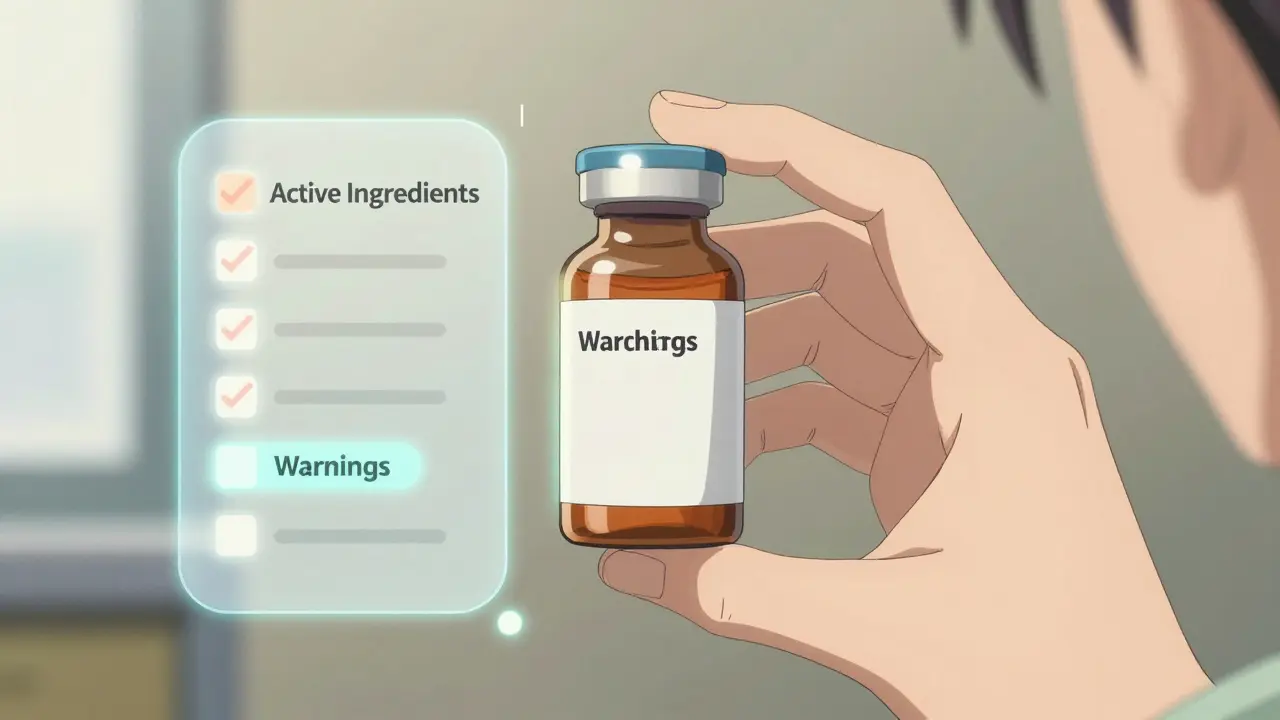
You don't need a medical degree to read a label, but you do need a system. Pharmacists at CVS Health recommend a "5-Point Check" that takes about 50 seconds. Instead of skimming, follow these steps in order:
- Identify Active Ingredients: Check exactly what is in the medicine (approx. 12 seconds).
- Verify Uses: Does the drug actually treat your specific symptom? (7 seconds).
- Read All Warnings: Are there conditions or other drugs that make this unsafe for you? (19 seconds).
- Check Directions: Is the dose correct for the person's age and weight? (8 seconds).
- Review Inactive Ingredients: Are there dyes or fillers you are allergic to? (6 seconds).
Using a structured approach like this has been shown to reduce medication errors by 68%. It transforms the label from a wall of text into a checklist for safety.
Decoding the Active Ingredients Section
This is the most critical part of the label. The Active Ingredient is the chemical that actually does the work. A common mistake is confusing the brand name with the active ingredient. For instance, Tylenol is a brand, but Acetaminophen is the active ingredient. If you take a "multi-symptom" cold medicine and a Tylenol pill at the same time, you might be taking a double dose of acetaminophen without realizing it.
Look for the concentration. If a label says "Acetaminophen 325 mg," that is the amount of medicine in one unit. In liquid forms, look for "per 5 mL." A common pitfall is confusing the concentration with the total volume of the bottle. Just because a bottle is 4 ounces (118 mL) doesn't mean you take 4 ounces; it means the bottle contains many individual 5 mL doses.
| Active Ingredient | Common Brand Examples | Primary Purpose |
|---|---|---|
| Acetaminophen | Tylenol | Pain reliever / Fever reducer |
| Ibuprofen | Advil, Motrin | Pain reliever / Anti-inflammatory |
| Guaifenesin | Mucinex | Expectorant (thins mucus) |
| Diphenhydramine | Benadryl | Antihistamine / Sleep aid |
Warning Signs You Shouldn't Ignore
The Warnings section is where the most dangerous mistakes happen. This area lists contraindications-basically, the "do not use if" list. For example, if you have a history of stomach ulcers, you'll see a warning against using Ibuprofen because it can increase the risk of gastrointestinal bleeding. Recent label updates have specifically highlighted this risk, leading to a 31% drop in related emergencies.
Pay close attention to the Liver Warning. Acetaminophen is processed by the liver, and taking more than 4,000 mg in 24 hours can cause severe, permanent damage. Since this ingredient is hidden in dozens of different products (from nighttime sleep aids to severe cold syrups), the risk of accidental overdose is surprisingly high.
Also, check for drug interactions. If you are taking a prescription blood thinner like warfarin, the label may tell you to consult a doctor before using the product. These interactions aren't always obvious but can be life-threatening.
Mastering Dosage and Directions
Many people struggle with the Directions section, often due to small font sizes. To do this correctly, focus on three things: the amount, the frequency, and the limit.
- The Amount: "2 caplets" or "5 mL." Always use the measuring device that comes with the medicine, not a kitchen spoon.
- The Frequency: "Every 4 to 6 hours." This means you must wait at least 4 hours before the next dose.
- The Limit: "Do not take more than 12 caplets in 24 hours." This is the absolute ceiling. If your symptoms aren't gone by then, stop and call a doctor.
One common point of confusion is the phrase "do not exceed 6 doses in 24 hours." Some people think this means 6 pills. However, if one "dose" is 2 pills, the limit is actually 12 pills. Always verify if the label defines a dose as a single unit or a combination of units.
What About Inactive Ingredients?
The Inactive Ingredients list might look like a chemistry textbook-filled with words like "croscarmellose sodium" or "povidone." While these don't treat your symptoms, they are the binders and dyes that hold the pill together. This section is vital for people with severe allergies or dietary restrictions. If you are allergic to a specific red dye or a certain starch, this is the only place you'll find that information.

The Future of Labeling
The FDA is currently moving toward more digital and visual labels. By the end of 2025, you'll start seeing more color-coded sections and standardized icons to make warnings jump out at you. Many brands are also adding QR codes to their packaging. Scanning these can lead you to video explanations of the label, which is a huge help for those who find the small print difficult to read.
What is the difference between a brand name and an active ingredient?
The brand name (like Tylenol or Advil) is the commercial name given by the company. The active ingredient (like acetaminophen or ibuprofen) is the actual chemical that treats the symptom. Multiple brands can use the same active ingredient, which is why checking the label is essential to avoid double-dosing.
How do I know if an OTC medicine is safe for my child?
Look at the "Directions" section. It will specify age and weight-based dosing. Never use a dose meant for an adult for a child. If the label says "Ask a doctor," especially for children under 4, do so. Always use the dosing syringe or cup provided with the medicine rather than household spoons.
What does "extra strength" actually mean?
"Extra strength" typically means the product has a higher concentration of the active ingredient per pill or dose-often 50% to 100% more than the regular strength version. Check the "Active Ingredients" section to see the exact milligram (mg) difference.
Can I take two different OTC medicines at the same time?
Only if they have different active ingredients and no conflicting warnings. For example, taking a decongestant and a pain reliever is often fine, but taking two different products that both contain acetaminophen can lead to liver damage. Always cross-reference the "Active Ingredients" lists of both products.
What should I do if I accidentally take too much medicine?
Immediately contact a poison control center or seek emergency medical care, even if you don't feel sick yet. Some overdoses, particularly with acetaminophen, don't show symptoms until several hours later when the damage to the liver has already occurred.
Next Steps for Safe Usage
If you're still unsure about a medication, don't guess. Your local pharmacist is the best resource for "label literacy." They can help you identify if two products overlap or if a medication is safe given your current prescriptions. For those who prefer digital tools, the FDA's "Drug Label Decoder" app is a great way to translate complex labels into simple terms on your phone.

10 Comments
This is such a helpful breakdown for anyone who gets anxious in those pharmacy aisles. It's really easy to feel overwhelmed when you're not feeling well and just want something that works without causing more problems.
honestly who even reads these things anyway just buy the brand name and hope for the best lol
The part about the multi-symptom cold meds is a total game-changer because those 'all-in-one' concoctions are absolute minefields of hidden ingredients. I've always found that stripping it back to the bare essentials is the way to go, and checking the active ingredients list is like having a map through a chemical jungle. It's wild how we just trust the fancy marketing on the front of the box without glancing at the fine print on the back, which is where the real secrets are hiding. If you're mixing a nighttime syrup with a morning pill, you're basically playing chemistry roulette with your liver if you aren't careful. Most people just skim and hope, but this structured approach actually makes it feel like a puzzle you can solve. Plus, the inactive ingredients section is a goldmine for anyone with weird sensitivities to specific dyes. It's just a bit of a linguistic nightmare to read, but it's the only way to be sure. I love the idea of the 5-point check because it turns a stressful moment into a quick routine. It’s essentially a safety protocol for your own medicine cabinet. Definitely worth the 50 seconds of effort to avoid a trip to the ER. It's just common sense wrapped in a standardized format. Seriously, the 'double-dosing' trap is way more common than people realize, especially during flu season when everyone is just desperate to stop coughing. Just a little bit of diligence saves a whole lot of grief.
im sick and tired of the way these big pharma companys try to hide the truth in tiny print just to make a buck off of us americans who are just trying to get by and not get sick every two seconds while the goverment just lets them put these confusing labels on things like its some kind of joke and we gotta spend fifty seconds just to make sure we dont accidentally kill ourselves with a headache pill which is just absolutely pathetic if you ask me!!
who cares about inactive ingredents lol its all just chemicals anyway
Omg some of you are so lazy!! 🙄 Reading the label is literally the bare minimum of being a responsible adult! If you can't take 50 seconds to not poison yourself, that's a you problem!! 💅✨
Oh wow, a guide on how to read a label. Truly revolutionary. I'm sure the world was just waiting for someone to explain that reading the instructions might be a good idea.
It is utterly disappointing to observe the lack of discipline in modern healthcare habits. One must adhere strictly to these guidelines to avoid catastrophic failures in health management.
Check the dates!!! Always check the expiry date too!!!
The pharmacokinetic profile... specifically the hepatic metabolism of acetaminophen... is very dangerous... if exceeded... be careful...!!
Write a comment