Getting the wrong medication or the wrong dose from a pharmacy isn’t just a mistake-it’s a safety risk. Maybe you picked up your prescription and noticed the pills look different. Or your child’s inhaler came with a label that doesn’t match the doctor’s instructions. Maybe you took the wrong dose and felt sick right away. Whatever happened, you’re not alone. Medication errors happen more often than most people realize, and reporting them is one of the most powerful things you can do to protect yourself and others.
What Counts as a Pharmacy Error?
A pharmacy error isn’t just about getting the wrong drug. It includes:- Wrong medication (like getting metformin instead of metoprolol)
- Wrong dosage (a 10mg pill instead of a 5mg)
- Wrong instructions (‘take twice daily’ vs. ‘take once daily’)
- Wrong patient (your prescription given to someone else)
- Missing or incorrect labeling
- Lack of counseling on side effects or interactions
- Expired or contaminated medication
Even if no harm occurred, if the error could have caused harm, it’s worth reporting. These are called near-misses. They’re just as important as actual injuries because they reveal flaws in the system before someone gets hurt.
Why Reporting Matters
Most people don’t report pharmacy errors because they think, “It’s just one mistake.” But here’s the truth: one error can hide a pattern. A pharmacist might be overworked. A barcode scanner could be malfunctioning. A new hire might not be trained properly. Reporting helps fix those problems.In 2022, the FDA received over 1.3 million adverse event reports, and about 8% were medication errors. But experts say only about 1 in 7 serious errors ever get reported. Why? Fear of retaliation, confusion over where to report, or thinking it won’t make a difference. The truth? Your report matters. The Institute for Safe Medication Practices (ISMP) analyzed over 12,000 reports in 2023 and used them to change labeling rules, update training programs, and even get manufacturers to redesign packaging.
Where to Report: The Main Options
You have several choices depending on where you live and what kind of error occurred.1. Report to the FDA (MedWatch)
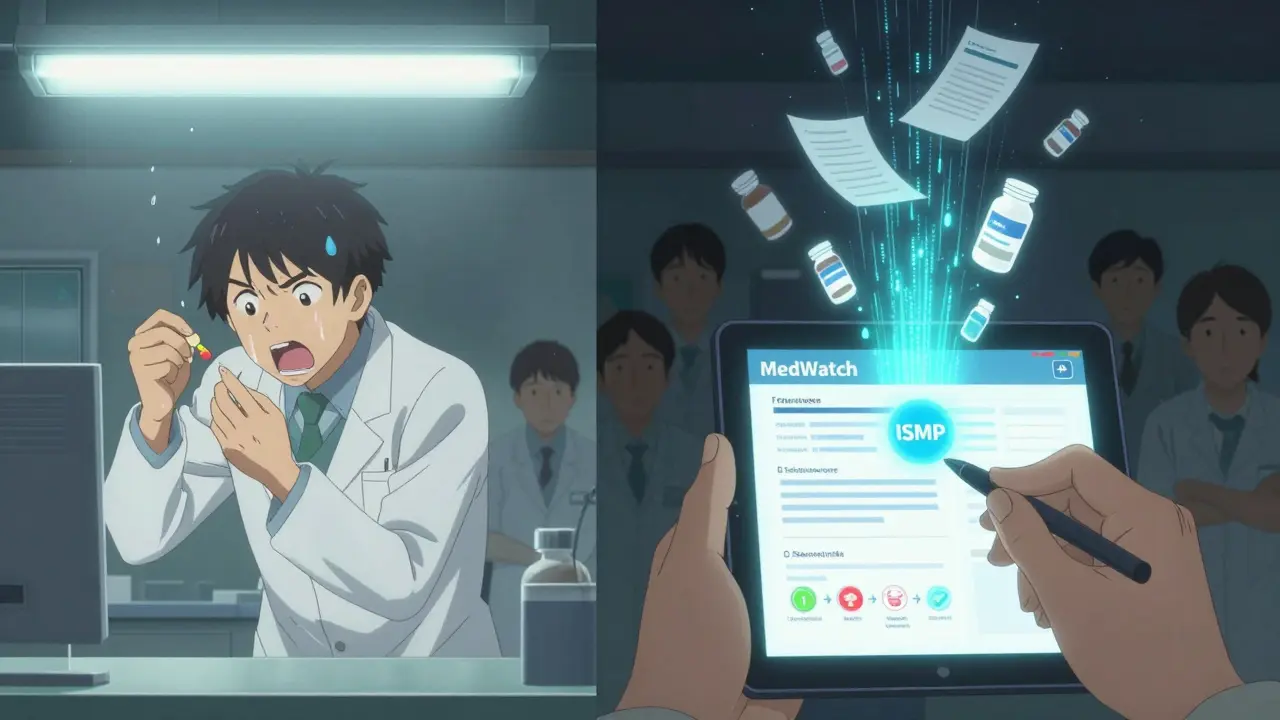
The FDA’s MedWatch program is the federal system for reporting medication errors and adverse reactions. It’s free, confidential, and open to anyone-patients, family members, or caregivers. You don’t need to be a doctor.You can report in three ways:
- Online: Go to the FDA’s MedWatch portal and fill out Form 3500 (for consumers).
- By phone: Call 1-800-FDA-1088. A representative will take your report over the phone.
- By mail: Download Form 3500B, fill it out, and send it to the address on the form.
Most people use the online form. It takes about 10 minutes. You’ll need details like the medication name, dosage, date of the error, what happened, and your contact info (optional). You don’t have to give your name, but if you want a follow-up, you should.
2. Report to ISMP (National Medication Error Reporting Program)
The Institute for Safe Medication Practices (ISMP) runs a confidential, non-punitive reporting system focused on learning-not blame. Their reports go directly to safety analysts who dig into the root causes.ISMP is especially good for:
- Detailed descriptions of how the error happened
- Reporting near-misses
- Describing system issues like poor lighting, rushed staff, or confusing packaging
You can report by phone at 1-800-233-7767 or online at ismp.org. Their analysts often call you back to ask clarifying questions. They don’t share your identity with the pharmacy. In 2023, they processed over 12,000 reports and used them to change how drugs are labeled and packaged across the country.
3. Report to Your State Board of Pharmacy
Each state has its own board that licenses pharmacists and investigates complaints. This is the best option if you want the pharmacy to be held accountable-especially if you suffered harm.For example, in California, you can file a complaint online at pharmacy.ca.gov or download a PDF form. You’ll need to include:
- Copy of the prescription
- Original medication container (if you still have it)
- Receipt or invoice
- Any medical records related to the error
The California Board received 1,842 complaints in 2021 and took disciplinary action in 217 cases. Other states have similar systems, but not all require mandatory reporting by pharmacies. As of 2023, only 18 states require pharmacies to report errors internally.
4. Report to the Pharmacy Itself
You can and should talk to the pharmacy first. Ask to speak with the pharmacist-in-charge. Say clearly: “I received the wrong medication/dosage, and I’m concerned about safety.” Most pharmacies will apologize and fix the issue right away.But don’t stop there. If they brush you off, don’t accept that. Document everything. Take photos of the label. Write down what was said. Then file a formal report with the state board or FDA. The pharmacy’s internal review doesn’t replace official reporting.
What Happens After You Report
What happens next depends on who you report to.With the FDA (MedWatch)
The FDA doesn’t investigate individual cases. They collect data. If enough people report the same error-say, 50 people getting the same wrong dose of a drug-they’ll issue a safety alert, update the drug’s label, or even recall it. You likely won’t get a personal response. But 83% of people who report to MedWatch say they believe their report helped prevent future harm.With ISMP
ISMP calls you back within 1-2 weeks. They analyze your report using the NCC MERP Index, a 9-point scale that rates error severity. They then publish anonymized case studies and send recommendations to manufacturers, pharmacies, and regulators. In 2023, they helped redesign 12 medication packages based on consumer reports.With Your State Board
They investigate. They might visit the pharmacy, interview staff, review training records, and check surveillance footage. If they find negligence, they can issue warnings, fines, mandatory retraining, or even suspend the pharmacist’s license. You’ll get a written update every 30 days. California now offers an online tracker so you can see your case status in real time.With the Pharmacy
They may offer a refund, a free refill, or a gift card. That’s nice-but it doesn’t fix the system. If they say, “We’re sorry, it won’t happen again,” ask: “What are you changing to make sure it doesn’t happen to someone else?” If they can’t answer, file a formal report.What to Do If You’re Frightened of Retaliation
It’s normal to worry. You might fear the pharmacy won’t fill your prescriptions next time. Or that the pharmacist will be angry. But here’s what you need to know:- Reporting to the FDA or ISMP is anonymous. You don’t have to give your name.
- State boards protect your identity by law. They don’t share your name with the pharmacy unless you give permission.
- HIPAA protects your medical privacy. The pharmacy can’t retaliate for reporting a safety issue.
- Over 60% of people who report pharmacy errors say they felt empowered afterward.
One woman in Ohio reported a mislabeled insulin vial. The pharmacy tried to blame her for not checking. She filed with ISMP. Within two weeks, the manufacturer changed the packaging design. She later received a letter from the company thanking her.
What Doesn’t Work
Don’t rely on:- Texting the pharmacy
- Leaving a bad review on Google
- Complaining to the store manager without documentation
- Waiting to see if it happens again
These don’t create systemic change. They might make you feel better temporarily, but they won’t prevent the next person from getting hurt.
Real Stories, Real Impact
In March 2023, a woman in Texas reported to ISMP that her child’s ADHD medication came in a bottle labeled for a different drug. ISMP found 17 other similar reports. The manufacturer changed the bottle color and added a warning sticker. That same week, another parent caught the same error-and didn’t give it to their child.In another case, a retiree in Florida reported that his blood thinner was dispensed with no expiration date. The state board investigated and found the pharmacy had been using outdated software that didn’t print dates. They shut down the system and mandated upgrades.
These aren’t rare. They’re the result of people speaking up.
What You Can Do Today
If you’ve experienced a pharmacy error:- Save everything: Keep the medication, label, receipt, and prescription.
- Write down what happened: Date, time, what you were told, what you noticed.
- Choose your reporting path: Use the FDA for national impact, ISMP for system fixes, or your state board if you want accountability.
- Report within 12 months: Most systems have a deadline.
- Follow up: If you don’t hear back in 30 days, call again.
You don’t need to be an expert. You just need to be observant. Your report could be the one that saves someone’s life.
What’s Changing in 2026
New tools are making reporting easier:- The FDA is launching a mobile app in Q2 2024 to make MedWatch reports faster.
- California’s real-time tracking system is being rolled out to 12 more states.
- The National Coordinating Council for Medication Error Reporting and Prevention (NCC MERP) released updated standards in January 2023 to make reports more consistent.
- Congress is considering the Patient Safety Improvement Act of 2023, which would create a national mandatory reporting system.
The goal is simple: fewer errors. Better systems. Safer pharmacies. And it starts with you.
Can I report a pharmacy error if I didn’t get hurt?
Yes. Even if no harm occurred, you should report near-misses. These are errors that could have caused harm but were caught in time. They help regulators and pharmacies spot dangerous patterns before someone gets injured. The Institute for Safe Medication Practices (ISMP) says near-miss reports are just as valuable as injury reports for improving safety systems.
Will the pharmacy know I reported them?
If you report to the FDA or ISMP, your identity is protected. You don’t have to give your name, and they don’t share it with the pharmacy. If you report to your state board, your name may be shared with the pharmacy during their investigation-but you can request confidentiality. State laws protect your identity in most cases, and retaliation is illegal under HIPAA and state pharmacy regulations.
How long does it take to get a response after reporting?
It varies. The FDA doesn’t respond personally-they use data to spot trends. ISMP typically calls within 1-2 weeks to follow up. State boards like California’s must acknowledge your report within 14 days and provide updates every 30 days. If you don’t hear back after 30 days, call the agency directly. Persistence matters.
What if the pharmacy refuses to give me my records or prescription copy?
By law, pharmacies must provide you with a copy of your prescription and medication records upon request. If they refuse, document the refusal and file a complaint with your state board of pharmacy. In California, this is a violation under Business and Professions Code Section 4034. You can also request records from your doctor’s office-they’re required to send them to you.
Can I report an error that happened months ago?
Yes. Most systems accept reports up to 12 months after the incident. The FDA and ISMP have no strict deadline, but the sooner you report, the better. Evidence like medication containers or receipts may be harder to find later. If it’s been over a year, you can still report-it helps build long-term safety data, even if no direct action is taken.

11 Comments
Mistakes happen. Report if you want. Doesn't change anything.
This is so important. If you see something wrong, speak up. It could save someone's life. No excuse to stay silent.
I just want to say THANK YOU for writing this! So many people don't realize how powerful their voice is. Reporting isn't about blaming-it's about protecting. And yes, even near-misses matter! Every single report adds up to real change. Keep speaking up!
The systemic failures in pharmacy workflows are unacceptable. The NCC MERP Index is underutilized, and the lack of mandatory reporting in 32 states is a regulatory failure. Pharmacies operate under profit-driven models that incentivize speed over safety. Until there's federal standardization, patient harm will persist.
People think reporting fixes things but it's just noise. The system doesn't care. You're just a data point in a machine that doesn't listen. But hey, if it makes you feel better go ahead
I've reported two errors-one for my mom, one for myself. Both times, ISMP called back within days. They asked thoughtful questions. It felt like someone actually cared. Don't underestimate how much your story can help redesign packaging or training. You're not just reporting-you're advocating.
Wait-so if I report to the FDA, they don't even contact me? But ISMP does? So which one should I pick if I just want to make sure it doesn't happen again?
You know what’s wild? In India, pharmacies don’t even have barcode scanners in half the places. I got wrong medicine twice. No one cared. Reporting here? You get a shrug and a free candy. But still-I reported. Because maybe one day, someone will listen.
I reported a near-miss last year-my blood pressure med was labeled for diabetes. I was scared to say anything. But I did. And guess what? I got a letter from the manufacturer saying they changed the bottle design because of reports like mine. It felt amazing. You really can make a difference.
I got the wrong meds and the pharmacist yelled at me for not checking. I reported them. They tried to block my prescription. I filed with the state. They suspended the pharmacist for 30 days. I didn’t ask for revenge-I asked for safety. And I got it.
Why does it matter if I report if they dont follow up
Write a comment