
Every year, millions of people around the world take pills they think are real medicine-only to find out later they were given something dangerous, or worse, nothing at all. Counterfeit drugs aren’t just a problem in distant countries. They’re in online pharmacies, in bulk distributors, and sometimes even in legitimate-looking pharmacies. And when these fake drugs cause harm, the financial and legal fallout can be devastating. That’s where insurance comes in-not as a magic shield, but as a necessary safety net for companies trying to do the right thing in a broken system.
What Exactly Counts as a Counterfeit Drug?
A counterfeit drug isn’t just a knockoff brand. The World Health Organization defines it as a medical product that’s deliberately and fraudulently mislabeled about its identity, ingredients, or source. This means a pill could be:
- Missing the active ingredient entirely
- Containing the wrong dose
- Filled with toxic chemicals like rat poison or floor cleaner
- Repackaged expired medicine sold as new
These aren’t hypotheticals. In 2023, the FDA intercepted counterfeit versions of cancer drugs like Keytruda, Avastin, and Gleevec-drugs that patients rely on to stay alive. One batch of fake Avastin was found to contain no active ingredient. Patients who took it didn’t just waste money-they lost precious time, and in some cases, their lives.
Why Insurance Isn’t a Guarantee
Most companies in the drug supply chain-distributors, pharmacies, wholesalers-carry product liability and errors & omissions insurance. But here’s the catch: it only kicks in if you didn’t know you were handling fakes. If you bought drugs from a shady supplier, skipped verification checks, or ignored red flags, your insurer will walk away.
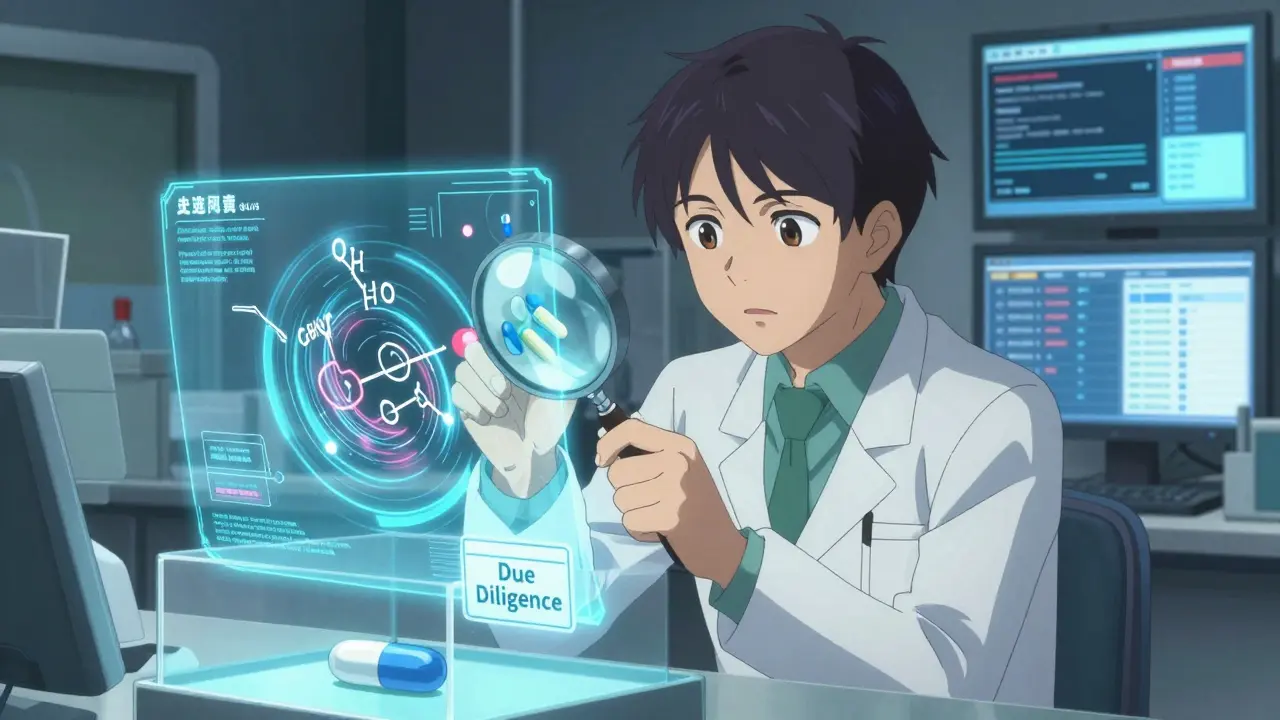
Underwriters at firms like Beazley make it clear: coverage depends on due diligence. That means you need records showing you checked your suppliers, ran batch verifications, and used traceability tools. If you’re just taking invoices at face value and shipping boxes without question, you’re not insured-you’re exposed.
The Rules That Are Supposed to Protect You
In 2013, the U.S. passed the Drug Supply Chain and Security Act (DSCSA). Its goal? To create a fully electronic, interoperable system to track every prescription drug from manufacturer to pharmacy. By November 2023, that system was supposed to be fully live. That means every package should have a unique identifier-a digital fingerprint-that can be scanned and verified.
But here’s the problem: not everyone is on the same system. Smaller distributors, international suppliers, and online pharmacies often operate outside these rules. The Medicrime Convention, which came into force in January 2016, made counterfeiting a criminal offense across 30+ countries. But enforcement? Still patchy. A fake drug made in India can be shipped to Canada, sold on a website based in the Philippines, and delivered to a patient in Halifax-all before anyone notices.

What Insurance Actually Covers (and What It Doesn’t)
Let’s say you’re a regional pharmacy. A patient gets sick after taking a generic blood pressure pill you bought from a new wholesaler. Tests show it’s fake-no active ingredient, just flour and dye. You didn’t know. You had no reason to suspect. Your product liability insurance steps in to cover:
- Legal defense costs
- Payouts to the patient or their family
- Regulatory fines (if applicable)
But if you bought the pills from a supplier with a history of complaints? Or if you ignored FDA alerts about that batch? Then your claim gets denied. Insurance doesn’t cover negligence. It covers honest mistakes in a system designed to be exploited.
Another gap? Intellectual property loss. When counterfeiters sell fake versions of your brand-name drug, you lose sales. Pfizer estimates they’ve prevented over 302 million counterfeit doses from reaching patients since 2004. But who pays for the lost revenue? Insurance won’t cover that. That’s a business risk-and one most companies handle through legal action, not claims.
How Companies Are Fighting Back
Some firms are going beyond insurance. They’re building their own defenses.
Bristol Myers Squibb runs a team that scans millions of webpages daily looking for their drugs being sold illegally. They shut down 93% of the illegal sites they find. Sanofi has a dedicated anti-counterfeit lab that analyzes suspect pills with advanced equipment. Pfizer works with law enforcement to trace fake shipments back to their source.
These aren’t just PR moves. They’re risk-reduction strategies-and insurers notice. Companies that invest in verification tech, real-time monitoring, and supplier audits often get better insurance rates. Why? Because they’re proving they’re not sitting ducks.
What You Need to Do Now
If you’re in the pharmaceutical supply chain-whether you’re a small pharmacy, a distributor, or a clinic-you can’t wait for someone else to fix this. Here’s what you need to do:
- Verify every supplier. Check their licenses. Look up their history with the FDA or Health Canada. Don’t trust a PDF invoice.
- Use traceability. If your system supports it, scan serial numbers on every package. If you’re still using paper logs, you’re behind.
- Train your staff. Teach them how to spot fake packaging-spelling errors, odd colors, mismatched lot numbers.
- Know your insurance policy. Read the fine print. Ask your broker: What counts as “due diligence”? What documentation do you need to keep?
- Don’t buy from eBay, Amazon, or random websites. Even if it looks legit, it’s not. The National Association of Boards of Pharmacy’s VIPPS program lists verified online pharmacies. Use those.
The Bigger Picture: Why This Matters Beyond Insurance
Counterfeit drugs don’t just hurt patients-they hurt everyone. They undermine trust in medicine. They drain money from real research. The $200 billion-a-year fake drug industry thrives because it’s cheap to make, easy to hide, and rarely punished.
Insurance helps absorb the damage. But it won’t stop the problem. Only better laws, smarter tech, and more accountability will do that. For now, your best protection isn’t a policy-it’s vigilance.
Every pill you handle carries a risk. The question isn’t whether you can avoid all counterfeits. It’s whether you’ve done everything you can to find them before they find someone’s bloodstream.
Does my business insurance cover counterfeit drugs?
Only if you can prove you acted in good faith and followed industry standards. Most policies cover accidental distribution of counterfeit drugs-but not if you ignored warnings, skipped supplier checks, or bought from unverified sources. Always ask your insurer what documentation they require to qualify for coverage.
Can I get insurance if I sell drugs online?
Yes-but it’s harder. Online pharmacies face higher scrutiny. Insurers will demand proof you’re using verified suppliers, scanning serial numbers, and complying with VIPPS or similar standards. Many standard policies exclude online sales unless you specifically add coverage. Be prepared to show your verification process.
What happens if a patient dies from a counterfeit drug I distributed?
If you had no knowledge of the counterfeit and followed due diligence, your product liability insurance should cover legal defense and potential settlements. But if you failed to verify the supply chain, your insurer can deny the claim. In extreme cases, criminal charges may also apply-even if you didn’t intend harm.
Are generic drugs more likely to be counterfeit?
Yes. Generic drugs are cheaper to produce and easier to replicate. They’re also less likely to have advanced security features like holograms or digital tracking. Counterfeiters target them because demand is high and scrutiny is lower. That’s why distributors of generics need to be extra careful with supplier verification.
How can I tell if a drug is fake?
Look for: mismatched packaging, spelling errors, odd smell or color, missing batch numbers, or packaging that feels flimsy. Use the FDA’s or Health Canada’s online tools to verify the drug’s registration. If you’re unsure, contact the manufacturer directly. Never assume a pill is real just because it looks right.
Is there a global system to track counterfeit drugs?
There’s no single global system, but the DSCSA in the U.S. and similar traceability laws in the EU and Canada are moving toward interoperable digital tracking. The Medicrime Convention helps coordinate international enforcement, but it doesn’t create a unified database. Until all countries adopt the same tech standards, counterfeit drugs will keep slipping through cracks.
Final Thought: Insurance Is a Backstop, Not a Solution
Insurance won’t stop a fake pill from being made. It won’t catch a smuggler crossing the border. It won’t fix broken regulations. But it can keep your business from collapsing when something goes wrong-provided you’ve done your part.
The real defense isn’t in your policy documents. It’s in your daily habits: checking every shipment, asking hard questions, trusting no one blindly. In a world where someone’s life could depend on a single pill, that’s not just smart business. It’s the only thing that matters.

9 Comments
Counterfeit drugs? Bro, the FDA’s just playing whack-a-mole. They intercept a few batches, but 90% of fake meds slip through. Insurance? LOL. You think a policy covers your dumbass for buying from a vendor with a .xyz domain? No. You’re on your own. #DontBeAnIdiot
It is patently incorrect to suggest that insurance serves as any meaningful safeguard in this context. The very premise presumes a moral equivalence between negligence and fortuitous error-when, in fact, the legal and ethical burden of due diligence is non-negotiable. One cannot invoke indemnification after willfully disregarding the DSCSA’s foundational tenets. The system does not fail; the actors do.
Y’all know who’s really behind this? Big Pharma. They let fakes in so people get sick, then charge MORE for the real stuff. 🤡 Plus, the FDA’s in bed with the big guys. I saw a video where a guy found fentanyl in his Zoloft-guess who got sued? The pharmacy. Not the Chinese lab making it. 🇨🇳💀 #DeepStatePharma
Man, I’ve seen this in my uncle’s clinic in rural Texas. They got a guy from ‘Global Pharma Supply’ sending them generic metformin for $0.02 a pill. No barcode, no lot number, just a FedEx box with no return address. He didn’t know it was fake till a patient had a seizure. Insurance denied it. He had to sell his truck. This isn’t a policy problem-it’s a humanity problem.
Let’s not forget: insurance is just one tool-and a reactive one at that! The real win is building a culture of verification. Train your staff. Use tech. Ask questions. Celebrate the team that catches a fake batch before it leaves the warehouse. That’s the kind of culture that saves lives-and keeps premiums low! 💪💊 #VigilanceWins
Every pharmacy needs a checklist: supplier license? Verified. Batch traceability? Scanned. Packaging anomalies? Documented. If you’re not doing this, you’re not insured-you’re just gambling with people’s lives. Simple as that.
Insurance companies are the real predators here. They design policies to deny claims. They bury the fine print. They wait for you to make one mistake-then pounce. And you call that ‘due diligence’? No. That’s predatory capitalism dressed in a white coat.
Think about it: counterfeit drugs are the ultimate symptom of late-stage capitalism. We commodify life-saving medicine, outsource production to the lowest bidder, and then slap on a liability policy like a Band-Aid on a hemorrhage. The system is designed to fail. The patient? The sacrificial lamb. The insurer? The silent beneficiary. And we’re all just scrolling through this post, nodding along, while the next fake pill sits in someone’s medicine cabinet… waiting. 🌑
Insurance doesn’t fix broken systems. It just lets them keep breaking. The real answer isn’t in a policy-it’s in radical transparency. Every pill should have a public blockchain trace. Every supplier, audited by independent global watchdogs. No more national borders, no more loopholes. We don’t need more coverage-we need more courage. And if that costs more? Good. Let’s pay for truth, not convenience.
Write a comment