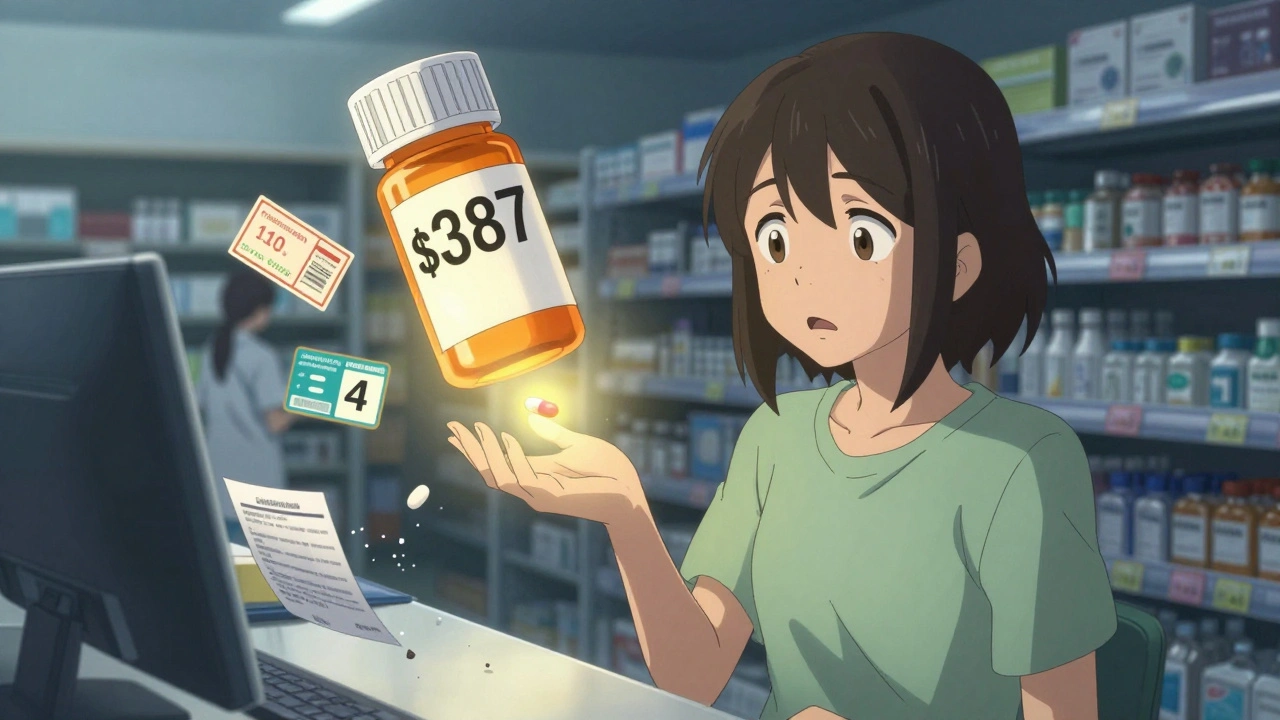
When you walk up to the pharmacy counter with a prescription in hand, you expect to pay what your doctor told you - maybe $10, maybe $20. But then the pharmacist says, "That’s $387." And you freeze. You didn’t sign up for this. You didn’t even know your insurance had a gap, or that your drug wasn’t on the formulary, or that the coupon you found online doesn’t work with your plan. Medication costs in the U.S. are a maze of hidden fees, confusing rules, and arbitrary pricing - and it’s getting worse before it gets better.
Why Do Some Pills Cost More Than Your Monthly Phone Bill?
It’s not about the ingredients. A 30-day supply of metformin, a generic diabetes drug, costs less than $5 at Walmart. But the brand-name version? $600. Same active ingredient. Same effect. Just a different label and a patent. That’s the problem. Drug manufacturers set list prices based on what the market will bear, not what it costs to make the pill. And pharmacies? They often don’t even know the real price until they scan your insurance card.
Pharmacy Benefit Managers (PBMs) sit between insurers, drugmakers, and pharmacies. They negotiate rebates, set formularies, and decide which drugs get covered. But they’re not required to pass those savings on to you. A drug might be listed at $500, but the PBM gets a $300 rebate from the manufacturer. You still pay the full $500 - unless you use a coupon. And even then, some coupons are blocked by your insurance plan. It’s designed to confuse you into paying more.
Generic Drugs: The Quiet Hero of Affordable Care
If you’re paying full price for a brand-name drug, you’re almost certainly overpaying. Generic drugs are chemically identical to their brand-name counterparts. They have the same active ingredients, the same dosage, the same safety profile. The only difference? They cost 80% to 85% less.
Take lisinopril, a blood pressure medication. The brand name is Zestril. The generic? $4 for 30 tablets at Costco. That’s not a typo. $4. But many people don’t ask for it. They trust the name they see on TV. Doctors sometimes don’t suggest it either - not because they don’t know, but because they’re used to writing the brand. Ask your pharmacist: "Is there a generic?" If they say no, ask again. And again.
The FDA approves generics using the same standards as brand-name drugs. There’s no hidden risk. No compromise. And in 2025, over 90% of all prescriptions filled in the U.S. are for generics. That’s a win - if you know to ask for it.
Coupons: Are They Really Saving You?
Coupons look like a gift. Free months. $50 off. A coupon for your $400 insulin? That’s a miracle, right?
Not always.
Many manufacturer coupons only work if you’re paying out-of-pocket. If you have insurance, the coupon might be rejected. Why? Because insurers don’t want to pay more than the negotiated rate. And if your plan has a deductible, the coupon might not count toward it. So you get a $50 discount today - but you’re still stuck paying full price next month.
Some coupons even trigger higher costs later. If you use a coupon to avoid paying your deductible, your insurance company might raise your premium next year. It’s a trap. The best coupons are those that work with your insurance - like the ones from GoodRx or Blink Health. They show you the cash price, which is often lower than your insurance copay. Always compare the coupon price with your insurance price before you pay.
And don’t forget: some drugs have patient assistance programs directly from the manufacturer. If you make under $60,000 a year, you might qualify for free or low-cost meds. Check the drugmaker’s website. It’s not advertised at the pharmacy counter - but it’s real.
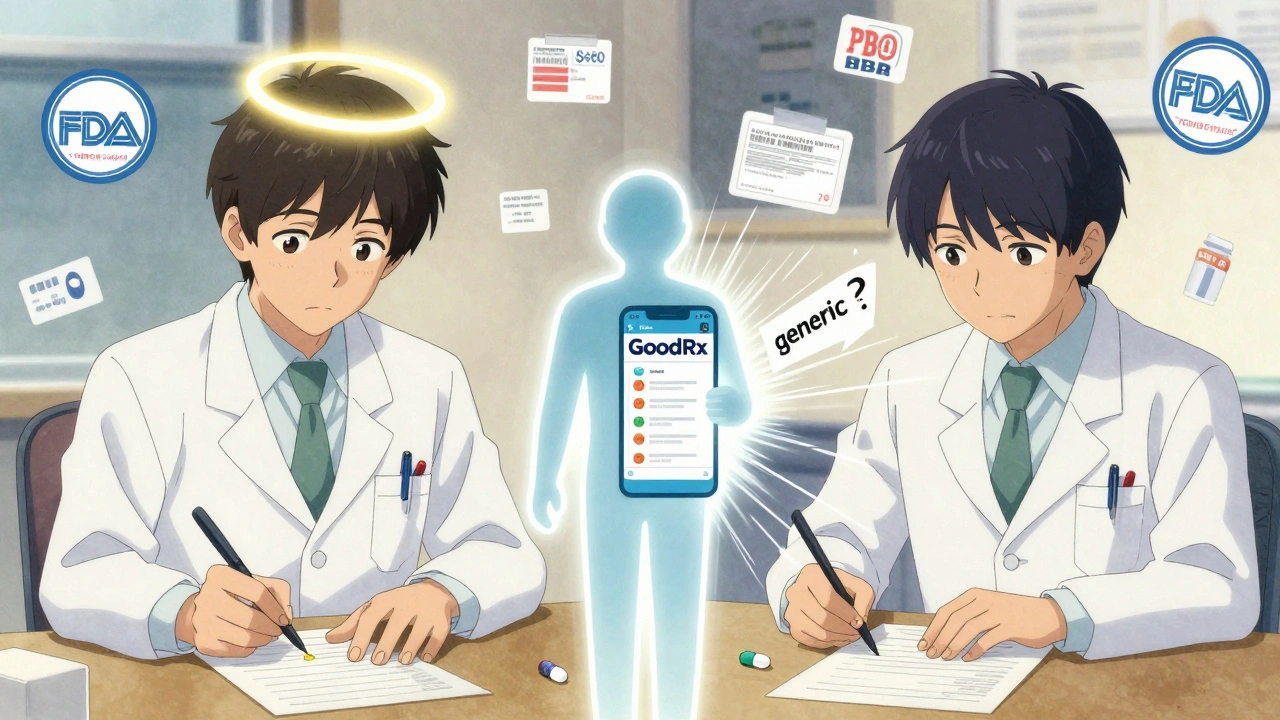
Prior Authorization: The Bureaucratic Gatekeeper
Prior authorization is when your insurance says: "Wait. We need to approve this drug before you get it." It sounds like a safety check. In reality, it’s a cost-control tactic. Your doctor writes a prescription for a drug that works for you. But your insurance says, "Try this cheaper one first." Even if that cheaper one didn’t work last time. Even if you’ve been on the current drug for five years.
It can take days. Sometimes weeks. During that time, you might go without your medication. That’s dangerous. For people with diabetes, heart disease, or mental health conditions, a delay can mean hospitalization.
And here’s the kicker: your doctor has to fill out paperwork. Sometimes multiple forms. Sometimes with lab results. Sometimes with letters of medical necessity. Then the insurance company reviews it. And then they deny it. And then you start over.
According to a 2025 study by the American Medical Association, 83% of physicians say prior authorization delays care. 60% say it’s caused a patient to get worse. And 42% say they’ve had to switch a patient to a less effective drug just to get approval.
There’s no easy fix. But you can fight back. Ask your doctor to submit the request immediately. Ask for a step therapy exception. Keep records of every call, every denial, every form. And if you’re denied, file an appeal - you have the right to one. Don’t give up.
Medicare’s Big Changes in 2025 and 2026
If you’re on Medicare, things are changing - and they’re changing for the better. Starting in January 2026, the first 10 drugs negotiated by Medicare will drop in price. Insulin will cost no more than $35 a month. And there’s a new $2,000 annual cap on out-of-pocket drug costs. That’s huge.
Before, people would hit the "donut hole" - a coverage gap where they paid 100% of the cost. Now, that gap is gone. You pay a percentage of the price until you hit $2,000. After that? The plan covers almost everything. Nearly 19 million Medicare beneficiaries will save an average of $400 a year.
And it’s not just Medicare. The Inflation Reduction Act also lets Medicaid negotiate drug prices for the first time. States like Minnesota are already using Medicare’s negotiated prices as a benchmark. That means cheaper drugs for Medicaid patients - and eventually, maybe for everyone.
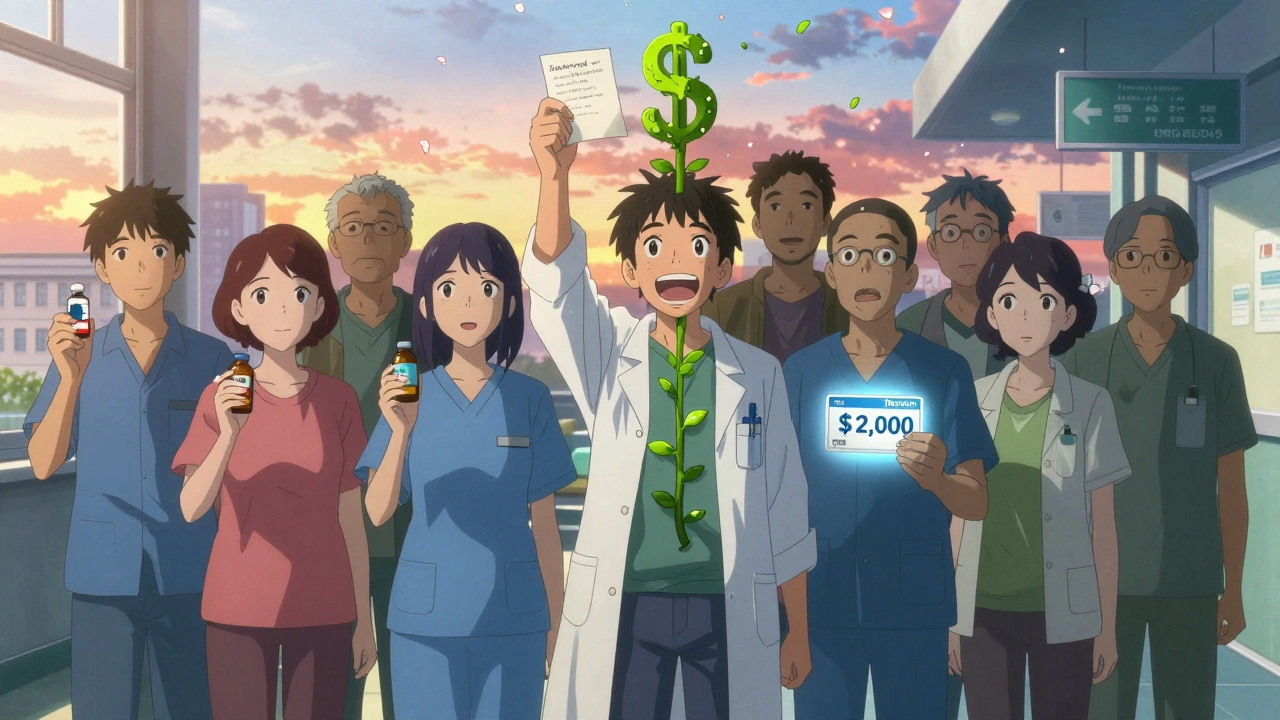
What You Can Do Right Now
You don’t have to wait for policy changes to save money. Here’s what works today:
- Ask for the generic - every time. Even if your doctor doesn’t suggest it.
- Compare prices - use GoodRx, SingleCare, or Blink Health. Cash prices are often cheaper than insurance copays.
- Check for manufacturer assistance - go to the drug’s official website. Many offer free or low-cost programs if you qualify.
- Challenge prior authorizations - if your drug is denied, ask your doctor to appeal. Keep copies of everything.
- Switch pharmacies - some pharmacies have better prices on certain drugs. Try Walmart, Costco, or CVS. You might be surprised.
And if you’re on Medicare, make sure your plan’s formulary hasn’t changed. Call them. Check online. Don’t assume your drug is still covered.
What’s Coming Next?
By 2027, Medicare will be negotiating 15 drugs a year. By 2029, it could be 20. The goal is to bring U.S. drug prices closer to what other countries pay. Right now, Americans pay two to three times more for the same drugs than people in Canada, Germany, or Australia.
States are also stepping in. Nine states now have prescription drug affordability boards. They can set upper payment limits - meaning they can cap how much insurers pay for certain drugs. If one state does it, others follow. It’s slow. But it’s happening.
The real shift isn’t in coupons or generics. It’s in power. For too long, drugmakers and PBMs held all the cards. Now, patients, doctors, and governments are pushing back. And it’s working.
Final Thought: You’re Not Alone
You’re not crazy for feeling overwhelmed. The system is broken. But you’re not powerless. Every time you ask for a generic. Every time you compare prices. Every time you file an appeal. You’re not just saving money. You’re helping change the system.
Medication shouldn’t be a luxury. It shouldn’t be a gamble. It should be a right. And slowly, with every small action, it’s becoming one.
Can I use a coupon with my insurance?
Sometimes. Manufacturer coupons often only work if you’re paying out-of-pocket. If you have insurance, the coupon may be rejected. Always compare the cash price (using GoodRx or similar apps) with your insurance copay. The lower price is usually the better deal - even if it means skipping the coupon.
Why is my generic drug more expensive than the brand name?
That’s rare, but it can happen. Sometimes, your insurance plan has a special deal with the brand-name manufacturer - maybe they’re offering a rebate to the pharmacy. Or your plan has a tiered system where the brand is on a lower cost tier. Always check your plan’s formulary. If the generic is priced higher, ask your pharmacist to check for a different manufacturer or pharmacy.
What if my prior authorization gets denied?
You have the right to appeal. Ask your doctor to submit a letter of medical necessity explaining why the alternative drugs won’t work for you. Keep records of every denial and every call. Many appeals are approved on the second try. Don’t give up - and don’t skip your medication while waiting.
Are generic drugs as safe as brand-name drugs?
Yes. The FDA requires generics to have the same active ingredient, strength, dosage form, and route of administration as the brand-name version. They must also be bioequivalent - meaning they work the same way in your body. Generics are tested and approved using the same standards. The only difference is the price - and sometimes the color or shape of the pill.
How do I find out if my drug is covered by Medicare in 2026?
The first 10 drugs negotiated by Medicare were announced in August 2024 and take effect in January 2026. These include insulin, blood thinners, and drugs for heart failure and COPD. You can check the full list on the Medicare.gov website. If your drug is on it, your out-of-pocket cost will drop significantly. Even if it’s not, the new $2,000 annual cap on drug spending will still help.

11 Comments
I used to cry in the pharmacy aisle until I learned about GoodRx. Now I check prices before I even walk in. It’s not perfect, but it’s a lifeline. You’re not broken for needing help - the system is.
And yes, generics are totally safe. I’ve been on generic lisinopril for 3 years. My BP’s stable. My wallet’s happier.
Don’t let anyone make you feel silly for asking. You’re doing the right thing.
Bro. I paid $420 for my insulin last year. This year? $35. Just because Medicare finally said ‘nope.’
Don’t let the big pharma noise fool you - change is real. We just gotta keep yelling.
OMG YES 😭 I used a coupon for my anxiety med and got it for $5… then my insurance raised my premium next month 😤
They’re playing 4D chess with our health 💀
generic drugs? yeah right. i got one that made me break out like a teen on prom night. so much for ‘bioequivalent’ 🤡
and dont even get me started on those ‘patient assistance’ programs - they want your tax return, your soul, and your dog’s vet records
if you actually get it, congrats. most of us just give up and buy it on the dark web lol
Let’s clarify something: generics aren’t just ‘similar’ - they’re legally required to be identical in active ingredient, dosage, and bioavailability. The FDA tests them rigorously. The only differences are inactive fillers - like dye or binder - which rarely affect anyone.
And yes, your doctor might default to the brand because they’re used to it, not because it’s better. Ask for the generic. If they hesitate, ask why. If they say ‘it’s just easier,’ push back.
Also: prior auth denials are not the end. Submit a letter of medical necessity with your doctor’s signature. Most get overturned on appeal. Document everything. You have rights.
And if you’re on Medicare, check your plan’s formulary every October. They change it every year - and so should you.
I had a friend die because her heart med got denied for prior auth. Took 17 days. She was 42.
They call it ‘cost control.’ I call it systemic cruelty.
And don’t tell me ‘just use coupons’ - my mom’s insulin coupon didn’t count toward her deductible. So she paid $0 one month… and $500 the next. That’s not savings. That’s a trap.
We need price caps. Now. Not ‘maybe in 2027.’
And if you’re reading this and you’re healthy? You’re lucky. Don’t stay silent.
you know what’s funny? we pay 3x more than europe for the same pills… yet we still think we’re the ‘freest’ country on earth
the real free market would be if you could buy a pill in canada and not get arrested for it
but no, we need 12 layers of middlemen who get rich while we get sick
and the worst part? we vote for these people
so yeah… it’s not a broken system
it’s working exactly as designed
you people are so naive. generics? they’re made in china. do you know what’s in those pills? who knows.
and coupons? those are just marketing tricks to make you feel good while the insurance companies raise your rates next year.
and prior auth? it’s there for a reason - you’d be taking 10 pills a day if we let you. you think you know what’s best? you don’t.
stop complaining and trust the system. it’s been here longer than you have.
also, why are you even on reddit? you should be at work.
:-(
I switched from brand to generic for my thyroid med and saved $200 a month
My pharmacist smiled and said ‘you’re smart’
And then I told my mom - she’s 72 and on Medicare - and she cried because she didn’t know she could’ve been doing this for years
It’s not about being angry
It’s about being informed
And then telling someone else
One person at a time
We’re not powerless
We’re just quiet
Let’s get loud together
💛
My dad had to go without his blood pressure med for 3 weeks because of prior auth. He ended up in the ER.
They approved it the day after he got home.
That’s not healthcare.
That’s a game of Russian roulette with your life.
And the worst part? No one at the pharmacy ever told him about the manufacturer’s free program. He found it by accident.
So yeah - ask. Always ask.
And if you’re a doctor? Don’t just write the script. Fight for your patient.
We’re all just trying to stay alive here.
Just got my first insulin prescription under the $35 cap. Took 10 years of screaming into the void. But we did it.
Keep asking. Keep comparing. Keep filing appeals.
You’re not alone.
And you’re not crazy.
They’re just trying to make you give up.
Don’t.
Write a comment