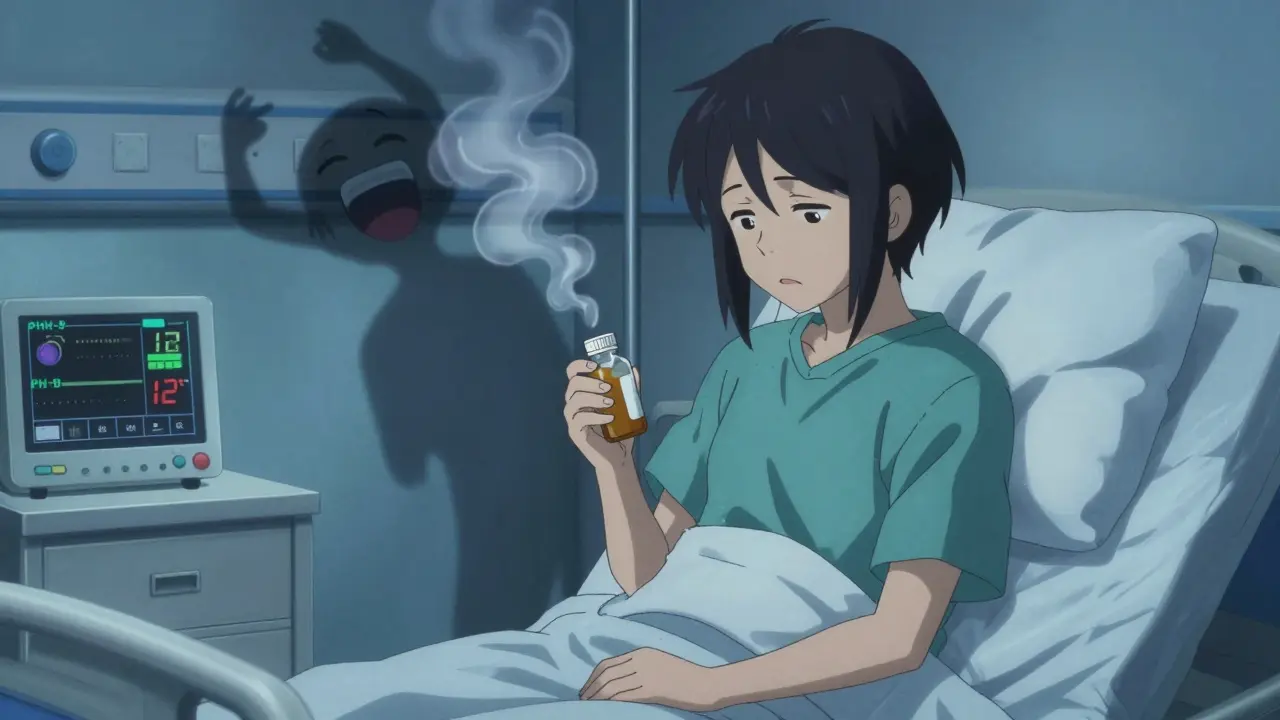
PHQ-9 Depression Screening Tool
Depression Screening Assessment
This 9-question assessment is based on the PHQ-9, a clinically validated tool for measuring depression symptoms. Answer honestly about how often you've experienced these feelings in the past two weeks.
If your total score is 10 or higher, it suggests moderate to severe depression that needs professional attention. Discuss your results with your doctor.
For each question, select the option that best describes how often you've been bothered by the listed problems during the past two weeks:
- 0 - Not at all
- 1 - Several days
- 2 - More than half the days
- 3 - Nearly every day
When you take opioids for pain, you might expect relief - not a heavier mood. But for many people, the very drugs meant to ease physical suffering can make emotional pain worse. It’s not just coincidence. Between 30% and 54% of people with chronic pain also have depression, and opioid use can push that number even higher. The link isn’t just psychological - it’s biological, chemical, and deeply personal.
How Opioids Can Make Depression Worse
Opioids work by binding to receptors in your brain that control pain, but those same receptors are also tied to how you feel emotionally. In the short term, they can lift your mood - especially if pain has been dragging you down. That’s why some people feel a sudden sense of calm or even euphoria after a dose.
But that relief doesn’t last. Over weeks or months, your brain starts to adapt. The natural chemicals your body uses to regulate mood - like endorphins and serotonin - start to slow down because the opioids are doing the job. When that happens, you don’t just need more opioids to manage pain. You also need them just to feel normal. That’s when depression creeps in.
Studies show that people taking more than 50 mg of morphine equivalent daily are over three times more likely to develop depression than those not using opioids. Even people taking lower doses for long periods show higher rates of low mood, loss of interest, and emotional numbness. In one study of burn patients, the more opioids they received over time, the worse their depression scores became - no matter how severe their injuries were.
The Bidirectional Trap
This isn’t a one-way street. Depression doesn’t just happen because of opioids - it can also lead to them. People with untreated depression often experience pain more intensely. Their bodies are already on high alert, and pain feels louder. So when they go to the doctor with back pain or headaches, they’re more likely to be prescribed opioids - and more likely to keep taking them longer than needed.
Once they’re on opioids, the cycle tightens. Depression increases the risk of long-term opioid use by two times. And the longer you’re on them, the more your brain’s reward system gets rewired. You start needing opioids just to feel okay - not just to stop hurting. It’s a loop: pain leads to opioids, opioids lead to depression, depression leads to more opioids.
And it’s not just about feeling sad. People on long-term opioids often report losing interest in things they used to love - friends, hobbies, even food. That’s called anhedonia. It’s one of the clearest signs that the brain’s mood system is being affected. Some people describe it as living behind glass - everything looks normal, but nothing feels real.
What the Science Says About Buprenorphine
There’s one opioid that seems to break the pattern: buprenorphine. Unlike morphine or oxycodone, it doesn’t fully turn on the brain’s opioid receptors. It’s a partial agonist - meaning it gives enough effect to reduce pain and cravings, but not enough to cause the same level of brain changes.
In studies of people with opioid use disorder, buprenorphine didn’t just help them stop using other opioids - it also lifted their mood. In one trial, patients with severe depression saw their Beck Depression Inventory scores drop from 24.7 to 13.4 over three months. That’s a move from severe depression to mild or even no depression.
Even more surprising: low doses of buprenorphine (as little as 1-2 mg per day) have shown antidepressant effects in people who didn’t respond to regular antidepressants. Within a week, some reported feeling lighter, more motivated. But here’s the catch - the FDA hasn’t approved buprenorphine for depression. Doctors can prescribe it off-label, but many don’t know about the data, or they’re afraid to try it.
How to Monitor Mood Changes
If you’re on opioids for more than a few weeks, you need to track your mood like you track your pain. You can’t wait until you’re in crisis to act. Depression doesn’t always come with tears. Sometimes it shows up as irritability, sleep problems, or just feeling “off.”
The simplest tool is the PHQ-9 - a nine-question screening test used in clinics across North America. It asks things like: “In the past two weeks, how often have you felt down, depressed, or hopeless?” or “How often have you had little interest or pleasure in doing things?” Each question is scored from 0 to 3. A total of 10 or higher suggests moderate to severe depression and needs attention.
But tools alone aren’t enough. You need to talk to someone who knows what to look for. Ask yourself:
- Have I stopped doing things I used to enjoy?
- Do I feel numb more often than sad?
- Have I been sleeping too much - or too little?
- Do I feel like I’m just going through the motions?
These aren’t signs of weakness. They’re signs your brain is changing.
Experts recommend screening for depression at the start of opioid therapy, then every three months - or every month if you’re on higher doses or have a history of mental health issues. Yet only 39% of doctors actually do this regularly. Don’t wait for them to ask. Bring it up yourself.
What to Do If You Notice Changes
If you’re feeling more down, flat, or hopeless while on opioids, don’t assume it’s just “how things are.” Talk to your doctor. Ask if your dose could be contributing. Ask about alternatives - like physical therapy, nerve blocks, or non-opioid pain meds like gabapentin or duloxetine.
Don’t stop opioids cold turkey. That can trigger withdrawal, which feels like the worst flu of your life - and can make depression worse. Instead, work with your provider to adjust slowly.
Consider combining pain treatment with mental health care. Cognitive behavioral therapy (CBT) has been shown to reduce opioid use by 32% in people with chronic pain and depression. It doesn’t fix the pain - but it changes how you relate to it. And that makes a huge difference.
If your doctor isn’t familiar with buprenorphine’s potential for treating depression, ask for a referral to a pain specialist or addiction medicine expert. There are clinics that specialize in treating both pain and mental health together - and they’re more common than you think.

The Bigger Picture
Science is still figuring out why opioids sometimes help mood and sometimes destroy it. One theory is that short-term use helps by reducing pain and activating natural reward pathways. Long-term use, though, causes the brain to lose its own ability to produce those good feelings. It’s like turning up the volume on a speaker until the music distorts - and then you can’t hear anything else.
Right now, researchers are using brain scans to see exactly how opioid use changes the structure and function of mood circuits. A major NIH-funded study is tracking 5,000 people with chronic pain and depression over the next few years. The goal? To find out who’s at highest risk - and how to stop it before it starts.
For now, the message is clear: opioids aren’t just painkillers. They’re mood-altering drugs. And if you’re using them for more than a few weeks, your mental health matters as much as your physical pain.
There’s no shame in needing help. The real risk isn’t taking opioids - it’s ignoring the warning signs they send.
Can opioids cause depression even if I don’t have a history of mental illness?
Yes. Even people with no prior history of depression can develop it while taking opioids long-term. The brain’s natural mood systems become less active over time, and without those chemicals, low mood, lack of motivation, and emotional numbness can appear. Studies show that long-term opioid use increases depression risk regardless of past mental health history.
How soon after starting opioids can depression appear?
Depression symptoms can show up within weeks. In one study, 27% of patients on long-term opioids developed worsening depression within three months. It often starts subtly - less interest in hobbies, trouble sleeping, or feeling emotionally flat. These aren’t always recognized as depression right away, which is why regular screening matters.
Is it safe to take antidepressants with opioids?
Many antidepressants, like SSRIs (e.g., sertraline, escitalopram) and SNRIs (e.g., duloxetine), are safe to use with opioids. In fact, combining them can improve outcomes. Duloxetine, for example, is approved for both depression and chronic pain. Always talk to your doctor about interactions - some combinations need monitoring, but most are well-tolerated and effective.
Can I stop opioids if I’m depressed?
Don’t stop abruptly. Stopping suddenly can cause withdrawal symptoms - including anxiety, insomnia, and worsening depression. Work with a doctor to taper slowly while adding mental health support. Many people find that as they reduce opioids, their mood improves - but only if they have the right support in place.
Why isn’t buprenorphine more widely used for depression?
Buprenorphine isn’t FDA-approved for depression, so most doctors don’t prescribe it for that purpose. It’s also tightly regulated because of its use in addiction treatment. But research shows promise - especially for treatment-resistant depression. Some clinics are using it off-label successfully, but access is limited. Advocacy and more clinical trials are needed to change this.
What Comes Next
If you’re on opioids and noticing mood changes, your next step is simple: write down how you’ve been feeling over the last two weeks. Use the PHQ-9 questions as a guide. Then bring that list to your next appointment. Ask: “Could my opioids be making my mood worse?”
There’s no single fix. But you don’t have to choose between pain relief and mental health. With the right support - careful monitoring, integrated care, and open conversations - you can manage both.
The goal isn’t to avoid opioids entirely. It’s to use them wisely - and to never ignore the signals your brain is sending.

12 Comments
i just started taking oxycodone for my back and i think i might be getting depressed?? i dont know if its me or the meds but i stopped caring about my plants and my cat stopped purring when i hold him idk what to do
Wow, this post is so spot-on. I’ve been on opioids for six years after a car wreck, and I didn’t realize until last year that my emotional numbness wasn’t just ‘being tired’-it was my brain literally forgetting how to feel joy. I used to love hiking, cooking, even just laughing with friends-but now I just stare at the ceiling. The PHQ-9 screen I did at my pain clinic? Scored 18. I cried reading it. Not because I was sad-but because I realized I hadn’t felt anything real in over a year. Buprenorphine changed everything. My doc was skeptical, but after three months on 4mg/day, my Beck score dropped from 26 to 9. I started cooking again. I hugged my daughter without feeling like I was underwater. It’s not magic-it’s neuroscience. And we need to stop acting like depression on opioids is ‘all in your head.’ It’s in your receptors. And it’s fixable.
So let me get this straight-you’re blaming opioids for depression, but you’re ignoring that people who are already depressed are way more likely to get addicted? This is classic medical gaslighting. You’re pathologizing normal human suffering and pushing pharmaceutical solutions like buprenorphine like it’s some miracle cure. Newsflash: depression isn’t a chemical imbalance-it’s a response to trauma, poverty, isolation, and systemic neglect. You think giving someone a drug will fix a life where they work three jobs and live in a trailer with no heat? Wake up.
yo i’m from bangalore and my cousin in delhi got prescribed tramadol for chronic back pain after a fall-he went from chill guy to zombie in 3 months. stopped watching cricket, stopped calling family, just sat there like a statue. we took him to a psych doc who asked if he was on opioids and he said ‘yeah, but i thought it was just stress’-turns out his serotonin was toast. they switched him to gabapentin + cBT and now he’s back to making masala chai and yelling at the TV during matches. point is: it’s not weakness. it’s biology. and yeah, buprenorphine sounds wild but it’s real. my cousin’s doc in delhi’s hospital is using it off-label and it’s working. why isn’t this everywhere??
bro this is so real. i was on hydrocodone for a year after a bad knee surgery. i thought i was just lazy. turns out i was emotionally dead. i stopped laughing at memes. stopped texting my homies. my gf left me because i 'felt like a ghost'. i found out about the phq-9 from a reddit thread. scored 21. went to my doc. he shrugged. i went to a pain clinic on my own. they put me on buprenorphine 2mg. within 10 days i cried watching a dog video. not because it was sad-because i felt something. thank god for the internet.
If you’re reading this and you’re on opioids and you’ve noticed you don’t care about anything anymore-you’re not broken. You’re not weak. You’re not failing. Your brain is just doing what it’s told to do: conserve energy because the chemicals it relies on are being hijacked. The fact that you’re here reading this means you still have a spark. Start with the PHQ-9. Write down one thing you used to love. Then ask your doctor: ‘Could my meds be doing this?’ Don’t wait for them to ask you. You’re the expert on your own life. And if they don’t listen? Find someone who will. There are clinics out there that treat pain and mental health together. You don’t have to choose between relief and feeling alive. You deserve both.
Let me tell you what they don’t want you to know. The pharmaceutical companies know opioids cause depression. They’ve known since the 90s. That’s why they pushed the ‘pain is undertreated’ narrative. They knew people would get hooked. And when they got depressed? They’d need more drugs. More antidepressants. More pills. The whole system is designed to keep you medicated. Buprenorphine? It’s not a miracle. It’s just another controlled substance with a nicer label. They’re just swapping one chain for another. And don’t let them fool you with ‘screenings’-they’re just checking boxes so they don’t get sued. Real healing? That’s not in a pill. It’s in community. In connection. In silence. In walking barefoot in the grass. But you won’t hear that from a doctor with a 7-minute appointment.
In India, we rarely talk about mental health with chronic pain. My uncle took tramadol for 5 years after a spine injury. We thought he was just ‘quiet’-turns out he was clinically depressed. No one asked. No one screened. He stopped eating, stopped talking, just sat in the courtyard all day. We didn’t know opioids could do this. When we finally took him to a psychiatrist in Chennai, he said: ‘This is opioid-induced depression. It’s reversible.’ He’s on buprenorphine now, 1.5 mg/day, and he’s laughing again. He’s even gardening. The point? This isn’t a Western problem. It’s a human problem. And we need to stop treating depression like it’s a personal failure. It’s a physiological consequence. And we need to educate doctors everywhere-not just in the US.
Depression is a choice. Opioids don’t cause it. Weak minds do.
Wow. I didn’t expect someone to say that. You know what’s a choice? Choosing to live in emotional numbness for five years because your doctor never mentioned the risk. Choosing to stop hugging your kids because you don’t feel anything anymore. Choosing to believe a 10-word comment on Reddit over 30 years of neurochemical research. I’m not weak. I’m surviving. And I’m not ashamed to say that buprenorphine gave me back my life. So if you’re going to judge, at least read the studies first.
From a neuropharmacological standpoint, the mu-opioid receptor downregulation cascade leads to a secondary dysregulation of the mesolimbic dopamine pathway, which in turn induces anhedonia and anhedonic depression. The HPA axis becomes hyperactive, cortisol levels rise chronically, and serotonergic tone diminishes. This is not anecdotal-it’s a well-documented neuroadaptation. The clinical implication? Long-term opioid therapy without concurrent neuromodulatory intervention is a biological liability. Buprenorphine’s partial agonist profile mitigates this by preventing full receptor internalization. The data is robust. The resistance is ideological.
thank you for writing this. i didn’t know i was depressed until i read the phq-9 questions. i thought i was just tired. now i’m going to my doctor tomorrow. i’m scared but i’m also hopeful. i just want to feel like myself again.
Write a comment