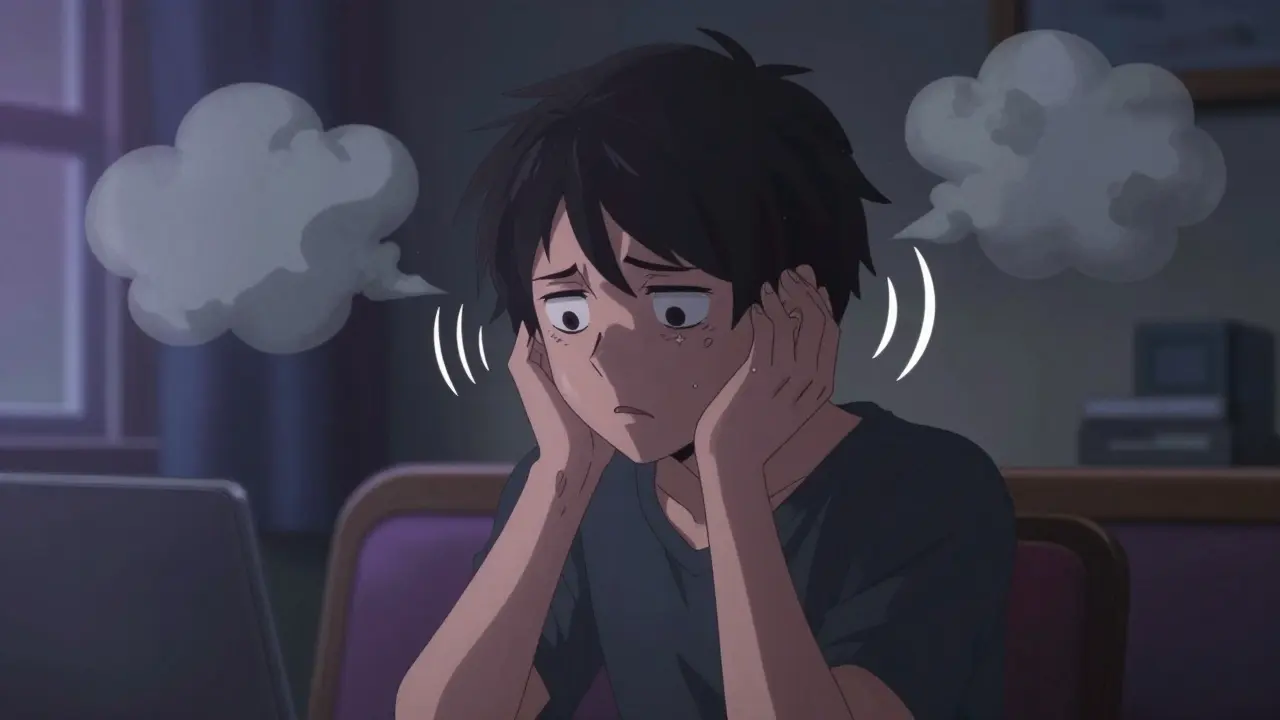
Imagine sitting in a quiet room, trying to listen to your partner speak, but their voice sounds muffled, as if they are talking from another room. You turn up the TV volume until your neighbors complain, yet you still struggle to catch low-pitched sounds like a man’s voice or the rumble of distant traffic. This isn’t just aging; it could be otosclerosis, a condition where abnormal bone growth in your middle ear traps the tiny bones responsible for hearing.
Otosclerosis is not just a minor annoyance-it is a progressive disorder that affects approximately 1 in 200 people in the United Kingdom and roughly 3 million Americans. It is one of the most common causes of hearing loss in adults under 50. The good news? It is rarely permanent deafness. With modern treatments, over 90% of patients regain functional hearing. But first, you need to understand what is happening inside your skull.
What Is Otosclerosis?
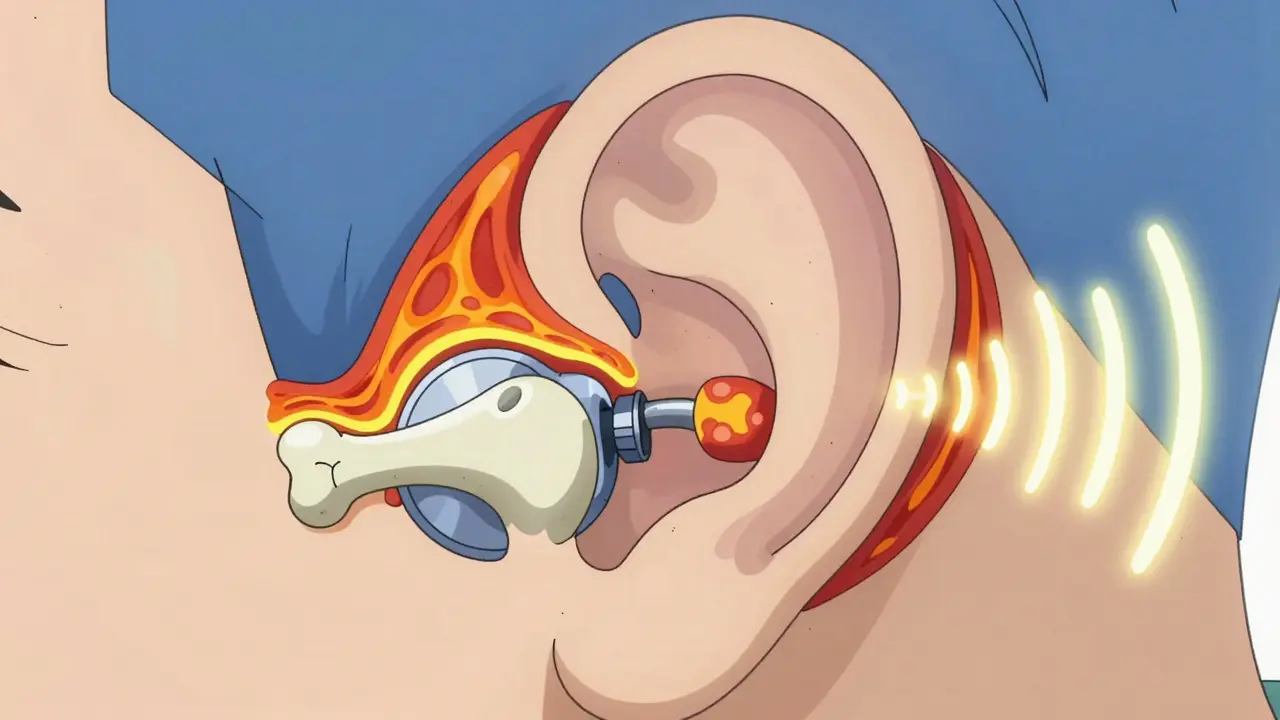
To understand otosclerosis, you have to look at the mechanics of your ear. Sound waves travel through your ear canal and hit your eardrum. This vibration moves three tiny bones called ossicles: the malleus (hammer), incus (anvil), and stapes (stirrup). The stapes is the smallest bone in the human body, measuring about 3.2 millimeters in length. Its job is to transfer vibrations into the fluid-filled inner ear.
In a healthy ear, the stapes acts like a piston, moving freely. In otosclerosis, abnormal spongy bone tissue forms around the base of the stapes, known as the footplate. Over time, this new bone hardens and fuses the stapes to the surrounding structures. When the stapes gets stuck, it can no longer vibrate. The sound energy hits a wall instead of passing through to the inner ear. This results in conductive hearing loss.
This process was first described in medical literature by Antonio Rossetti in 1863, with the term 'otosclerosis' coined by Henry Wickham in 1894. Today, we know it involves complex genetic factors. Research published in the Journal of Medical Genetics identified 15 distinct genetic loci associated with the condition, with the RELN gene on chromosome 7q22 being a significant marker. While the exact cause remains under investigation, it is clear that this is a biological error in bone metabolism, not damage from noise or age.
Symptoms: How Does It Feel?
The hallmark symptom of otosclerosis is progressive hearing loss that worsens slowly over years. Unlike noise-induced hearing loss, which typically damages high-frequency hearing first (making it hard to hear birds chirping or children speaking), otosclerosis often affects low frequencies. You might find it difficult to hear whispers, men’s voices, or the bass notes of music.
Many patients report a specific phenomenon called Paracusis Willisii. This is the ability to hear better in noisy environments. Why? Because when background noise is present, you instinctively raise your own voice or lean in closer, compensating for the lack of clarity. In a quiet room, however, the muffled quality becomes glaringly obvious.
Tinnitus, or ringing in the ears, is another major complaint. A Better Health Channel survey found that 80% of otosclerosis patients experience bothersome tinnitus, with 35% describing it as severely disruptive to sleep. For many, the ringing starts as a faint hum and grows louder as the bone fusion progresses.
It is crucial to distinguish otosclerosis from other conditions:
- Ménière's disease: Causes episodic vertigo and fluctuating hearing loss. Otosclerosis does not cause dizziness.
- Presbycusis (age-related hearing loss): Typically begins after age 65 and affects high frequencies. Otosclerosis usually manifests between ages 30 and 50.
- Eustachian tube dysfunction: Often feels like pressure or fullness. While otosclerosis can feel similar, audiometry will reveal a distinct air-bone gap.
Risk Factors and Demographics
Who gets otosclerosis? The data shows clear patterns. Women are affected twice as often as men, accounting for about 70% of cases. Pregnancy seems to accelerate the progression in some women, likely due to hormonal influences on bone metabolism. Family history is also a strong predictor-about 60% of patients have a relative with the condition.
Ethnicity plays a role too. According to the World Health Organization's 2022 Global Burden of Hearing Loss report, prevalence varies significantly:
| Population Group | Estimated Prevalence |
|---|---|
| Caucasian (European descent) | 0.3% - 0.4% |
| Asian populations | 0.2% - 0.3% |
| African populations | ~0.1% |
If you have fair skin, blue eyes, and a family history of hearing issues, you may be at higher risk. However, anyone can develop it. The average age of diagnosis is between 30 and 50, though symptoms often start earlier.
Diagnosis: Confirming the Cause
You cannot diagnose otosclerosis by looking in your ear. The eardrum usually looks normal. Diagnosis requires specialized testing performed by an audiologist or an otolaryngologist (ENT specialist).
The primary tool is pure-tone audiometry. This test measures your hearing thresholds at different frequencies. In otosclerosis, the test reveals a characteristic "air-bone gap." This means your bone conduction hearing (sound transmitted through the skull) is normal, but your air conduction hearing (sound entering through the ear canal) is poor. A gap of at least 15 dB is typical. Speech discrimination scores usually remain above 70%, indicating that your inner ear and brain are processing sound correctly-the problem is purely mechanical.
In some cases, a temporal bone CT scan may be ordered. These scans can show radiolucent foci (areas of abnormal bone) measuring 0.5 to 2.0 mm in early stages. However, imaging is not always necessary if the audiogram is classic for otosclerosis.
A common pitfall is misdiagnosis. Tampa General Hospital reported that 22% of patients experience diagnostic delays averaging 18 months, often being told they have Eustachian tube dysfunction or simple wax buildup. If standard treatments for these conditions fail, ask for a referral to an ENT.
Treatment Options: Surgery vs. Hearing Aids
Once diagnosed, you have two main paths: amplification or surgery. There is no medication that cures otosclerosis, though sodium fluoride has been used in some countries to slow progression. A 2024 study in the Journal of Otology showed a 37% reduction in hearing deterioration with fluoride treatment over 24 months, but it does not reverse existing loss.
Hearing Aids
About 65% of diagnosed patients initially choose hearing aids. Modern digital hearing aids are highly effective for otosclerosis because they amplify the specific frequencies you are missing. They are non-invasive and reversible. Many people use them successfully for years, especially if the hearing loss is mild to moderate (20-40 dB). However, as the bone fusion progresses, even powerful hearing aids may not provide enough gain without feedback (whistling).
Stapedectomy/Stapedotomy
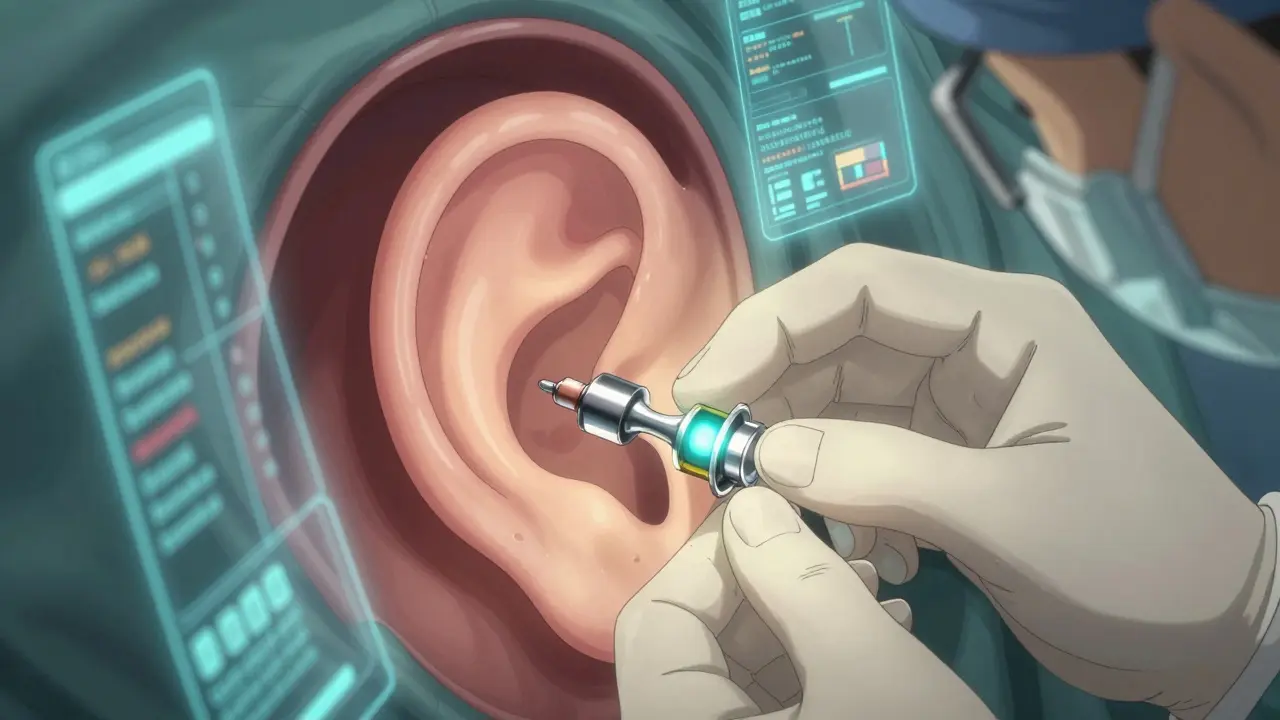
Surgery is the only way to fix the mechanical problem. The procedure, known as stapedectomy or stapedotomy, involves removing the fused stapes bone and replacing it with a tiny prosthesis.
- Anesthesia: Usually local anesthesia with sedation, so you are awake but comfortable.
- Access: The surgeon lifts the eardrum to access the middle ear.
- Removal: The fixed portion of the stapes is removed.
- Implantation: A small piston-like prosthesis is inserted to bridge the gap between the incus and the oval window.
The success rate is impressive. Dr. John Niparko of Johns Hopkins notes that stapedectomy achieves closure of the air-bone gap to within 10 dB in 92% of cases. Most patients experience immediate improvement in hearing. The American Academy of Otolaryngology rates stapedotomy as the gold standard treatment with Level A evidence.
However, surgery carries risks. Approximately 1% of patients experience profound sensorineural hearing loss, a devastating complication that must be thoroughly discussed during informed consent. Other risks include taste disturbance (due to nerve irritation), dizziness, and infection. Revision surgeries have lower success rates (75%) compared to primary procedures (95%), so choosing an experienced surgeon is critical.
Living with Otosclerosis
If you are diagnosed, do not panic. This is a manageable condition. Here are practical steps to take:
- Monitor Progression: Get annual audiograms. NHS England recommends tracking changes every year to decide when intervention is needed.
- Protect Your Residual Hearing: Avoid loud noises. Use earplugs in concerts or when using power tools. Protecting your inner ear is vital since otosclerosis already stresses the auditory system.
- Join Support Groups: The Hearing Loss Association of America has active support groups. Sharing experiences with others who understand the frustration of muffled speech can reduce anxiety.
- Communicate Openly: Tell friends and family about your condition. Ask them to face you when speaking and avoid talking from across the room.
The emotional impact should not be underestimated. Reddit discussions show that many patients feel isolated before diagnosis, thinking they are "going crazy" or losing their memory. Knowing there is a physical cause-and a cure-can be incredibly liberating.
Future Outlook
Research is advancing rapidly. The FDA approved the StapesSound™ prosthesis in March 2024, featuring a titanium-nitride coating that reduces postoperative adhesions. Clinical trials showed a 94% success rate at 12 months, compared to 89% for traditional prostheses. Genetic screening protocols are also on the horizon. Dr. Sarah Ketchum predicts that within five years, polygenic risk scores could identify high-risk individuals before symptoms even appear.
Despite concerns about a decline in surgeons performing stapes surgery, the demand remains steady. Otosclerosis will likely remain the third most common cause of adult-onset hearing loss through 2040. With improved diagnostics and surgical techniques, the prognosis for patients has never been better.
Is otosclerosis hereditary?
Yes, genetics play a significant role. About 60% of people with otosclerosis have a family member with the condition. Researchers have identified multiple genetic loci, including the RELN gene, associated with the disorder. If you have a parent or sibling with otosclerosis, your risk is higher than the general population.
Can otosclerosis cause total deafness?
Total deafness is rare. Otosclerosis primarily causes conductive hearing loss, which is mechanical. Even in advanced cases, the inner ear often retains some function. In about 10-15% of cases, it extends to the inner ear causing mixed hearing loss, but complete silence is uncommon. Treatment options like hearing aids or surgery are effective in over 90% of cases.
How much does stapedectomy surgery cost?
In the United States, out-of-pocket costs for stapedectomy range from $8,500 to $12,000, according to Healthcare Bluebook data. However, many insurance plans cover part or all of the procedure if deemed medically necessary. Costs vary significantly by region and hospital facility fees.
Does pregnancy affect otosclerosis?
Yes, pregnancy can accelerate the progression of otosclerosis in some women. Hormonal changes during pregnancy may stimulate abnormal bone growth. Many women notice a sudden worsening of hearing during or shortly after pregnancy. Monitoring hearing closely during this time is recommended.
Can I fly after stapedectomy surgery?
Most surgeons recommend waiting at least two weeks before flying to allow the middle ear to heal and equalize pressure properly. Flying too soon can cause pain or complications due to pressure changes. Always follow your specific surgeon's post-operative instructions regarding air travel.

11 Comments
Actually, the article is completely wrong about the RELN gene being a 'significant marker.' I read a different study that said it's barely relevant. Also, stapedectomy isn't the 'gold standard'-it's just what surgeons want you to believe so they can charge $12,000. People should just get hearing aids and stop listening to medical propaganda.
hey sherrie i think u might be overreacting a bit lol. the article seems pretty detailed and cites actual journals. i mean sure surgery is expensive but if ur ear is literally stuck maybe u need it fixed? also spelling matters less than understanding right?
Oh, hello friends! It is absolutely fascinating how our bodies betray us, isn't it? But let me tell you, this whole otosclerosis thing is a perfect example of why we need to take control of our health from the inside out. No pills, no surgeries, just pure American resilience! If you are feeling muffled, perhaps you are just not listening to your inner voice enough. Have you tried screaming into a pillow? It helps with the pressure!
Katie, please do not give medical advice on forums; it is dangerous! ; ) Sherrie, while skepticism is good, dismissing peer-reviewed research is not helpful. The air-bone gap is a real, measurable phenomenon. If you suspect otosclerosis, see an ENT. Do not wait. Early diagnosis saves hearing. Stay safe everyone! :)
It is truly disheartening to witness such ignorance regarding basic anatomical functions, for when one considers the intricate machinery of the human ear, which has evolved over millions of years to process sound waves with precision, it becomes evident that any disruption to this system, such as the abnormal bone growth described in otosclerosis, is not merely a minor inconvenience but a profound failure of biological integrity that demands immediate and rigorous scientific attention rather than the frivolous commentary often found on these platforms, where individuals who lack even a rudimentary understanding of genetics or audiology presume to critique complex medical procedures without ever having set foot in a hospital.
lol chris ur so pretentious with all those long sentences nobody reads them. honestly only people with proper education understand this stuff. if u cant afford the surgery then its ur fault for not planning ahead. poor people deserve to suffer for their lack of discipline.
The discourse surrounding otosclerosis reveals a deeper existential crisis within modern medicine: the reduction of human experience to mechanical failures. We treat the ear as a broken piston, ignoring the soul’s resonance. Is hearing merely the transmission of vibrations, or is it the bridge between the self and the other? Perhaps the muffled quality is not a defect, but a metaphor for our inability to truly hear one another in a fragmented world.
Paul, that's deep but kinda useless if you're actually trying to fix your hearing. Look, I'm an audiologist. Otosclerosis is a physical blockage. You can't philosophize away a fused stapes bone. If you have symptoms, get tested. Hearing aids work great for many, but surgery is the only cure for the mechanical issue. Don't let internet poets delay your treatment.
Why does everyone focus on Western medicine? In India, we have Ayurveda which balances the doshas. This bone growth is just Vata imbalance. You don't need titanium prostheses. You need ghee and meditation. Your obsession with surgery shows your spiritual emptiness. I feel drained just reading this thread.
Vinay, your 'spiritual emptiness' comment is noted 🙄. Meanwhile, my cousin got the StapesSound prosthesis and her life changed instantly. No ghee required. Just science. And yes, I am better than you because I prioritize evidence over ancient myths. 😎✨
Let us pause for a moment and appreciate the diversity of perspectives here, though some are more grounded in reality than others. Casey here, reminding everyone that while philosophy and tradition have their place, anatomy is unforgiving. If your stapes is fused, it is fused. Respect your body, respect the science, and please, for the love of clarity, cite your sources. Let's keep this conversation civil and informative. :)
Write a comment