
Opioid Response Assessment Tool
Disclaimer: This tool is for educational purposes only and is not a clinical diagnosis. Please consult a licensed healthcare provider for medical advice and treatment planning.
| Feature | Physical Dependence | Opioid Use Disorder (Addiction) |
|---|---|---|
| What is it? | A normal physiological adaptation | A chronic brain disease |
| Key Sign | Withdrawal symptoms upon stopping | Compulsive use despite harm |
| Brain Area | Locus ceruleus (autonomic) | Mesolimbic pathway (reward/craving) |
| Prevalence | Very common (nearly 100% after 30 days) | Less common (approx. 8% of chronic users) |
| Management | Medically supervised tapering | MAT and behavioral therapy |
The Science of Physical Dependence
First, let's talk about what's happening in your body. Physical Dependence is an adaptive state that develops when your body adjusts to the repeated presence of a drug. It isn't a behavioral choice; it's biology. When you take opioids, they bind to mu-opioid receptors in your brain, specifically inhibiting the release of norepinephrine in the locus ceruleus, which manages your "fight or flight" responses.
Over time, your brain notices this inhibition and tries to balance things out by cranking up its own signaling. It creates a new equilibrium. When you suddenly stop the medication, the "brake" (the opioid) is gone, but the "accelerator" (the brain's compensation) is still floored. This causes the classic opioid withdrawal symptoms. If you've ever felt the "flu-like" symptoms-the yawning, sweating, and diarrhea-you're experiencing your autonomic nervous system reacting to the loss of that chemical balance. According to the Clinical Opiate Withdrawal Scale (COWS), things like nausea and anxiety are reported in nearly 90% of these cases.
What Actually Defines Addiction?
Now, let's pivot to Opioid Use Disorder (or OUD), which is the clinical term for addiction. OUD is a chronic, relapsing disorder characterized by compulsive drug seeking and use despite adverse consequences. This isn't about the physical "sick" feeling of withdrawal. It's about the brain's reward system being hijacked.
While dependence lives in the parts of the brain that regulate body functions, addiction lives in the mesolimbic dopamine pathway and the prefrontal cortex. This is the area that governs decision-making and impulse control. When someone has OUD, their brain changes in a way that makes the drug feel necessary for survival, similar to food or water. You'll see behaviors like "doctor shopping," stealing to fund the habit, or continuing to use the drug even after it has destroyed a marriage or caused a job loss. This is a pathological behavioral syndrome, not a physiological adaptation.
Why the Distinction Matters for Patients
Why does this matter? Because for years, doctors and patients used these words interchangeably, and it caused a lot of harm. A 2020 study found that 68% of chronic pain patients thought they were "addicted" simply because they had withdrawal symptoms. This fear leads to a dangerous cycle: patients stop taking needed meds and their pain spirals, or doctors prematurely cut off a patient's medication because they mistake Physical Dependence for addiction.
Consider the numbers: nearly every person who takes opioids for more than a month will develop some level of physical dependence. However, only about 8% of those patients develop a full-blown Use Disorder. If we treat every dependent person as an "addict," we are misdiagnosing 92% of the population. This leads to stigma and an undertreatment of pain that can leave people disabled.
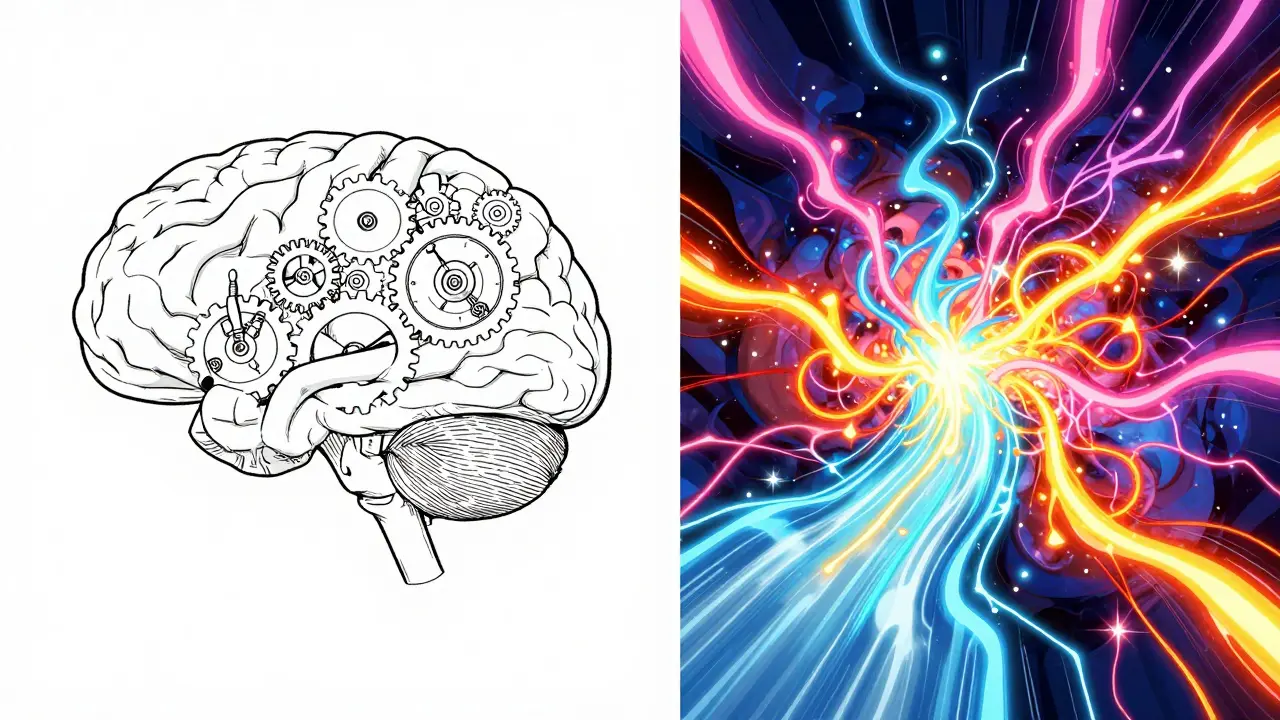
Spotting the Red Flags: Dependence vs. OUD
If you are trying to figure out where you or a loved one stands, look at the behavior, not just the physical symptoms. Physical dependence is about how the body reacts; addiction is about how the person behaves.
- Physical Dependence Indicators: You feel sick when you miss a dose, but you only take the medication as prescribed. You don't crave the drug when you have it; you just want your pain to be managed.
- OUD Indicators: You find yourself taking more than prescribed even when the pain is gone. You spend hours thinking about how to get more. You neglect your children or work to obtain the drug. You experience intense cravings (present in 83% of severe cases).
How to Safely Manage the Transition
The way you handle these two states is completely different. You cannot "treat" physical dependence with behavioral therapy, and you cannot fix OUD by simply tapering a dose.
For those with physical dependence, the goal is a slow, medically supervised taper. The CDC generally suggests reducing the dose by 5% to 10% every few weeks. This gives the brain time to reset its equilibrium without triggering a massive withdrawal crash. If you are on a high dose (over 100 MME), this process might take months, and that's okay.
For those struggling with OUD, a different approach is needed: Medication-Assisted Treatment (or MAT). MAT uses medications like buprenorphine or methadone to stabilize brain chemistry and reduce cravings, combined with behavioral therapy to rebuild the patient's life. Buprenorphine, for instance, has been shown to reduce mortality by 70-80% because it addresses the brain's reward circuitry rather than just the body's physical need.
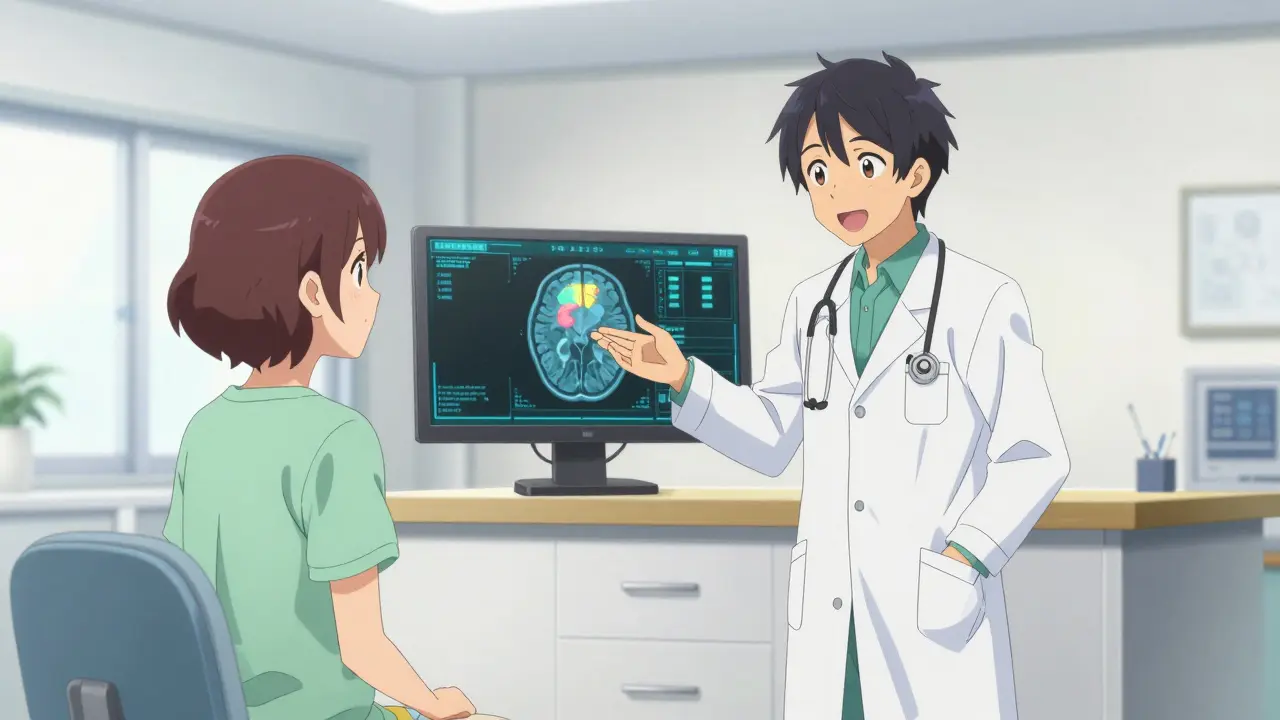
The Future of Diagnosis
We are moving toward a world where we won't have to guess. New research using fMRI biomarkers is showing that we can differentiate between the two with nearly 89% accuracy by looking at prefrontal cortex activation during craving tasks. In the next few years, a brain scan might be the definitive way to tell if a patient needs a simple taper or a comprehensive OUD treatment program.
Can I be physically dependent but not addicted?
Yes, absolutely. In fact, it's very common. Physical dependence is a normal bodily response to long-term opioid use. If you take your medication as prescribed and don't experience compulsive cravings or behavioral changes, you are physically dependent but not addicted.
Does tolerance mean I'm becoming an addict?
Not necessarily. Tolerance happens when your receptors become less sensitive to the drug, requiring a higher dose to get the same pain relief. While tolerance often goes hand-in-hand with physical dependence, it is a physiological process, not a sign of behavioral addiction.
What are the most common withdrawal symptoms?
The most frequent symptoms include nausea (92%), anxiety (89%), vomiting (85%), sweating (78%), and yawning (76%). These are caused by the brain's over-excitation once the opioid's inhibitory effect is removed.
How long does it take to develop physical dependence?
It typically develops within 7 to 10 days of continuous use, especially at doses exceeding 30 morphine milligram equivalents (MME) per day.
Can physical dependence be reversed?
Yes. Through a gradual, medically supervised taper, the brain can reset its baseline. Unlike the epigenetic changes seen in severe OUD, withdrawal-related adaptations usually resolve within a few weeks after the drug is completely gone.
Next Steps for Recovery
If you are currently taking opioids and are worried about your status, start by tracking your behavior. Are you taking extra pills? Are you lying about your use? If the answer is no, but you feel sick when you miss a dose, talk to your doctor about a tapering plan. Do not stop cold turkey, as this can be dangerous and physically grueling.
If you recognize the signs of OUD-compulsion, loss of control, and social decay-seek out a specialized clinic that offers MAT. The combination of buprenorphine or methadone with cognitive behavioral therapy is the gold standard for recovering from addiction and reclaiming your life.

About author Roger Baraldes
© 2026. All rights reserved.
13 Comments
This is such a helpful breakdown. Many people feel so much shame when they experience withdrawal, but knowing it's just a physiological adaptation can really help them reach out for help without fear of judgment. We need more of this empathy in healthcare!
Absolute nonsense!! 🙄 Calling it a "chronic brain disease" is just a way to strip away personal responsibility. People choose to take the first pill, and then they act surprised when they can't stop. It's a moral failure, not a medical one! 😤
Love this perspective! ✨ It's so important to be kind to ourselves and others while navigating recovery. You've got this everyone! 🌸💪
Let's be real here, most of you reading this are probably just looking for an excuse to keep popping pills. If you're "dependent" but not "addicted," you're still just a slave to a chemical. Wake up and take control of your life before you lose everything.
I completely agree with the distinction made here. In my experience working with different community health initiatives, the stigma attached to the word "addict" literally kills people because they stop being honest with their providers. We need to aggressively push for this terminology shift in every single clinic across the country right now!
The sheer arrogance of assuming a Western medical model is the only way to analyze this is staggering. This analysis fails to account for the systemic failures of the pharmaceutical industry which practically forced these medications on patients. It is a corporate crime, not just a biological fluke, and the data provided here is far too sanitized for the actual horror of the opioid crisis.
so... basicly saying... biology is an excuse...?? lol... truly an amature level of analysis,,, i've read better papers in a highschool libary...!!
It is wonderful to see such a clear distinction between these two states. It provides a roadmap for patients to understand their own bodies without falling into a spiral of self-loathing. :)
I must say that I find the section on medically supervised tapering to be exceptionally pertinent, as many patients are often left to suffer through the grueling process of withdrawal without any guidance, which is an unacceptable failure of the current healthcare infrastructure that requires immediate rectification through more comprehensive physician training and a more holistic approach to patient care over the long term.
typical gov propaganda tryin to make us think brain scans solve evrything lol. just more ways for big pharma to keep us on meds forever under a different name
Funny how they mention fMRI biomarkers now. I bet the companies selling those scanners are the same ones funding the studies to "prove" the difference. It's all a loop to keep us dependent on the medical-industrial complex while they monitor our brains like lab rats.
Focus on the behavior! That's the key. If you're staying on track, don't let the physical symptoms scare you into thinking you're a failure. Keep moving forward! 🚀✨
one must consider that the duality of the mind and body is forever blurred in the realm of pharmacopoeia and to suggest a clean line between the biological impulse and the psychological craving is a simplistic reduction of the human condition which is inherently chaotic and not reducible to a few mme counts or a dopamine pathway if you actually think about the existential dread of chronic pain it transcends mere chemistry it becomes the only truth the patient knows and thus the distinction between dependence and addiction is merely a linguistic tool for the elite to categorize the suffering of the masses in a way that makes the bureaucracy of medicine feel more orderly than it actually is in the raw reality of a clinic waiting room
Write a comment