
Medication Side Effect Timeline Estimator
How Long Do Side Effects Last?
Research shows most common side effects peak within 3-5 days and begin fading by day 10-14. By week 3-4, 70-80% of patients report significant improvement. This tool helps you understand your individual timeline.
What symptoms are you experiencing?
It’s not just in your head-but it’s also not always the medication. If you’ve ever felt your heart race after taking a new pill, convinced the dizziness, nausea, or sleeplessness was a sign something was seriously wrong, you’re not alone. In fact, 60% of people on blood pressure meds report similar fears. And here’s the twist: sometimes, the anxiety about side effects creates the very symptoms you’re dreading. This isn’t weakness. It’s biology. It’s called the nocebo effect-when expecting harm makes harm happen.
Why Your Brain Turns Normal Side Effects Into a Crisis
Your brain is wired to protect you. When you hear a medication might cause nausea, fatigue, or weight gain, your mind doesn’t just file that away. It starts scanning your body for signs. A slight headache? Must be the pill. A restless night? Definitely the medication. The truth? Most side effects are temporary, mild, and not dangerous. But anxiety turns small sensations into emergencies. A 2022 meta-analysis found that people who feared side effects were 58% more likely to quit their meds early-even when the side effects were normal and fading. That’s not just risky. It’s costly. For depression or anxiety meds, stopping too soon means your symptoms come back, often worse than before.How Cognitive Behavioral Therapy (CBT) Rewires Your Fear Response
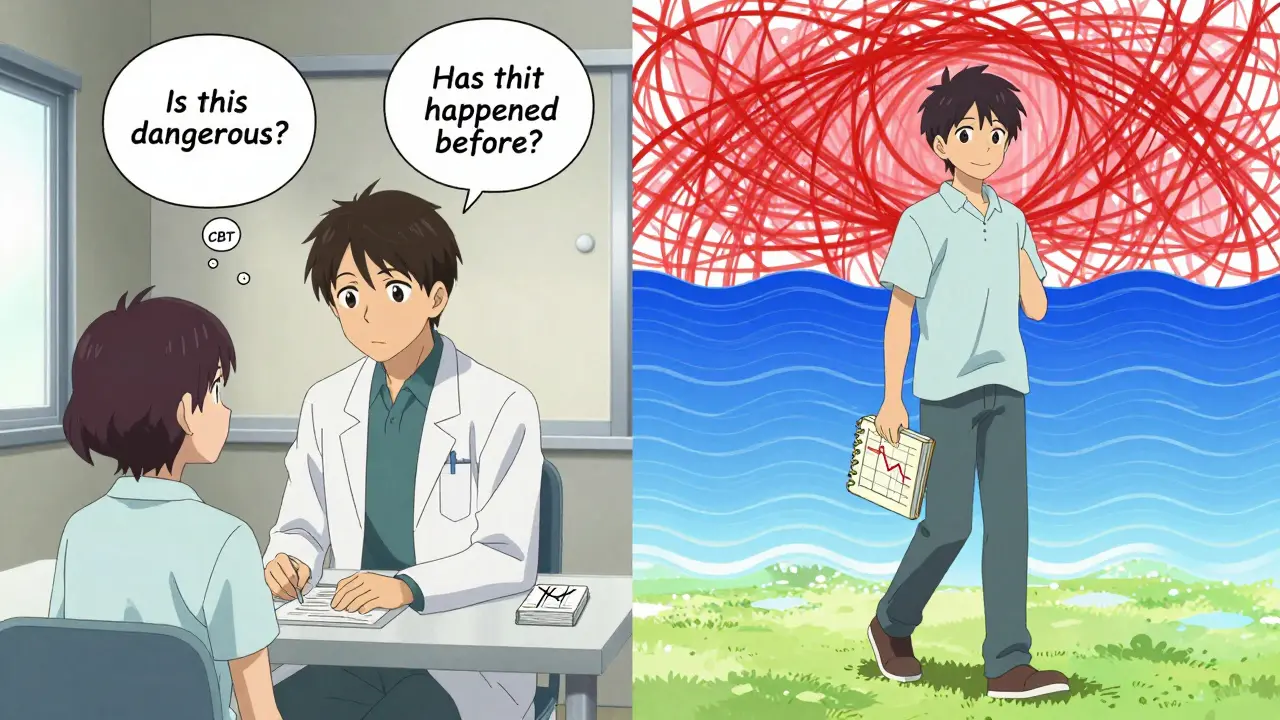
CBT isn’t just for panic attacks. It’s one of the most effective tools for medication anxiety-and it works fast. The goal isn’t to deny your feelings. It’s to question them. Here’s how it works in practice:- Identify the thought: “This dizziness means the drug is poisoning me.”
- Challenge it: “Has this happened before? Did I survive it? What’s the actual likelihood this is dangerous?”
- Replace it: “This is a common, temporary side effect. It peaks around day 3 and fades by day 14.”
The Two-Week Rule: A Simple Trick to Break the Cycle
The hardest part? Getting through the first two weeks. That’s when most side effects hit hardest-and when most people quit. The “two-week rule” is a no-nonsense strategy: commit to taking your medication for 14 days, no matter how bad you feel. Use that time to track symptoms, not to judge them. Write down:- What you felt (e.g., “nausea after lunch”)
- When it happened
- How intense it was (1-10 scale)
- What you did to cope
When Side Effects Are Real-But Not Catastrophic
Not all side effects are the same. Some are annoying. Some are manageable. A few are serious. Here’s what most people experience-and what to do:- Nausea: Take your pill with food. Suck on sugar-free hard candy. Drink cool water. Clinical trials show these steps cut nausea severity by 65%.
- Insomnia: If you’re on an SSRI, take it in the morning. Moving your dose from night to morning drops sleep problems from 35% to 15% in most people.
- Fatigue: It’s common in the first 2-4 weeks. Push through light activity-walking, stretching. Energy usually rebounds by week 3.
- Sexual side effects: These can be persistent, but they’re not always permanent. Talk to your doctor about dose changes or alternatives. Don’t assume it’s hopeless.
What Works Better Than Just “Staying Positive”
Telling yourself “just relax” doesn’t work. You need tools.- Probability testing: Ask: “What’s the real chance this side effect is dangerous?” For most people, the answer is less than 1%. That’s not paranoia-it’s perspective.
- Symptom normalization: “Everyone feels this at first. It doesn’t mean I’m broken.” Hearing that from your doctor or a peer reduces fear by 65%.
- Grounding techniques: When anxiety spikes, focus on your senses: 5 things you see, 4 you can touch, 3 you hear, 2 you smell, 1 you taste. This interrupts the panic loop.
What If Your Doctor Doesn’t Get It?
Too many patients say their concerns were brushed off. “It’s all in your head,” they’re told. That’s not helpful. It’s harmful. You have a right to support. If your doctor dismisses your anxiety, say this: “I know side effects are common, but my fear is making it harder to take my meds. Can we talk about psychological strategies to manage it?” Many clinics now use standardized protocols. Kaiser Permanente, for example, trains staff to offer side effect timelines and coping tools as part of routine care. Ask if your clinic has a “medication anxiety protocol.” If they don’t, bring in resources from Mayo Clinic or HelpGuide.org. You’re not being difficult-you’re being informed.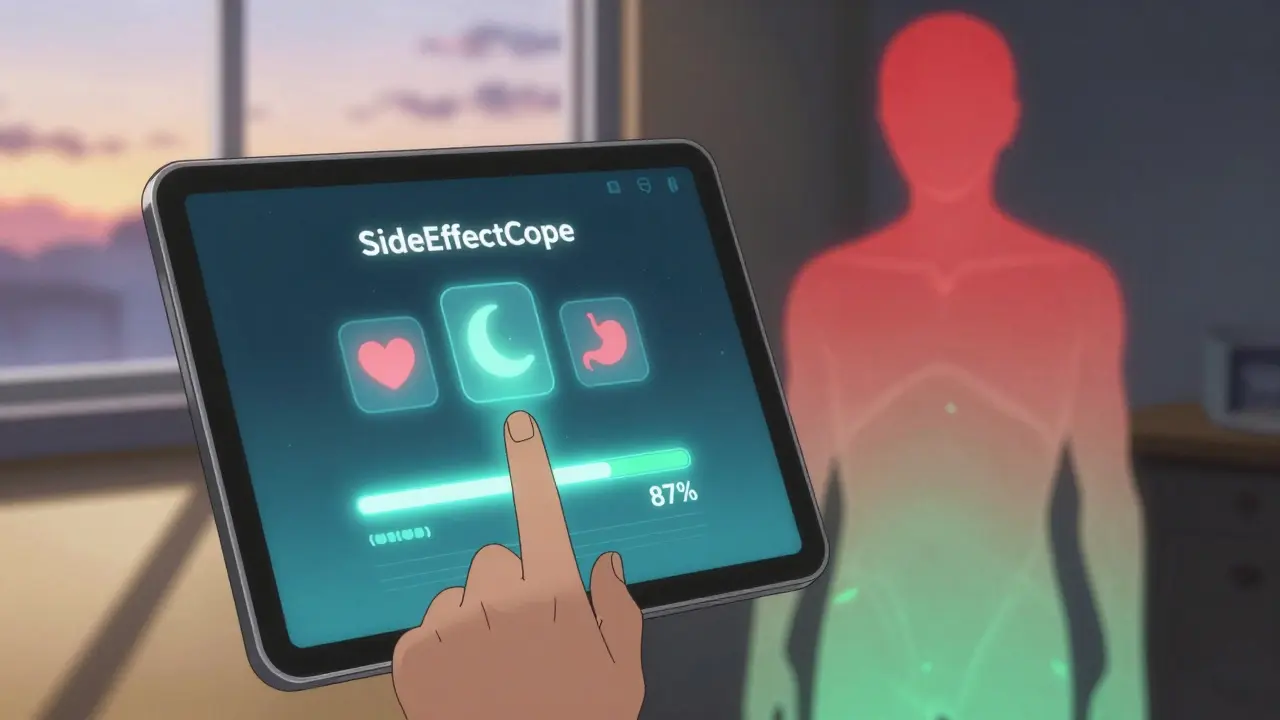
What’s New: Digital Tools That Actually Help
In March 2024, the FDA approved the first app designed specifically for medication anxiety: SideEffectCope. It uses CBT exercises, symptom trackers, and personalized education. In trials, it cut discontinuation rates by 53%. Apps aren’t magic. But if you’re waiting weeks for a therapist, or live in a rural area with no specialists, this is a real lifeline. Free alternatives like the “Managing Medication Anxiety” workbook by Dr. Martin Antony (2022) also show 55% effectiveness when used consistently over 8 weeks.Why This Matters More Than You Think
Medication anxiety isn’t just about feeling nervous. It’s a public health blind spot. Only 35% of primary care clinics offer any psychological support for this. Rural areas? Just 22%. But here’s the upside: when you tackle the fear, adherence jumps by up to 40%. That means fewer hospital visits. Fewer relapses. Better outcomes. For depression, anxiety, and chronic conditions, sticking with treatment isn’t optional. It’s life-changing. The goal isn’t to never feel anxious. It’s to not let anxiety stop you from getting better. You don’t need to be fearless. You just need to be persistent.What to Do Next
Start today:- Write down your top 3 fears about your medication.
- Look up the typical timeline for side effects (Mayo Clinic or HelpGuide.org have clear charts).
- Commit to 14 days of taking your pill, no matter what.
- Track symptoms in a notebook or app.
- Use one grounding technique when anxiety hits-breathe, name five things you see, sip cold water.
Are medication side effects usually dangerous?
Most side effects aren’t dangerous-they’re uncomfortable. Nausea, dizziness, fatigue, and sleep changes are common in the first 2-4 weeks of starting a new medication, especially antidepressants or blood pressure drugs. These typically fade on their own. Only a small fraction of side effects signal a serious reaction. If you have chest pain, trouble breathing, swelling, or severe rash, contact your doctor immediately. Otherwise, most symptoms are temporary and manageable.
Can anxiety make side effects worse?
Yes. This is called the nocebo effect. When you expect a side effect, your brain can amplify physical sensations, making them feel stronger or more frequent. A headache you might have ignored becomes proof the drug is harming you. Research shows anxious patients report more side effects-even when they’re on a placebo. Managing anxiety doesn’t make the side effects disappear, but it helps you interpret them correctly.
How long do medication side effects last?
For most people, common side effects like nausea, dizziness, or fatigue peak within 3-5 days and begin to fade by day 10-14. By week 3-4, 70-80% of patients report significant improvement. Some side effects, like sexual dysfunction or weight changes, may take longer or persist. That doesn’t mean you have to live with them-talk to your doctor about adjustments. But don’t assume the worst too soon.
Is CBT the best option for medication anxiety?
CBT is the most researched and effective psychological approach, with studies showing 65-75% success in reducing medication anxiety. It works by changing how you think about side effects-not by denying them. Acceptance and Commitment Therapy (ACT) and Mindfulness-Based Stress Reduction (MBSR) also help, but CBT has the strongest evidence for improving medication adherence. If you can access a trained therapist, it’s the top choice. If not, self-guided CBT workbooks or FDA-approved apps like SideEffectCope are strong alternatives.
What if my doctor won’t help me with my anxiety about meds?
If your doctor dismisses your concerns, it’s not your fault. Ask directly: “Can we discuss psychological strategies to help me manage my fear of side effects?” Bring printed resources from Mayo Clinic or HelpGuide.org. Many clinics now use standardized protocols. If you’re still met with resistance, consider asking for a referral to a behavioral health specialist or seeking a second opinion. Your mental health matters as much as your physical health.
Are there apps that can help with medication anxiety?
Yes. In March 2024, the FDA approved SideEffectCope, the first digital therapeutic app designed specifically to reduce medication anxiety using CBT techniques. It includes symptom tracking, psychoeducation, and guided exercises. Studies showed a 53% reduction in treatment discontinuation. Free or low-cost alternatives include workbooks like Dr. Martin Antony’s “Managing Medication Anxiety” or mindfulness apps with CBT modules. These aren’t replacements for care, but they’re powerful tools when professional support is hard to access.

10 Comments
Been on SSRIs for 5 years. The first two weeks felt like my body was betraying me. Started tracking symptoms like you said-wrote down every dizzy spell and nausea spike. By day 12, I could see the pattern. It wasn’t the drug. It was my panic making everything feel worse. Sticking it out changed everything.
Now I just breathe and wait it out.
The nocebo effect is one of the most underdiscussed forces in modern medicine. We treat the body like a machine, but it’s a story-telling organ. If you believe the pill is dangerous, your nervous system will find evidence to prove it-even if it’s just a normal headache.
CBT doesn’t erase the sensation. It changes the meaning. That’s the real magic.
From a clinical perspective, the 65–75% reduction in fear post-CBT aligns with meta-analytic data on cognitive restructuring for somatic symptom disorders. The two-week rule leverages extinction learning-repeated exposure without aversive outcome weakens the conditioned fear response.
Also, the FDA-approved SideEffectCope app demonstrates ecological validity; its algorithmic feedback loops mirror in vivo exposure protocols. This isn’t anecdotal-it’s neuropsychological engineering.
It is imperative to acknowledge that the pharmaceutical industry has a vested interest in minimizing the perception of adverse effects. One must question the source of every statistic cited herein. Are these figures derived from double-blind, placebo-controlled trials? Or are they extrapolated from marketing whitepapers?
While I do not dispute the existence of psychological modulation of somatic experience, I remain skeptical of any intervention that does not involve full disclosure of corporate funding and conflict of interest.
60% of people feel anxious? Yeah, because the drugs are literally poisoning them. You ever hear of the 2018 whistleblower report on SSRI liver toxicity? No? Because they buried it.
They want you to think it's 'just anxiety' so they can keep selling pills to a population too scared to ask questions.
Try herbal supplements. They don't have side effects. Just ask the guy on YouTube with the 300k subs.
I was so scared to start my antidepressant. Thought I’d turn into a zombie. But I did the two-week rule. Wrote everything down. Took walks. Drank water. Didn’t give in.
Day 15? I felt like me again. Not perfect. But better.
You can do this. Seriously. You’re not broken. You’re just learning how to listen to your body without letting fear scream for you.
I’ve used the symptom tracker method for my blood pressure med. It helped me realize I was mistaking normal fluctuations for emergencies. The 1-10 scale was surprisingly useful-most days were 2s and 3s, not 8s.
Also, taking it with food cut the nausea in half. Small tweaks matter.
Thanks for the practical stuff. Most articles just say ‘stay positive’ and that’s useless.
65% drop in fear? LOL. Where’s the peer-reviewed study with actual p-values? You’re quoting ‘studies’ like they’re TikTok trends.
Also, ‘SideEffectCope’? Sounds like a scam app made by a pharma intern. And ‘Mayo Clinic says’-did they pay you to say that?
Just stop taking the meds. Your body knows better than some doctor with a clipboard.
I’m someone who used to panic every time I felt a flutter in my chest after taking my anxiety med. I thought I was having a heart attack. Turns out? It was just my body adjusting. I started using the 5-4-3-2-1 grounding trick when the fear hit-and it worked way better than I expected.
Also, talking to someone who’d been through it helped more than any article. It’s not about being strong. It’s about not being alone.
Thank you for writing this. I wish I’d seen it six months ago.
Oh wow, so now we’re supposed to believe that every single side effect is ‘just anxiety’? What about the people who actually got hospitalized? What about the ones who had seizures? What about the ones who died because they were told ‘it’s all in your head’?
You’re gaslighting people who are scared for their lives. And you call this ‘helpful’? This is dangerous. This is corporate propaganda wrapped in CBT jargon.
Don’t take your meds. Trust your gut. Not some app. Not some ‘two-week rule.’ Your body is trying to tell you something.
Write a comment