Sleep Hygiene Calculator
Your Sleep Schedule Planner
Optimize your sleep using science-backed strategies from the article. Set your wake-up time and medication schedule to calculate your ideal bedtime and maximize sleep quality.
Your Personalized Sleep Schedule
Optimal bedtime:
Minimum sleep duration:
Key Recommendations
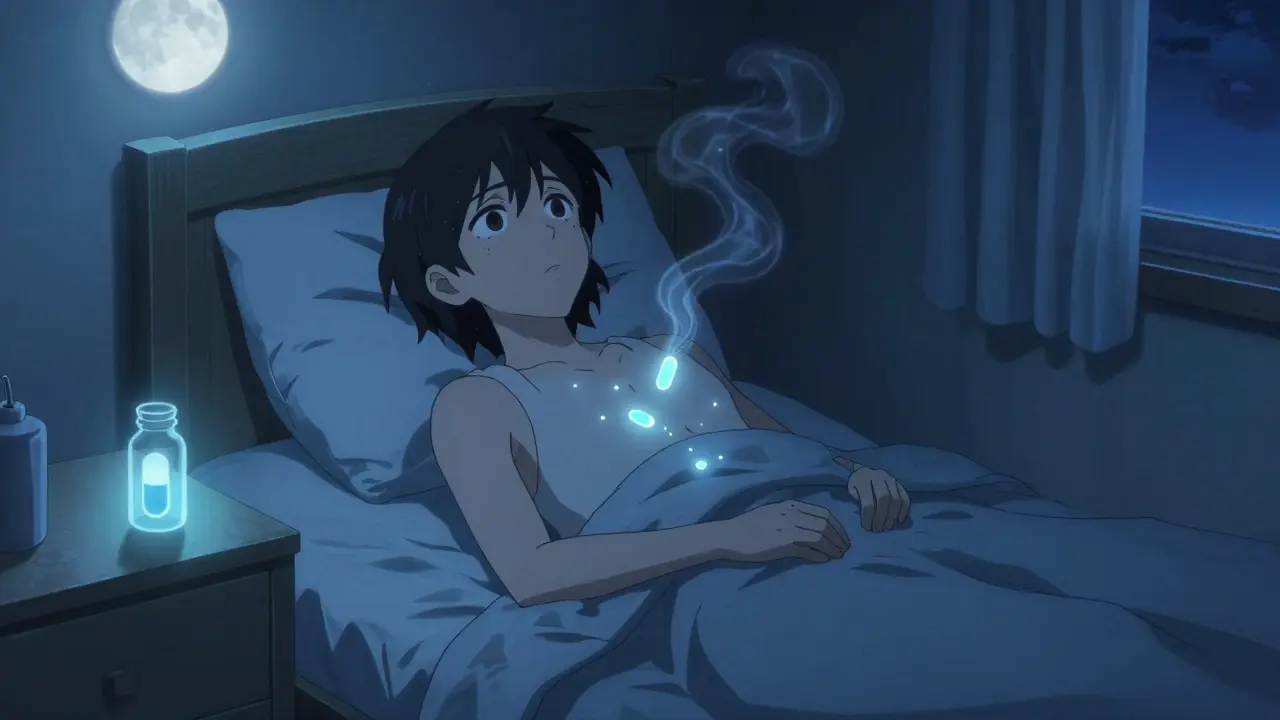
What if your medication is keeping you awake-or making you groggy all day? You’re not alone. Millions take pills for high blood pressure, depression, or insomnia, only to find their sleep is worse than before. The problem isn’t always the disease. It’s the treatment. And the solution isn’t another pill. It’s sleep hygiene.
Why Your Medication Is Ruining Your Sleep
Not all sleep problems come from stress or coffee. Sometimes, they come from the very drugs meant to help you. Antidepressants like fluoxetine (Prozac) can be so stimulating that falling asleep feels impossible. Meanwhile, beta blockers like metoprolol cut your body’s natural melatonin by nearly 40%, messing with your internal clock. Even sleep meds like zolpidem (Ambien) can leave you feeling hungover-drowsy, foggy, and unsteady the next morning. Studies show 68% of people on these drugs report next-day drowsiness, and 42% struggle with memory lapses. The FDA added black box warnings to several sleep medications after reports of people driving, eating, or even leaving their homes while asleep. These aren’t rare accidents. They’re documented side effects. And the risk grows with age. Seniors are over three times more likely to suffer severe next-day impairment than younger adults.What Sleep Hygiene Really Means (And Why It Works)
Sleep hygiene isn’t about buying a new mattress or using lavender spray. It’s a set of science-backed habits that train your body to sleep better-no pills needed. Developed in the 1980s by Dr. Peter Hauri at Mayo Clinic, it’s now the first-line recommendation from the American College of Physicians and the American Academy of Sleep Medicine. Why? Because drugs come with risks. Sleep hygiene comes with results. A 2022 study in JAMA Internal Medicine found that people who stuck to a fixed wake-up time every day-even on weekends-improved their sleep efficiency by over 58%. That’s more than half the people who followed this rule saw their sleep quality jump significantly. And it didn’t require changing their meds.Fix Your Wake-Up Time First
The most powerful sleep hygiene rule? Wake up at the same time every day, within 30 minutes. No exceptions. Not even after a bad night. This isn’t just about routine. It’s about resetting your circadian rhythm, which medications like beta blockers and antidepressants have already thrown off. Set your alarm for the same time daily. If you normally wake at 7 a.m., don’t let yourself sleep past 7:30 a.m. Even if you went to bed at 2 a.m. Get up. Open the curtains. Step into natural light. This tells your brain: it’s daytime. Your body will adjust over time. In three weeks, your sleep pressure will naturally build up at night, making it easier to fall asleep without drugs.Control Light Like Your Sleep Depends on It (Because It Does)
Melatonin is your body’s natural sleep hormone. But many medications lower it. So you have to protect what’s left. After 8 p.m., turn off all blue light. That means phones, tablets, TVs, and even LED bulbs. Use red or amber night lights if you need to get up. Blue light suppresses melatonin even more than caffeine. On the flip side, get bright light first thing in the morning. Sit by a window for 10 minutes. Or use a 10,000-lux light therapy box for 30 minutes. This counteracts the melatonin suppression from beta blockers and helps your body know when to be awake-and when to sleep.Time Your Exercise Right
Exercise helps sleep-but only if you do it at the right time. Working out too close to bed can make insomnia worse, especially if you’re on stimulant medications like SSRIs. The fix? Finish any vigorous activity at least four hours before bedtime. A brisk walk after dinner is fine. But don’t lift weights or run at 9 p.m. if you’re trying to fall asleep by 11.
Adjust When You Take Your Sleep Medication
If you’re on zolpidem, eszopiclone, or zaleplon, timing matters more than dose. These drugs work fast. But if you take them too early-or don’t plan for a full 7-8 hours of sleep-you’ll wake up groggy, or worse. The FDA says taking zolpidem only when you can sleep uninterrupted reduces next-day impairment by 32%. Set a rule: Don’t take your sleep pill unless you’re certain you can stay in bed for at least seven hours. No late-night scrolling. No checking emails. No drinking alcohol. Just sleep.Diet Can Make or Break Your Sleep
What you eat affects how your meds work. Aged cheeses, cured meats, and soy sauce contain tyramine-a compound that can spike blood pressure and disrupt sleep, especially if you’re on hypertension meds. Avoid them in the evening. On the other hand, magnesium-rich foods like spinach, almonds, and black beans can reduce insomnia severity by over 34 points on the Insomnia Severity Index, according to a 2020 study. Try a small handful of almonds or a spinach salad before bed. It’s not magic. But it’s safer than another pill.Build a Buffer Between Meds and Bed
If you take a medication that affects your nervous system-like an antidepressant or a beta blocker-don’t lie down right after. Give yourself a two-hour buffer. Walk, read a physical book, listen to calm music. This prevents the drug from hitting your system while you’re trying to wind down. Your brain needs time to separate the drug’s effects from your sleep signals.Track What Works-And What Doesn’t
Start a simple sleep log. For one week, write down:- What time you took each medication
- What time you went to bed and woke up
- How rested you felt in the morning (1-10 scale)
- Any unusual symptoms (nighttime eating, memory gaps, dizziness)

Why Sleep Hygiene Beats More Pills
Long-term use of sleep medications increases dementia risk by 138%, according to a study of nearly 90,000 people. Benzodiazepines and Z-drugs raise the risk by 83%. Meanwhile, sleep hygiene has zero side effects. In fact, it improves overall health: better blood pressure, lower stress, improved mood. Digital CBT-I programs like Sleepio have helped 71% of users reduce next-day impairment from sleep meds within six weeks. And they’re now covered by most insurance plans. Why? Because they work better-and cost less-than lifelong prescriptions.What to Do Next
Start small. Pick one habit: fixed wake-up time, no screens after 8 p.m., or magnesium-rich snacks at night. Stick with it for 21 days. That’s how long it takes to rewire your body’s sleep clock. Then talk to your doctor. Bring your sleep log. Ask: “Is this medication necessary? Are there alternatives? Can we reduce the dose?” Don’t stop meds cold turkey. But do ask for a plan. Many people can safely taper off sleep meds with the right behavioral support. You don’t need to live with foggy mornings and restless nights. The tools to fix this are already in your hands. No new prescription. No expensive gadget. Just consistency, light, timing, and a little patience.Can sleep hygiene replace my sleep medication?
Sleep hygiene doesn’t replace medication overnight, but it can reduce your reliance on it. Many people successfully lower or stop sleep meds under medical supervision after 6-12 weeks of consistent sleep hygiene. The goal isn’t to quit cold turkey-it’s to build a foundation so your body can sleep naturally. Always work with your doctor before changing your medication.
Why does my beta blocker make me wake up at 3 a.m.?
Beta blockers like metoprolol reduce melatonin production by up to 37%, which throws off your natural sleep cycle. This often causes early waking because your body doesn’t get the chemical signal to stay asleep. Fixing your wake-up time and getting bright light in the morning helps reset your internal clock. Avoiding caffeine and alcohol after noon also helps.
Is it safe to take melatonin supplements with my meds?
Melatonin supplements can help some people, but they’re not a fix-all. If you’re on blood pressure meds, antidepressants, or immune suppressants, melatonin might interact. Always check with your doctor first. Instead of supplements, focus on natural melatonin support: darkness after 8 p.m., morning sunlight, and avoiding late meals.
I take antidepressants and can’t sleep. Should I switch meds?
Some antidepressants are more stimulating than others. Fluoxetine (Prozac) is known to cause insomnia, while paroxetine (Paxil) is more sedating. But switching meds isn’t always the answer. Many people improve sleep with sleep hygiene alone-fixed wake times, light exposure, and avoiding late caffeine. Talk to your doctor about timing your dose (e.g., taking it in the morning) before considering a switch.
Why do I keep getting up to eat at night?
This is a documented side effect of sleep medications like zolpidem. It’s called complex sleep-related eating disorder. You’re not dreaming-you’re partially awake. It’s dangerous and often linked to taking the drug too early or not having enough sleep time. Stop taking the pill unless you can sleep 7-8 hours straight. Switch to sleep hygiene practices. Many people stop these episodes within weeks of stopping the med and fixing their sleep schedule.
Can I use a sleep tracker to improve my sleep hygiene?
Yes, but only as a tool, not a rulebook. Sleep trackers can show patterns-like how late-night scrolling affects your deep sleep. But they can’t tell you why you’re waking up. Focus on behavior: wake time, light exposure, medication timing. Don’t stress over exact sleep stage numbers. Consistency matters more than data.
How long until I see results from sleep hygiene?
Most people notice less grogginess and better sleep within 2-3 weeks. Deep changes-like falling asleep faster without pills-take 4-6 weeks. The key is sticking with it. Even one bad night won’t undo progress. Just get up at your usual time and try again tomorrow.
Is this advice different for older adults?
Yes. Older adults are more sensitive to medication side effects and metabolize drugs slower. They’re 3.2 times more likely to suffer next-day impairment from sleep meds. For them, sleep hygiene is even more critical. Fixed wake times, morning light, and avoiding nighttime meds are essential. Many seniors improve sleep without any pills at all.
What to Avoid
- Don’t nap after 3 p.m. It kills sleep pressure. - Don’t drink alcohol to “help” sleep. It fragments your sleep cycles. - Don’t lie in bed awake for more than 20 minutes. Get up, read under dim light, then return only when sleepy. - Don’t blame yourself. Medication side effects aren’t your fault. But fixing them is in your control.Final Thought
Sleep isn’t a luxury. It’s the foundation of every other part of your health. When medication messes with it, you’re not broken-you’re just caught in a system that overprescribes. The answer isn’t more drugs. It’s better habits. Start today. One small change. One night at a time. Your body remembers what you teach it. And it’s ready to learn how to sleep again.
12 Comments
Bro. I was on Prozac for 3 years and couldn't sleep worth a damn. Then I just started waking up at 6:30 every day no matter what. No alarms. No excuses. Got sunlight in my face before coffee. Three weeks later? I fell asleep before my head hit the pillow. No pills. No magic. Just consistency. Try it.
light = new god 🌞🌙
no screens after 8 = sacred ritual
almonds before bed = my therapy
also i cried when i realized my zolpidem was making me sleep-eat tacos at 2am 😭
Love this. So many people think sleep is about pills or expensive gadgets. Nah. It’s about rhythm. Your body’s a clock, not a phone that needs a reboot. Wake up same time. Get light. Move early. Stop fighting it. The sleep comes. Trust the process. You got this.
OMG YES. I did the 21-day wake-up rule and now I’m sleeping 7 hours straight. No Ambien. No melatonin. Just me, my alarm, and the sun. Also I started eating almonds and I swear I dreamt in color for the first time in years. 🌟
What’s the ideal light exposure time if you’re stuck indoors? I work from home and my window faces a brick wall.
Let’s be real-this whole ‘sleep hygiene’ thing is just Big Sleep’s attempt to sell you a $200 lightbox and a $40 journal. The real issue? Doctors overprescribe. They don’t care if you’re sleepwalking and eating peanut butter at 3 a.m.-they just want you to keep taking the pill. The solution isn’t ‘habits.’ It’s stopping the damn prescriptions. Period.
Oh wow, so the solution to iatrogenic insomnia is… doing the thing that’s been proven since the 80s? Groundbreaking. Next you’ll tell me exercise helps cardiovascular health. 🤡
Meanwhile, my neurologist still prescribes zolpidem like it’s Advil. The system is broken. Not the patient.
While I appreciate the emphasis on behavioral interventions, I must respectfully note that the data cited, while compelling, often lacks longitudinal control for confounding variables such as comorbid anxiety or circadian phase disorders. The JAMA study referenced, for instance, did not stratify participants by baseline melatonin levels or medication half-lives. That said, the principle of chronobiological entrainment remains sound, and I’ve personally observed improved sleep efficiency in my patients who adhere strictly to fixed wake times. Still, individual variability demands clinical nuance.
How do you know if you’re getting enough morning light? I live in Seattle and it’s grey for months.
Same! I use a little lamp on my desk. 20 minutes while I drink coffee. Feels weird at first but now I look forward to it. My body feels like it finally knows what time it is. 😊
Let’s be honest-this post is just a fancy ad for Sleepio. I tried all this. Woke up at 6, got sunlight, ate almonds, no screens. Still woke up at 3 a.m. sweating and heart racing because my beta blocker was still in my system. You can’t ‘hygiene’ your way out of pharmacology. My doctor won’t even listen. So yeah, I’m still on the pill. And I’m tired. Really tired.
Oh wow. So instead of fixing the root problem-the damn medication-we just tell people to wake up earlier and eat nuts? That’s like telling someone with a broken leg to ‘walk more carefully.’ I’ve been on metoprolol for 8 years. I wake up at 2:47 a.m. every damn night like clockwork. I’ve tried everything. The ‘sleep hygiene’ advice is nice, sure. But it’s not a solution. It’s a Band-Aid on a severed artery. And now you want me to feel guilty for still needing a pill? No thanks. I’m done being gaslit by wellness influencers who’ve never had their melatonin crushed by a beta blocker. This isn’t motivation. It’s medical neglect dressed up as a self-help checklist.
Write a comment