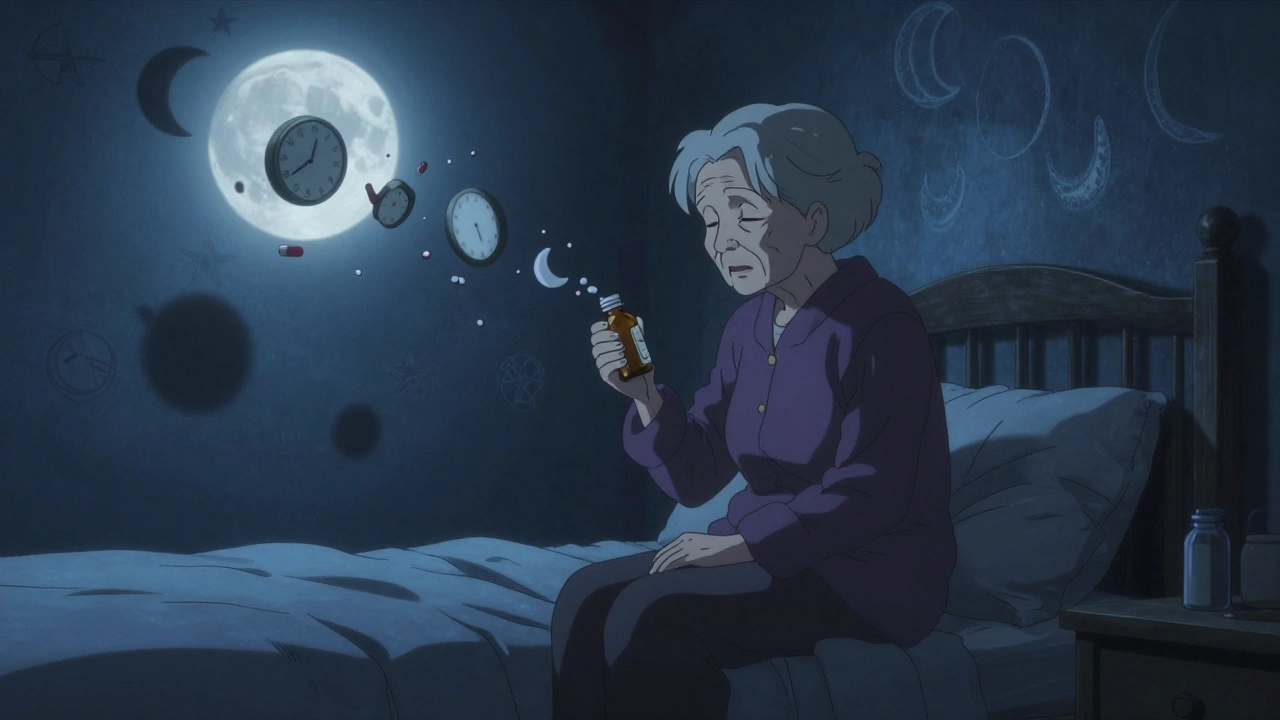
More than half of adults over 65 struggle with sleep. Some nights, it’s just tossing and turning. Other nights, it’s waking up at 3 a.m. and not being able to go back to sleep - again. It’s exhausting. And it’s common. But too many seniors reach for a pill because they’ve been told it’s the easiest fix. The problem? Many of those pills are riskier than people realize.
Why Sleep Meds Can Be Dangerous for Seniors
Your body changes as you age. Your liver and kidneys don’t process drugs the same way they did when you were 40. That means a pill that was fine at 55 can become dangerous at 70. Sleep medications - especially benzodiazepines like diazepam or triazolam - stick around longer in older bodies. This increases the chance of next-day drowsiness, confusion, and falls. And falls in seniors aren’t just scary - they’re life-changing. A broken hip can mean the end of independence. The American Geriatrics Society has been warning doctors since 1991: avoid these drugs as a first choice. Their 2019 update made it even clearer. Ten sleep medications are flagged as potentially inappropriate for seniors. That includes zolpidem (Ambien), eszopiclone (Lunesta), and benzodiazepines like lorazepam. Even though they’re still widely prescribed, studies show they increase the risk of dementia, memory problems, and hospital visits due to accidents. A 2014 study in the BMJ found that long-term use of benzodiazepines raised Alzheimer’s risk by 51%. For those using them for more than six months, the risk jumped to 84%. That’s not a small side effect. That’s a major health threat.What’s Safer? The Real Alternatives
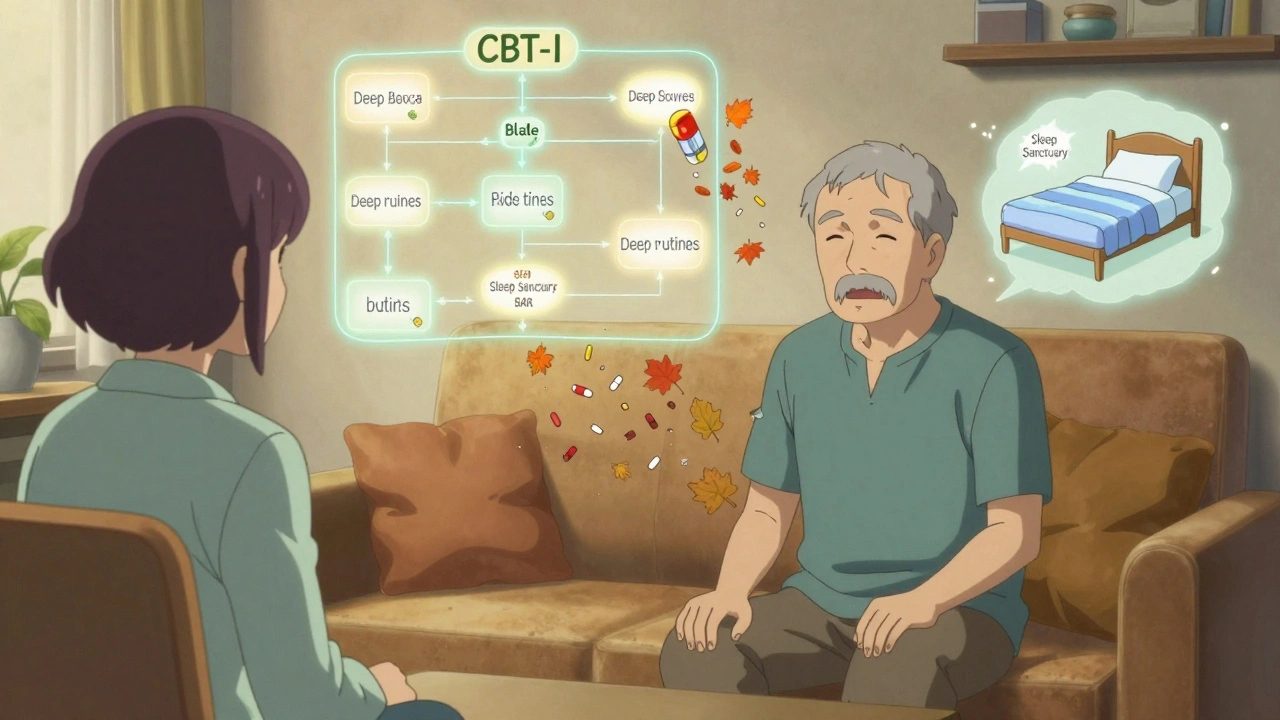
The best solution isn’t another pill. It’s a proven, drug-free method called Cognitive Behavioral Therapy for Insomnia, or CBT-I. It’s not a quick fix. It takes work. But it works better and lasts longer than any medication. CBT-I teaches you how to fix the habits and thoughts that keep you awake. It includes things like:- Only going to bed when you’re sleepy
- Getting out of bed if you can’t fall asleep after 20 minutes
- Stopping clock-watching at night
- Training your brain to associate the bed with sleep - not TV, phone calls, or worrying
When Medication Is Still Needed - and What to Use
Sometimes, CBT-I isn’t enough right away. Or maybe you’re in the middle of a crisis - a recent loss, a hospital stay, or severe anxiety. In those cases, medication might be a temporary bridge. But if you’re going to use it, use the safest option. Here’s what experts recommend for seniors when meds are unavoidable:- Low-dose doxepin (Silenor) - 3 to 6 mg at bedtime. It’s an old antidepressant, but at this low dose, it only helps with sleep. It doesn’t cause next-day grogginess or memory issues. In studies, it added nearly 30 minutes of sleep and improved sleep quality without the risks of stronger sedatives.
- Ramelteon (Rozerem) - 8 mg. It works by targeting your body’s natural melatonin system. It doesn’t depress the brain like other sleep drugs. It’s not addictive. It doesn’t cause falls. It just helps you fall asleep faster - about 14 minutes quicker on average.
- Lemborexant (Dayvigo) - 5 to 10 mg. This newer drug blocks wakefulness signals in the brain. A 2021 study found it caused less dizziness and balance problems than zolpidem in seniors. It’s not cheap, but it’s one of the safest options on the market.
- Melatonin - 2 to 5 mg. Not a drug, but a hormone your body makes naturally. It helps reset your internal clock. It’s not strong enough for deep insomnia, but it can help if you’re waking too early or have trouble falling asleep at the right time.
Cost vs. Safety - The Hard Truth
Here’s the catch: the safest options aren’t always the cheapest. Generic zolpidem (Ambien) costs about $15 a month. Low-dose doxepin? Around $400 without insurance. Ramelteon? Just as expensive. Many seniors can’t afford the safer drugs. So they stick with the cheap, risky ones. But here’s what no one tells you: the cost of a fall, a hospital stay, or dementia care is far higher than a $400 pill. Medicare and private insurers are starting to cover CBT-I more often. Ask your doctor. Ask your insurance. You might be surprised what’s covered. One 78-year-old in Toronto switched from trazodone to CBT-I after two falls in six months. “I didn’t want to end up in a nursing home,” she said. “So I did the program. I’m sleeping better than I have since I was 50.”How to Talk to Your Doctor
Most doctors don’t bring up CBT-I first. They’re used to writing prescriptions. But you can change that. Next time you talk to your doctor about sleep, say this:- “I’ve heard CBT-I is the best first step for insomnia. Can you refer me to someone?”
- “I’m concerned about the risks of my current sleep med. Are there safer alternatives?”
- “Can we try lowering my dose slowly? I don’t want to depend on this forever.”
Deprescribing: Getting Off Sleep Meds Safely
If you’ve been on a sleep medication for months or years, don’t just stop. That can cause rebound insomnia - even worse than before. The STOPP/START guidelines recommend a slow taper. For benzodiazepines or Z-drugs, reduce the dose by 10-25% every 1-2 weeks. Do it under your doctor’s watch. Pair it with CBT-I. Many people find they don’t need the drug at all after a few weeks of therapy. One man in Halifax, 81, had been on lorazepam for 12 years. He cut his dose in half over 10 weeks. He started CBT-I. Six months later, he was off the pill entirely. “I used to wake up scared I’d fall,” he said. “Now I wake up ready for the day.”The Future of Sleep for Seniors
The medical community is shifting. The FDA now requires stronger warnings on all Z-drugs. Medicare is pushing hospitals to reduce inappropriate prescriptions. Research funding for non-drug sleep solutions is growing. By 2030, experts predict that less than 30% of insomnia treatment for seniors will involve medication. The rest will be CBT-I, light therapy, exercise, and better sleep routines. You don’t have to accept poor sleep as part of aging. There are better ways. Safer ways. Ways that don’t put your balance, your memory, or your independence at risk. It’s not about giving up. It’s about choosing better.Are over-the-counter sleep aids safe for seniors?
No, most are not. Common OTC sleep aids like diphenhydramine (Benadryl) and doxylamine (Unisom) are anticholinergics. These drugs block a brain chemical needed for memory and focus. Studies link them to higher dementia risk in older adults. Even if they help you fall asleep, the long-term cost to your brain isn’t worth it. Avoid them unless your doctor specifically recommends them for a short period.
Can melatonin help seniors sleep better?
Yes, but only in small doses and for specific issues. Melatonin helps regulate your sleep-wake cycle, not deepen sleep. It’s most useful if you wake up too early or have trouble falling asleep at a normal time. Take 2 to 5 mg about an hour before bed. Higher doses (10 mg or more) can cause dizziness, headaches, or next-day grogginess. It’s not a magic fix for chronic insomnia, but it’s one of the safest options.
Why is CBT-I better than sleeping pills?
Sleeping pills treat the symptom - not the cause. They make you drowsy, but they don’t fix the habits, thoughts, or routines keeping you awake. CBT-I teaches you how to break the cycle of insomnia. Studies show it works better than medication long-term. People who do CBT-I stay asleep longer, wake up less, and don’t need drugs. And the benefits last for years. Pills? You need them every night. Stop taking them, and the insomnia comes back.
What should I do if I’m already on a sleep medication?
Don’t stop suddenly. Talk to your doctor about tapering off slowly - usually over 4 to 8 weeks. Start CBT-I at the same time. Many people find they can reduce or eliminate their medication with support. Keep a sleep diary to track progress. Note how you feel in the morning: groggy? dizzy? confused? That data helps your doctor adjust your plan. If you’ve been on a benzodiazepine or Z-drug for more than a few months, you’re at higher risk for dependence. Getting off is safer with a plan.
Is it true that some seniors are more likely to be prescribed sleep meds than others?
Yes. A 2022 study found white seniors were three times more likely to use sleep medications frequently than Black seniors. This isn’t because one group sleeps worse - it’s about access. White seniors are more likely to see specialists, get prescriptions, and have insurance that covers pills. Black seniors often face barriers to care, which means their insomnia goes untreated - or is managed with unsafe alternatives. This is a healthcare disparity, not a medical one.
Next Steps: What to Do Today
If you or a loved one is using sleep meds:- Write down every medication you take for sleep - including OTC ones.
- Call your doctor and ask: “Is this the safest option for me?”
- Ask for a referral to a CBT-I provider. Check with your insurance - many now cover it.
- Try a free digital CBT-I program like Sleepio or SHUTi to start.
- Stop using Benadryl, Unisom, or anything with diphenhydramine.
- If you’re on a benzodiazepine or Z-drug, ask about a slow taper plan.

12 Comments
so like... i took zolpidem for 3 years and woke up one day thinking my cat was a government spy. not a joke. my cat just stared. i stared back. we both lost. CBT-I sounds like a lot of work but honestly? less scary than waking up confused in a pharmacy aisle.
this is why america is falling apart. you want old people to just... meditate? sleep better? nope. we used to just give em a pill and move on. now we got therapists on the phone telling grandmas to stop looking at clocks. what next? telling them to breathe? lol.
i am 68 and i did CBT-I through a VA program. it took 8 weeks. i had to write down every time i got up. i had to stop reading in bed. i had to stop worrying about sleep. guess what? i sleep 7 hours now. no pills. no side effects. my grandson says i snore less. he's 12. he knows what he's talking about. this works. do it.
i lost my husband last year and couldn't sleep for 6 months. my doctor gave me lorazepam. i took it for 9 months. i felt like a ghost. then i found a free CBT-I app. i cried through the first session. but now? i wake up without panic. i don't need the pill anymore. i just miss him. but at least i'm not dizzy all day.
lol who even uses melatonin anymore? 🤡 i take 2 benadryl and a glass of wine. i'm 71. i'm not a lab rat. if the doc says it's safe, it's safe. #america
my uncle took Lunesta for 7 years. he fell. broke his hip. spent 4 months in rehab. now he's in a chair. he still says it was worth it because he 'finally got some rest'. i don't know what to say. this post hits hard.
so the new biohack is CBT-I? sounds like cognitive behavioral therapy for insomnia. basically, you're telling people to rewire their neural pathways through stimulus control and sleep restriction protocols. also, avoid anticholinergics because they're muscarinic antagonists that impair cholinergic transmission in the hippocampus. also, melatonin is a chronobiotic, not a hypnotic. btw, doxepin is an H1 antagonist with low anticholinergic burden. i know these things. you're welcome.
YES YES YES!!! 🙌 I did CBT-I and now I'm sleeping like a baby again! 🌙💤 No more zombie mornings! My dog even notices I'm happier! 🐶💖 You guys need to try this!! It’s life-changing!!
the real problem? doctors dont care. they get paid to write scripts. not to refer you to some 6-week app. and the insurance? they cover the $15 pill but not the $400 safe one. this isn't medicine. it's capitalism with a side of geriatric neglect.
i appreciate the data. but let's be real - CBT-I requires time, energy, and access. most seniors are tired, lonely, and don't have broadband. this reads like a white, middle-class solution. what about the ones who can't even afford a phone? you're prescribing privilege.
there is a quiet tragedy in how we treat aging. we treat sleep like a bug to be eradicated, not a natural rhythm to be honored. we reach for chemicals because we've forgotten how to be still. perhaps the real medicine isn't in the pill bottle - but in the silence we refuse to sit with.
my mom was on trazodone for 5 years. i got her into a free CBT-I program through her senior center. she thought it was dumb. now she tells everyone about it. she says she finally feels like herself again. not drugged. not confused. just... tired. and that's okay. if you're on a sleep med and feel like a zombie - please talk to your doctor. you don't have to live like that.
Write a comment