Fentanyl Patch Heat Risk Estimator
Select Your Scenario
Choose the heat source you are exposed to while wearing a patch.
Patient Profile
Your current physical state affects how your body handles the drug spike.
Result Title
Detailed explanation goes here.
Recommended actions.
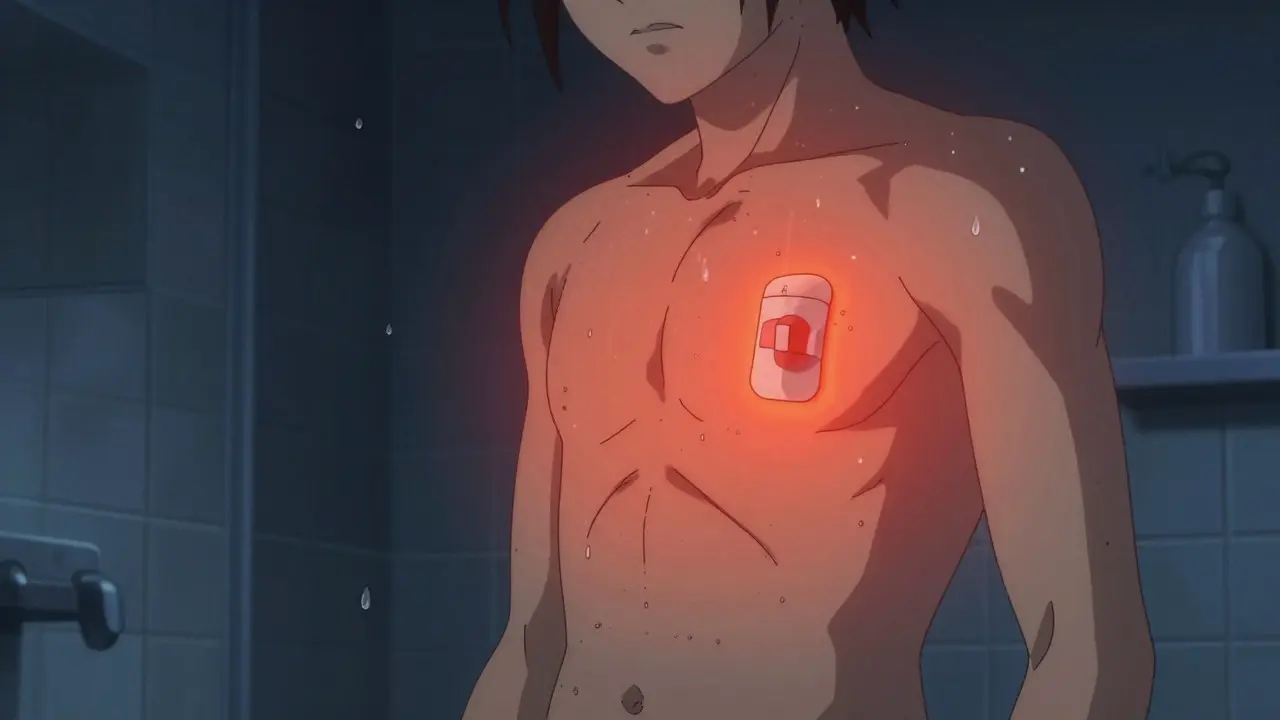
Imagine you are in the middle of a long, hot shower. The water feels great, washing away the day’s tension. But if you are wearing a fentanyl patch is a transdermal delivery system that releases potent opioid medication through the skin for continuous pain management, that comforting warmth might be silently turning into a lethal dose. This isn’t just a theoretical warning; it is a documented medical reality that has led to respiratory depression and fatalities.
Fentanyl is not like other painkillers. It is roughly 50 to 100 times more potent than morphine. When delivered via a patch, such as Duragesic is the brand name for the most common transdermal fentanyl patch manufactured by Janssen Pharmaceuticals, the drug sits in a reservoir against your skin, releasing a steady, controlled amount over 72 hours. The system relies on your body temperature and skin permeability to work correctly. Introduce external heat, and that delicate balance breaks. The patch doesn’t just release more drug; it floods your system with it.
How Heat Breaks the Patch Mechanism
To understand why heat is so dangerous, you have to look at how the patch works. Fentanyl travels from the adhesive layer into the upper layers of your skin, creating what doctors call a "depot." From there, it slowly diffuses into the capillaries-the tiny blood vessels near the surface. This process is slow by design. It takes about 12 to 24 hours for the drug levels in your blood to reach a steady state, and peak levels can take up to 72 hours.
When you apply heat, two things happen simultaneously. First, the heat increases local microcirculation. Your blood vessels dilate (widen) to cool your body down, bringing more blood flow to the area where the patch is stuck. Second, heat changes the physical properties of the skin itself, making it more permeable. Think of your skin like a sieve. Normally, the holes are small, letting only a trickle of fentanyl through. Heat stretches those holes open.
Research published in *Pain Medicine* demonstrated this vividly. In a study involving healthy volunteers, researchers applied a Controlled Heat Aided Drug Delivery (CHADD) patch over a standard 25 μg/h fentanyl patch. The CHADD patch raised the skin temperature to approximately 41°C (106°F). The result? Maximum serum concentrations of fentanyl nearly tripled compared to non-heated conditions. That is a massive spike in a drug that already has a narrow therapeutic window-the difference between effective pain relief and stopping your breathing.
| Heat Source | Mechanism of Risk | Potential Consequence |
|---|---|---|
| Heating Pads / Electric Blankets | Direct localized heating of the patch site | Rapid increase in drug release rate |
| Hot Baths / Showers | Whole-body vasodilation + direct skin contact with hot water | Accelerated systemic absorption |
| Saunas / Hot Tubs | High ambient temperature and humidity | Increased skin permeability and blood flow |
| Strenuous Exercise | Elevated core body temperature and sweating | Variable but significant increase in absorption |
| Fever (>104°F / 40°C) | Systemic rise in internal body temperature | Up to 33% increase in serum fentanyl levels |
The Invisible Dangers: More Than Just Heating Pads
We all know not to put a heating pad directly on a fentanyl patch. The warnings are printed on the box. But the danger extends far beyond intentional heating devices. Many patients overlook environmental factors or their own physiology.
Consider a simple fever. If your body temperature rises to 40°C (104°F), pharmacokinetic modeling suggests your fentanyl serum concentration could jump by 33%. While no published reports document overdoses caused by fever alone, the margin for error shrinks drastically. If you are also taking other medications, that 33% spike can push you over the edge.
Then there is exertion. Going for a brisk run, doing heavy yard work, or even an intense yoga session raises your core temperature. An editorial in *Anesthesia Progress* highlighted that increased peripheral blood flow to the skin during exercise accelerates drug absorption. For someone who is "opioid-naïve"-meaning they haven’t built up a tolerance to opioids-this can be fatal. Even for tolerant patients, unexpected sedation or slowed breathing can occur.
Sunbathing is another silent culprit. Lying in the sun, especially with a tanning lamp, heats the skin directly under the patch. The combination of UV exposure and thermal energy creates a perfect storm for rapid absorption. Similarly, heated water beds or sitting too close to a fireplace or radiator can create localized hot spots that disrupt the patch’s controlled release mechanism.

Who Is Most at Risk?
Not everyone using fentanyl patches faces the same level of danger. The risk profile depends heavily on your history with opioids. Transdermal fentanyl is specifically indicated for patients with established opioid tolerance. These are individuals who have been taking strong painkillers regularly and need a high dose to manage chronic pain, often due to cancer or severe neuropathic conditions.
If you are opioid-naïve, your body has no defense against a sudden surge of fentanyl. The FDA explicitly contraindicates these patches for acute postoperative pain in patients without tolerance. A single patch can deliver enough fentanyl to stop the breathing of someone who hasn’t built up resistance.
Another critical factor is drug interactions. Fentanyl is metabolized by the liver enzyme cytochrome P450 3A4. If you are taking drugs that inhibit this enzyme-such as ketoconazole, erythromycin, or certain antifungal agents-your body clears fentanyl more slowly. Add heat exposure to this mix, and you get a double whammy: faster absorption from the patch and slower removal from the blood. This combination can precipitate a serious overdose quickly.
Recognizing the Signs of Overdose
Because the absorption happens gradually, the symptoms of heat-induced overdose might not hit you instantly. However, when they do, they can escalate rapidly. You need to watch for signs of respiratory depression and central nervous system depression.
- Extreme drowsiness: Feeling unusually sleepy or difficult to wake up.
- Slowed breathing: Fewer than 12 breaths per minute, or shallow breaths.
- Confusion or agitation: Mental status changes are early warning signs.
- Cold, clammy skin: Despite the heat source, your extremities may feel cold.
- Pinpoint pupils: A classic sign of opioid toxicity.
In some cases, patients experience opioid-induced hyperalgesia, where pain sensitivity actually increases despite higher drug levels. Others may develop serotonin syndrome, especially if taking other serotonergic drugs, leading to anxiety, fast heartbeat, and muscle spasms. If you notice any of these symptoms after heat exposure, seek emergency help immediately. Do not wait to see if it passes.

Safety Protocols: What You Must Do
Prevention is the only reliable strategy. The Mayo Clinic and other major health institutions provide clear guidelines that should be treated as non-negotiable rules.
- Avoid Direct Heat: Never place a heating pad, electric blanket, or heat lamp directly over the patch. Keep them at least several inches away if you must use them elsewhere on the body.
- Modify Bathing Habits: Take lukewarm showers instead of hot baths. Avoid saunas, steam rooms, and hot tubs entirely while wearing the patch.
- Monitor Exercise: If you engage in strenuous activity, consider removing the patch beforehand or consulting your doctor about adjusting your dosage timing.
- Check for Fever: If you develop a fever, contact your healthcare provider. They may advise temporarily removing the patch or adjusting other medications.
- Replace on Schedule: Remove the old patch exactly 72 hours after application. Do not leave it on longer, as residual fentanyl continues to absorb for hours after removal.
Healthcare providers play a crucial role here. Doctors prescribing fentanyl patches must ensure patients understand these risks. It’s not enough to hand over the prescription; they need to ask, "Do you use heating pads? Do you take hot baths? Do you have a job that involves heat exposure?" Tailoring advice to the patient’s lifestyle saves lives.
What Happens After Removal?
Many people think the danger ends when they peel off the patch. It doesn’t. The depot of fentanyl in your skin still holds a significant amount of drug. It continues to release into your bloodstream for several hours after removal. If you expose that area to heat immediately after taking the patch off, you can still trigger a spike in absorption.
This is particularly relevant during surgery or dental procedures. Anesthesiologists need to know if you are wearing a fentanyl patch. They will usually remove it before the procedure to prevent unpredictable interactions with anesthesia gases, which can also cause vasodilation and increase absorption. Leaving the patch on during surgery has led to cases of deeper-than-intended sedation and respiratory complications.
Can a normal fever cause a fentanyl overdose?
While no published reports document clinical overdoses caused by fever alone, a high fever (above 104°F or 40°C) can increase fentanyl serum concentrations by up to 33%. For patients with low tolerance or those taking interacting medications, this spike can be dangerous. Always consult your doctor if you develop a fever while wearing a patch.
Is it safe to exercise while wearing a fentanyl patch?
Light to moderate exercise is generally safe, but strenuous activity that raises your core body temperature significantly can increase fentanyl absorption. If you plan to do intense workouts, consult your healthcare provider. They may recommend removing the patch before exercise or monitoring for signs of excessive sedation.
How long does fentanyl stay in your system after removing the patch?
Fentanyl continues to be absorbed from the skin depot for several hours after patch removal. Serum levels typically decline gradually, but the drug remains active in your system for a significant period. This is why avoiding heat sources immediately after removal is still important.
What should I do if I accidentally exposed my patch to heat?
If you suspect heat exposure, monitor yourself closely for signs of overdose such as extreme drowsiness, slowed breathing, or confusion. Have someone check on you regularly. If symptoms appear, seek emergency medical attention immediately. Do not drive or operate machinery until you are sure you are stable.
Are there alternative pain management options that don't carry this heat risk?
Yes, depending on your condition. Oral opioids, intravenous infusions, or other transdermal systems with different mechanisms may be options. However, fentanyl patches are unique in their convenience for chronic pain. Discuss alternatives with your pain specialist if heat exposure is unavoidable in your daily life.
