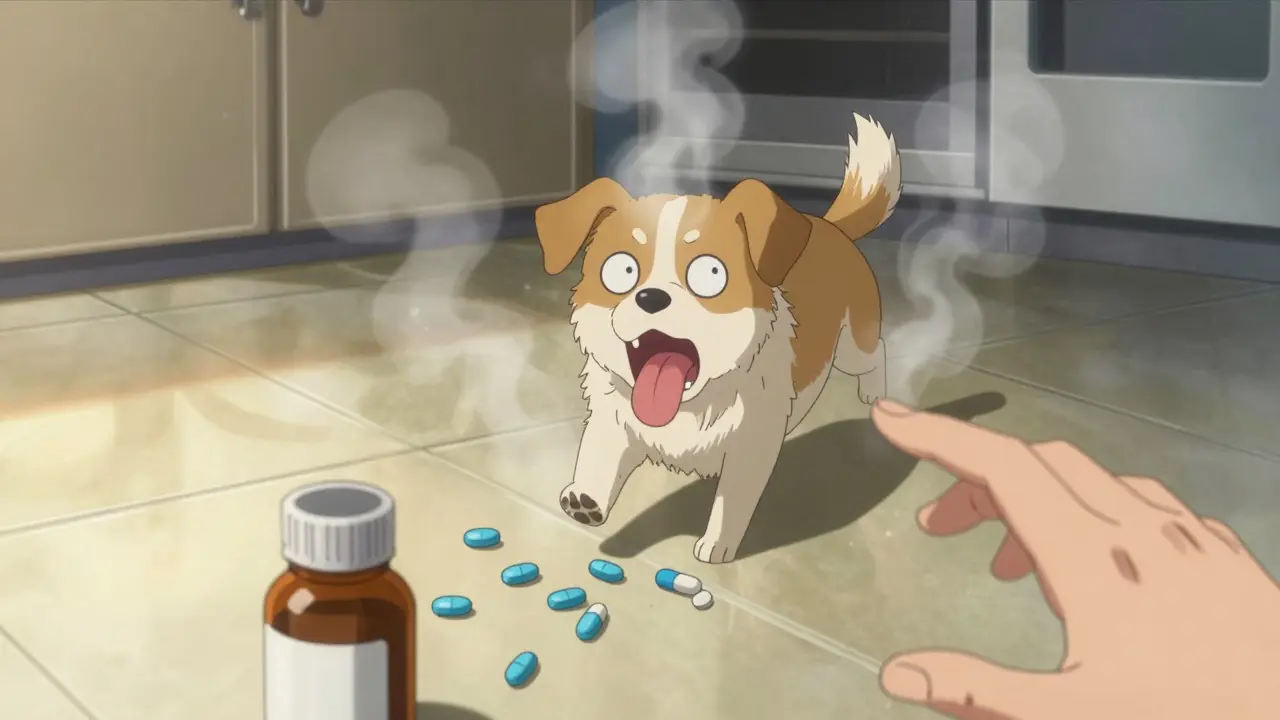
Every year, over 150,000 pets in the U.S. end up in emergency vet clinics because they swallowed something they shouldn’t have-and most of it wasn’t chocolate or trash. It was your medicine. A single pill left on the nightstand, a dropped capsule on the floor, or an open bottle on the counter can turn a normal day into a life-or-death situation. Dogs and cats don’t process human drugs the same way we do. What’s safe for you can kill them in minutes. The key isn’t just keeping meds out of reach-it’s knowing what to look for when something goes wrong. Time isn’t just a factor-it’s the difference between recovery and loss.
What Happens When Pets Ingest Human Medications?
Your dog doesn’t know that the blue pill on the floor is your antidepressant. To them, it’s just something tasty, especially if it’s coated or flavored. Cats are even more dangerous to treat because their livers can’t break down many common drugs at all. The result? Toxic buildup that attacks their organs fast.
Antidepressants like Prozac, Lexapro, and Effexor are among the most common culprits. In dogs, these can trigger serotonin syndrome-where their nervous system goes into overdrive. Symptoms include fever above 103.5°F, frantic pacing, shaking, loud vocalization, and sometimes seizures. In cats, Effexor is especially deadly: just one extended-release capsule can cause liver failure, with liver enzyme levels spiking past 1,200 U/L (normal is under 100). That’s not a slow decline-it’s a crash.
Stimulants like Adderall and Concerta are even faster. A dog that eats one 20mg Adderall tablet can develop a heart rate over 220 beats per minute (normal is 60-140). Their body temperature can climb to 107°F. Their pupils stay wide and fixed. They tremble uncontrollably. All of this happens within 30 to 60 minutes. If you don’t get them to a vet within two hours, the chance of survival drops sharply.
NSAIDs like ibuprofen and naproxen are often mistaken for harmless pain relievers. But in dogs, even a single 200mg tablet can cause stomach ulcers and kidney failure. Vomiting, black tarry stools, and lethargy show up within hours. By day two, their kidneys may be shutting down. Cats? They’re even more sensitive. As little as 5mg/kg of ibuprofen can be fatal.
Acetaminophen (Tylenol) is the silent killer for cats. One regular tablet can destroy their red blood cells, turning their gums and tongue brown. That’s methemoglobinemia-oxygen can’t reach their tissues. They’ll start panting, drooling, and swelling up. In dogs, it takes more to cause damage, but liver failure still follows. And there’s no warning sign until it’s too late.
Recognizing the Signs: What to Look For
There’s no single symptom that means “overdose.” But there are clusters. And if you see more than one, act immediately.
- For antidepressants (SSRIs/SNRIs): Fever, agitation, rapid breathing, muscle tremors, dilated pupils, and uncontrolled vocalization. Cats may seem confused, bump into walls, or hide in corners.
- For stimulants (Adderall, Ritalin): Hyperactivity followed by extreme restlessness, heart rate over 200 bpm, body temperature above 104°F, dilated pupils, and shaking that looks like they’re having a seizure but isn’t. Their gums may feel dry and hot.
- For NSAIDs (ibuprofen, naproxen): Vomiting (often with blood), dark or tarry stools, loss of appetite, increased thirst, and urinating less or not at all. These signs show up within 6-24 hours.
- For acetaminophen (Tylenol): In cats, brown or blue-tinged gums, swollen face or paws, difficulty breathing, and dark urine. In dogs, yellowing of the eyes or gums (jaundice), vomiting, and weakness. These signs can take 12-72 hours to appear.
- For benzodiazepines (Xanax, Ambien): In dogs, these often cause the opposite of what you’d expect-agitation, pacing, and vocalizing instead of sedation. In cats, liver damage shows up quietly, with lethargy and loss of appetite before anything else.
Don’t wait for all the signs. If your pet ingested any human medication and starts acting weird-even if it’s just pacing or whining-assume it’s serious. Don’t think, “Maybe they’re just excited.” Don’t say, “They’re just shivering from the cold.” These are not normal behaviors. They’re red flags.
Species Differences Matter-A Lot
One of the biggest mistakes owners make is treating dogs and cats the same. They’re not. Cats lack a key liver enzyme that breaks down acetaminophen and many other drugs. That means even tiny doses can be fatal. A single 325mg Tylenol tablet can kill a cat. For a dog, it takes about five times that amount to reach the same danger level.
Effexor is another example. In dogs, it causes serotonin syndrome. In cats, it causes liver necrosis. The same pill. Two different outcomes. That’s why knowing what your pet ate isn’t enough-you have to know what it means for your pet’s species.
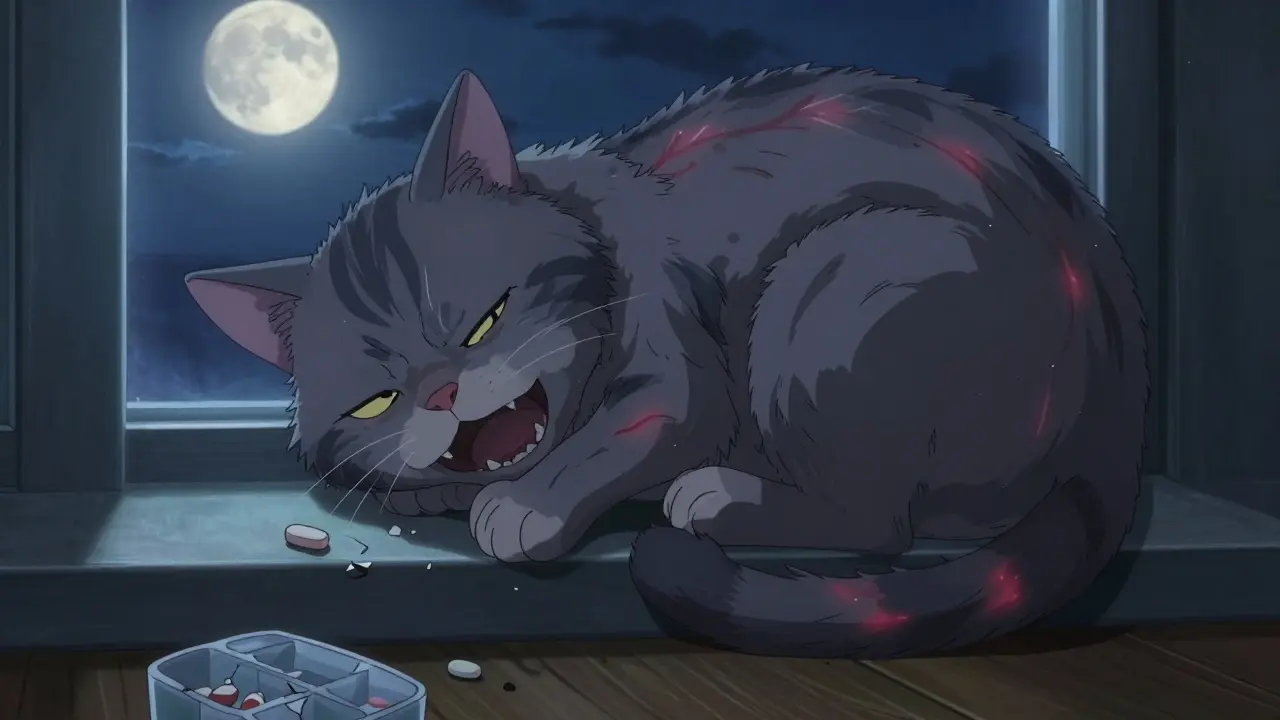
And don’t assume that because your cat doesn’t seem to be acting sick, they’re fine. Cats hide illness until it’s advanced. If they’ve licked a pill off the floor or chewed a bottle, treat it like an emergency-even if they’re sleeping. That sleep could be the calm before the storm.
What to Do Immediately
If you suspect your pet ingested human medication, do not wait. Do not call your regular vet first. Do not search online. Call the Pet Poison Helpline at 1-800-213-6680 right away. They’re staffed 24/7 by veterinary toxicologists. The average response time is under a minute. They’ll ask you what was ingested, how much, when, and what symptoms you’re seeing. Then they’ll tell you exactly what to do next.
Don’t try to make your pet vomit unless they specifically tell you to. Some drugs, like stimulants or corrosive substances, can cause more damage if vomited. Activated charcoal might help-but only if given early and under professional guidance.
While you’re on the phone, collect information:
- What medication was it? (Look for the name and dosage on the bottle)
- How much did they eat? (Estimate based on how many pills are missing)
- When did it happen?
- Are they showing any symptoms? (Note the time they started)
This info saves critical minutes. The vet will need it. The poison control center will need it. And the faster you give it, the better their chances.
What Happens at the Vet
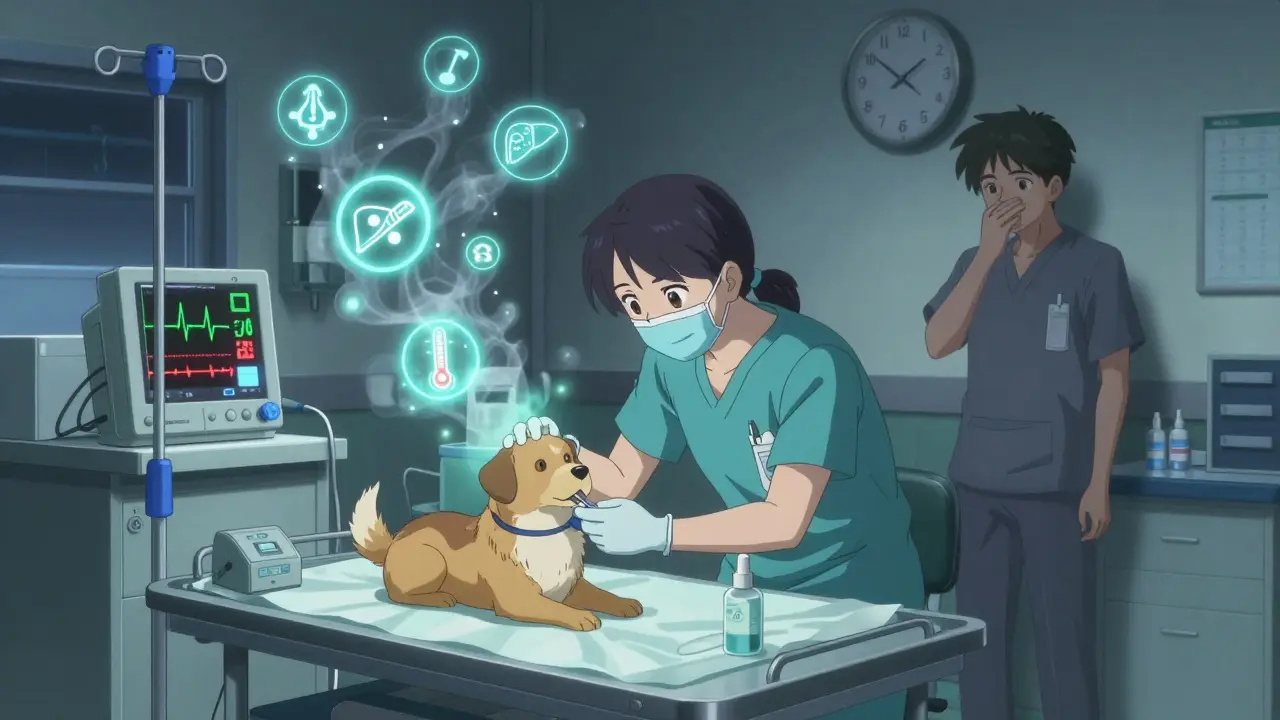
Once you arrive, the vet will likely start treatment within minutes. If it’s been less than two hours, they may induce vomiting or use endoscopy to remove the pill. They’ll give activated charcoal to bind any remaining toxins. IV fluids will flush their system and protect their kidneys. Blood tests will check liver and kidney function, electrolytes, and blood oxygen levels.
For serotonin syndrome, they’ll use medications to calm the nervous system. For acetaminophen toxicity in cats, they’ll give N-acetylcysteine (NAC)-a life-saving antidote that must be given early. For stimulant overdoses, they’ll cool the body, lower the heart rate, and monitor for seizures.
Success rates jump from 28% to just 4% mortality when treatment starts within two hours. That’s not a small difference. It’s everything.
Prevention: How to Keep Your Pet Safe
Most of these cases are preventable. Here’s how:
- Store all medications in closed cabinets-never on counters, nightstands, or purses.
- Use child-proof caps. They’re not foolproof for pets, but they add a layer of protection.
- Never give your pet human medicine, even “just a little.”
- Keep pill organizers locked or out of reach. Dogs will dig through them like treasure chests.
- Be extra careful with extended-release pills. They last longer, so the danger lasts longer too.
- Teach kids not to leave pills lying around. They often don’t realize pets can eat them.
And if you’re ever unsure-call. Even if you think it’s nothing. Better to be safe than sorry. The Pet Poison Helpline has handled over 430,000 calls in 2022. Every one of those calls started with someone asking, “Should I worry?” The answer was always yes.
What You Should Know Before It’s Too Late
There’s no magic test that tells you your pet is poisoned. It’s not like a broken leg. It’s subtle. It’s fast. It’s silent until it’s too late. But you can learn to see the signs. You can learn the patterns. You can learn what’s dangerous for your dog, what’s deadly for your cat, and what to do in the first 60 minutes.
Most owners don’t know this stuff until it’s too late. They think their pet is just acting weird. They wait. They hope. And by then, the damage is done.
Don’t be one of them. Know the symptoms. Know the risks. Know what to do. And if you ever doubt it-call. No one will judge you for being cautious. But your pet will thank you for being prepared.

13 Comments
Just saved this for my vet tech training module. The breakdown of species-specific toxicity is incredibly clear-especially how Effexor hits cats with liver necrosis versus serotonin syndrome in dogs. Most pet owners don’t realize the same pill can kill differently based on species. This should be mandatory reading for anyone who keeps meds anywhere near the floor.
Let’s be real-this is just fearmongering dressed up as education. You’re telling people to panic every time a pill drops? Most pets are fine with one accidental ingestion. The real issue is overmedicated humans who leave their SSRIs lying around like candy. Maybe stop taking so many pills instead of blaming your pet for being curious.
I work in emergency vet care and I can tell you-this is the single most important thing I’ve read all year. We see this every weekend. A 12-pound cat that licked one Tylenol off the counter. A golden retriever that ate four Adderall pills from a purse. The difference between life and death is 90 minutes. Please, if you have pets, treat your meds like loaded guns. Not because you’re paranoid-because your animal doesn’t know the difference.
This is gold. My dog ate my ibuprofen last year. Took him to the ER at 2am. They gave him charcoal and fluids. He’s fine now. But I didn’t know any of this until it was too late. Now I lock everything. Even the vitamins. #neveragain
Did you know the FDA secretly allows pet poisonings because it boosts vet profits? I’ve seen the documents. They don’t want you to know that activated charcoal is 90% cheaper than hospitalization. That’s why they scare you with 150,000 cases a year. It’s a money racket. Don’t fall for it. Just keep your meds in the bathroom. That’s all you need.
It’s interesting how we treat pets like children in some ways but ignore their biological reality in others. We give them human meds because we love them, but we forget they’re not small humans. Their metabolisms are alien to ours. Maybe the real lesson here isn’t just about pills-it’s about humility. We think we understand their bodies. We don’t. Not even close.
Why are people so lazy they leave pills on the nightstand. My dog died because I didn’t lock the drawer. Don’t blame the pet. Blame yourself. And stop acting like this is news. It’s been common sense for 20 years
My cat once ate my Xanax. I thought she was just being dramatic. She slept for 14 hours. I thought it was fine. Until she stopped eating. Took her to the vet. $1200 later. She’s okay. But I now have a locked cabinet. And a new respect for how fragile they are. 🙏
Excellent breakdown of clinical signs by drug class. One addition: for acetaminophen toxicity in cats, the brown gums are a hallmark of methemoglobinemia, but the urine turning dark brown is often the first visible sign owners notice. Also, NAC is most effective if administered within 8 hours-after that, survival plummets. This post should be pinned on every vet clinic bulletin board.
This is what happens when people anthropomorphize animals. They think pets are just furry toddlers. They’re not. They’re predators with different biochemistry. If you can’t manage your own medication then don’t own a pet. Simple. No need for 2000 words.
I appreciate the effort, but I’m curious why the tone feels so urgent. Is it because we’ve normalized ignoring animal health until it’s catastrophic? I think this piece works because it doesn’t shame-it informs. And that’s rare. I’ll be sharing this with my book club. We’re reading about human-animal ethics next month.
As someone who grew up in a country where pet meds are a luxury, I’m amazed by how much we take for granted here. In India, people give their dogs aspirin for pain because it’s cheap and available. They don’t know it’s toxic. This article should be translated into Hindi, Tamil, Bengali. The knowledge gap isn’t just in the U.S.-it’s global.
Thank you for writing this with such precision. As a vet technician, I’ve seen too many owners say, ‘I didn’t think it would hurt them.’ You’ve given them the tools to think differently. I’ve printed this and put it in our waiting room. If one person reads this and saves a life because of it, this is worth every word. No emojis needed. Just truth.
Write a comment