Contrast Hydration Risk & Protocol Calculator
Patient Parameters
Risk Assessment
Recommended Protocol
Implementation Steps
Enter patient details to generate a personalized hydration plan based on current clinical guidelines.
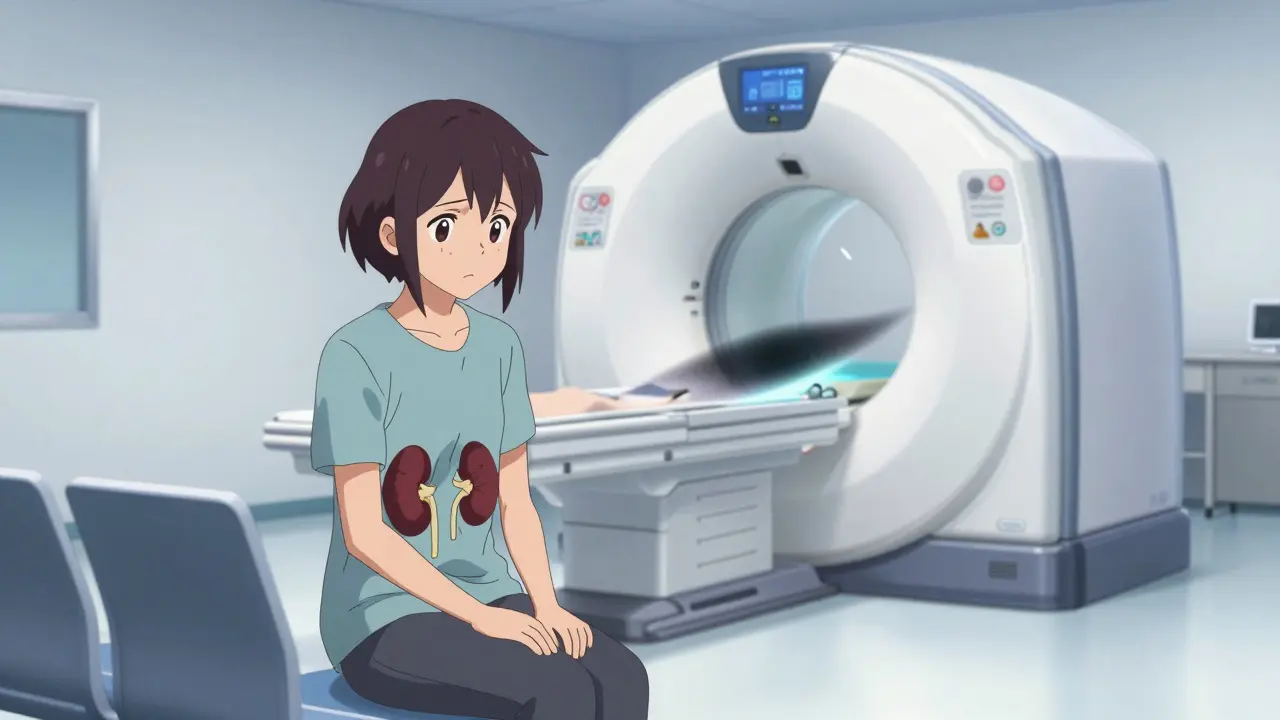
Imagine sitting in a radiology suite, waiting for a CT scan or cardiac catheterization. You’re told you need a "dye" to make the images clearer. That dye is powerful, but it carries a hidden risk: it can hurt your kidneys. This condition, known as Contrast-Induced Acute Kidney Injury (CI-AKI), happens when your kidney function drops sharply within 48 to 72 hours after exposure to contrast media. It’s defined by a rise in serum creatinine of at least 0.5 mg/dL or a 25% increase from your baseline. The stakes are high-not just for your health, but for your wallet and hospital stay. CI-AKI adds an average of 3.2 days to your hospitalization and costs roughly $7,500 per case. The good news? We have a proven shield against this damage: strategic hydration.
The Science Behind Hydration Protocols
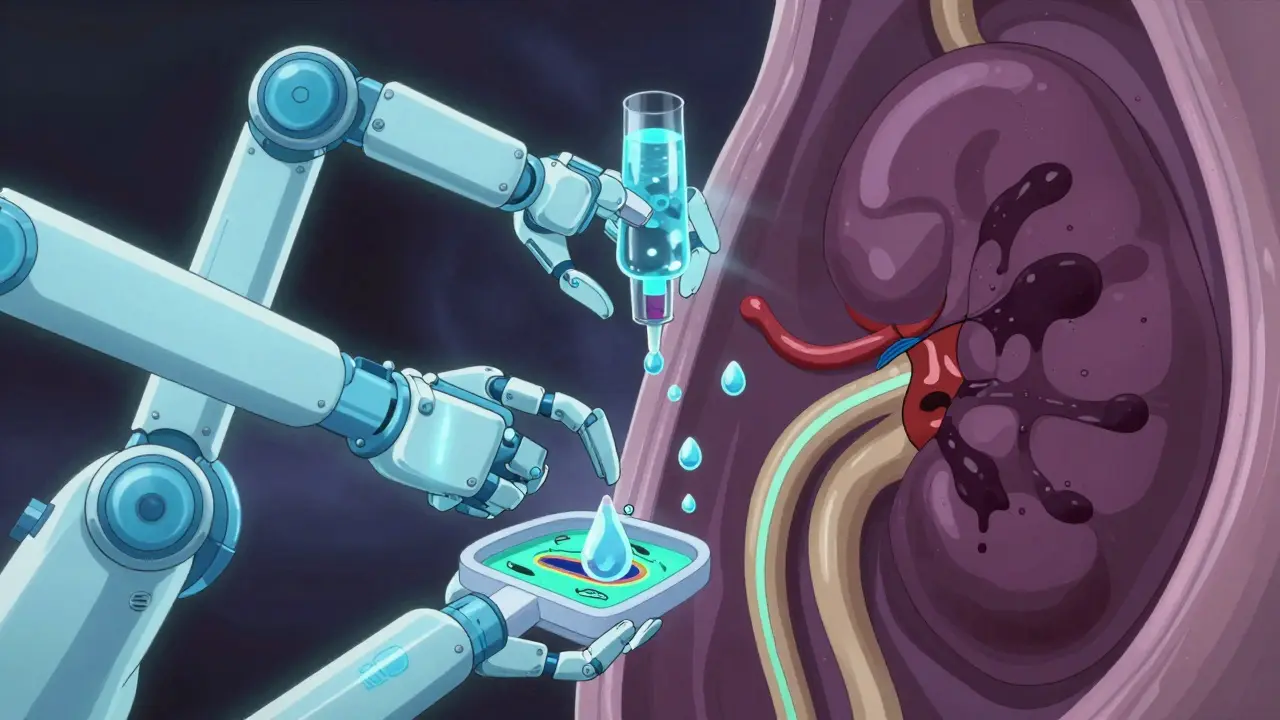
Hydration isn’t just about drinking water; it’s a precise medical intervention designed to flush out nephrotoxic agents before they cause permanent harm. Since the early 2000s, clinical protocols have evolved from simple saline drips to sophisticated, data-driven systems. The core goal is to maintain blood flow through the kidneys, diluting the contrast media so it doesn’t concentrate and damage the delicate renal tubules. A major 2020 Bayesian network meta-analysis published in the Journal of Interventional Cardiology reviewed 60 randomized controlled trials involving over 21,000 patients. The results were clear: hydration works, but not all hydration is created equal. Standard intravenous (IV) saline reduced CI-AKI by 26% compared to no hydration. However, advanced methods like hemodynamic-guided hydration cut the risk by 59%, and closed-loop systems like the RenalGuard system achieved a 68% reduction. These numbers aren’t just statistics; they represent thousands of patients avoiding dialysis and extended recovery times.
Standard protocols typically involve IV 0.9% sodium chloride. There are two main approaches: a short protocol of 3-4 mL/kg/hour for four hours before and after the procedure, or a long protocol of 1 mL/kg/hour for 12 hours before and after. Sodium bicarbonate is another option, using a 154 mmol/L solution at 3 mL/kg/hour for one hour pre-procedure, followed by 1 mL/kg/hour for six hours post-procedure. While effective, these static methods don’t account for individual patient variability. That’s where modern technology steps in, matching fluid intake to real-time urine output to ensure precision.
Advanced Systems vs. Traditional Methods
When protecting high-risk kidneys, precision matters. The RenalGuard system, manufactured by PL Corazon, represents a leap forward in renal protection. Unlike standard IV bags that drip at a fixed rate, RenalGuard is a closed-loop system. It monitors your urine output in real time and adjusts IV fluid administration automatically to keep your urine output between 150 and 200 mL/hour. In a comparative analysis, RenalGuard ranked highest with a Surface Under the Cumulative Ranking Area (SUCRA) value of 0.974, meaning it was statistically the most likely to be the best intervention. For patients with chronic kidney disease (CKD) stages 3-4, this system dropped CI-AKI rates from 22.1% in control groups to just 7.3%. Hemodynamic-guided hydration, which uses central venous pressure monitoring, also performed well with a SUCRA of 0.849. These advanced tools are particularly valuable for patients who cannot tolerate excessive fluid due to heart failure, as they prevent volume overload while ensuring adequate kidney perfusion.
| Protocol Type | CI-AKI Reduction | SUCRA Rank | Key Advantage | Primary Limitation |
|---|---|---|---|---|
| RenalGuard System | 68% | 0.974 (Best) | Precision fluid balance; prevents overload | Higher cost (~$1,200 extra); requires training |
| Hemodynamic-Guided Hydration | 59% | 0.849 | Individualized based on heart pressure | Invasive monitoring required |
| IV Sodium Bicarbonate | 26% | 0.640 | Alkalizes urine; reduces oxidative stress | Risk of alkalosis; complex preparation |
| Standard IV Saline | 26% | 0.473 | Simple, widely available, low cost | Risk of volume overload in heart failure patients |
| Oral Hydration | Non-inferior to IV in low risk | N/A | No IV access needed; comfortable | Not suitable for high-risk or fasting patients |
Who Really Needs Aggressive Hydration?
Not everyone needs a full-blown hydration protocol. In fact, over-hydrating low-risk patients can lead to unnecessary delays and potential complications like pulmonary edema. Recent research has shifted toward risk-stratified approaches. A study published in eClinicalMedicine in 2018 found that for elective patients with an estimated glomerular filtration rate (eGFR) higher than 29 mL/min/1.73m², withholding prophylactic IV hydration was non-inferior to standard protocols. Their CI-AKI rates were nearly identical: 1.8% without hydration versus 2.1% with it. This means if your kidney function is relatively preserved, you might not need the IV drip at all. Oral hydration-drinking 500 mL of water two hours before the procedure and 250 mL hourly during-can be just as effective for these lower-risk individuals. However, for patients with eGFR below 60 mL/min/1.73m², especially those with diabetes or heart disease, aggressive protection is critical. The 2025 VA/DOD Clinical Practice Guideline recommends volume expansion with isotonic crystalloids at 1-1.5 mL/kg/hour for 3-12 hours before and after contrast for this group. For those with eGFR under 30, the decision to use contrast must carefully weigh risks versus benefits, often considering alternative imaging modalities like MRI without gadolinium or ultrasound.
Balancing Risks: Heart Failure and Volume Overload
One of the biggest challenges in nephroprotection is balancing kidney safety with heart safety. Patients with chronic kidney disease often have co-existing heart failure. Pouring liters of fluid into someone with a weak heart can trigger pulmonary edema, a life-threatening buildup of fluid in the lungs. Dr. Emily Chen of Massachusetts General Hospital noted in a 2023 review that even 500 mL of excess fluid can trigger decompensation in patients with reduced ejection fraction. This is why advanced systems like RenalGuard are gaining traction-they stop giving fluid once the target urine output is reached, preventing the "flood" that traditional protocols might cause. If you have heart failure, your care team will likely monitor your weight, lung sounds, and oxygen levels closely during hydration. They may use lower fluid rates or shorter durations, prioritizing hemodynamic stability over maximal diuresis. Always disclose your cardiac history before any contrast procedure.

Implementation and Patient Experience
From a practical standpoint, hydration protocols require planning. Standard IV hydration is easy for nursing staff to administer, usually requiring only 1-2 supervised sessions to master. However, advanced systems like RenalGuard demand specific training-a 4-hour certification course plus five supervised procedures. Hospitals are increasingly adopting these standards; 78% of major academic medical centers had standardized hydration protocols in place by 2024. For patients, the experience varies. Short protocols mean a few hours of waiting with an IV pole nearby. Long protocols can extend your stay by 4.5 hours, potentially disrupting discharge plans. Documentation is key: your baseline renal function should be checked within 30 days of the procedure, and your creatinine levels will be re-measured 48-72 hours afterward to catch any late-onset injury. The Mayo Clinic reported that standardizing these protocols reduced their CI-AKI rate from 12.3% to 5.7% in one year, highlighting the importance of institutional consistency.
Future Directions and Cost Considerations
The landscape of kidney protection is moving toward personalization and AI. The American Heart Association predicts that within five years, AI-driven fluid management systems will become standard care for high-risk patients, potentially reducing CI-AKI rates by another 15-20%. Meanwhile, pharmacologic adjuvants like N-acetylcysteine (NAC) have fallen out of favor; the 2020 meta-analysis found no significant benefit when NAC was added to adequate hydration. Economically, while advanced systems add $800-$1,500 to the immediate procedural cost, they save approximately $4,200 per prevented CI-AKI case by avoiding extended stays and dialysis. With 8 million contrast-enhanced procedures performed annually in the U.S., these savings are substantial. Regulatory bodies like the FDA now require contrast media labels to include specific hydration recommendations for patients with eGFR under 60, reinforcing hydration as a standard of care rather than an optional extra.
What is the best way to protect my kidneys from contrast dye?
The best method depends on your kidney function. For high-risk patients (eGFR <60), advanced systems like the RenalGuard or hemodynamic-guided hydration are most effective, reducing CI-AKI risk by up to 68%. For lower-risk patients, oral hydration or standard IV saline may suffice. Always follow your doctor’s personalized plan.
How much water should I drink before a CT scan with contrast?
If prescribed oral hydration, typical protocols suggest drinking 500 mL of water two hours before the procedure and 250 mL hourly during the scan. However, do not self-prescribe fluids if you have heart failure or severe kidney disease, as excess fluid can be dangerous. Always confirm your specific instructions with your healthcare provider.
Is N-acetylcysteine (NAC) still recommended for kidney protection?
Current evidence suggests NAC offers no significant additional benefit when combined with adequate hydration. Major meta-analyses have shown that proper fluid management alone is sufficient, making NAC an unnecessary addition for most patients.
What are the signs of contrast-induced kidney injury?
CI-AKI is primarily detected through blood tests showing a rise in creatinine levels 48-72 hours after exposure. Symptoms may include reduced urine output, swelling in the legs or feet, fatigue, and nausea. If you experience these after a contrast procedure, contact your doctor immediately.
Can people with heart failure receive hydration for kidney protection?
Yes, but with caution. Advanced systems like RenalGuard are preferred because they adjust fluid rates based on real-time urine output, minimizing the risk of volume overload. Close monitoring of heart function and lung status is essential during the process.

11 Comments
thx for the info but honestly most ppl just drink water and hope for the best lol
This is such a vital topic for anyone undergoing medical imaging! 🌟 I had my CT scan last month and was so worried about the contrast dye. Knowing that there are specific protocols like the RenalGuard system gives me so much peace of mind. It’s amazing how technology can protect our kidneys while ensuring we get accurate diagnostics. The fact that hydration isn’t just about drinking water but a precise medical intervention is something more people need to know. 😊
The notion that standard saline is sufficient for high-risk patients is frankly insulting to modern nephrology standards. If you have an eGFR under 60, demanding anything less than hemodynamic-guided hydration or closed-loop systems like RenalGuard is negligence. These advanced protocols reduce CI-AKI by nearly 70%, whereas your "simple" IV drip barely moves the needle at 26%. Why would any competent medical team settle for mediocrity when precision tools exist? It is not about cost; it is about preventing dialysis-dependent outcomes in vulnerable populations. The data from the Journal of Interventional Cardiology is unequivocal. Stop treating kidney protection as an afterthought.
I’m glad someone brought up the heart failure angle because that’s where things get tricky. As a nurse who has seen pulmonary edema develop from over-hydration, I cannot stress enough how critical it is to disclose cardiac history before these procedures. Dr. Chen’s point about 500mL triggering decompensation is spot on. We use RenalGuard specifically for these patients because it stops the fluid once urine output hits the target. It saves lives by balancing renal perfusion with cardiac stability. Don’t let fear of kidney injury make you ignore heart risks.
🤔 Interesting how they push this $1200 extra cost device while ignoring the root cause of why kidneys are failing in the first place. Big Pharma loves creating new problems to sell expensive solutions. The FDA mandates hydration labels now, sure, but does that mean the contrast media itself isn’t the real issue? I bet if we looked at long-term cumulative exposure studies, the numbers would look very different. They want you to think you’re safe with a machine, but really they’re just protecting their bottom line. Stay skeptical folks 🕵️♂️
Hey everyone, just wanted to chime in since I work in radiology. The shift toward risk-stratified approaches is huge here. We used to hydrate everyone regardless of risk, which caused so many delays and unnecessary complications. Now, if your eGFR is above 29, we often skip the IV drip entirely and go with oral hydration. It’s way more comfortable for patients and works just as well for low-risk groups. But for those with CKD stages 3-4, we absolutely use the advanced systems. It’s all about matching the treatment to the patient’s actual needs rather than a one-size-fits-all approach.
So NAC is basically useless then? 💡 That’s good to know because I’ve been taking it preemptively for every scan. Saves me some hassle and money. Thanks for clarifying!
Exactly right Diana. The 2020 meta-analysis showed zero significant benefit when added to adequate hydration. It’s an unnecessary expense and adds no protective value. Stick to the fluids.
It is quite remarkable how the evolution of clinical protocols has refined our understanding of renal protection. The distinction between static methods and dynamic, closed-loop systems like RenalGuard illustrates a broader trend in medicine toward personalized care. While the initial costs may appear prohibitive, the long-term savings from avoided dialysis and extended hospital stays present a compelling economic argument for widespread adoption. Furthermore, the emphasis on risk stratification ensures that resources are allocated efficiently, sparing low-risk patients from unnecessary interventions while providing robust protection for those most vulnerable. This balance between efficacy and efficiency is what modern healthcare should strive for.
Look, I don’t care about the fancy tech if it doesn’t work. But these stats are solid. 68% reduction is huge. American hospitals should be leading the world in this, not lagging behind with outdated saline drips. We spend billions on healthcare, least we can do is protect our kidneys properly. If you’re getting a scan, demand the best protocol available. Don’t let them cut corners.
I really appreciate how this post breaks down the complex medical jargon into understandable terms. It’s empowering to know that there are clear guidelines for kidney protection. I always feel anxious before procedures, but knowing that my care team will monitor my heart and kidney function closely helps ease my mind. Thank you for sharing this valuable information. It makes me feel more prepared and informed about my health choices. Let’s keep supporting each other in navigating these medical challenges with confidence and knowledge. 🌼
Write a comment