
Generic drugs are the backbone of modern healthcare. They account for roughly 90% of prescriptions filled in the United States and save the system billions of dollars annually. For most people, switching from a brand-name drug to its generic equivalent is seamless. You pay less, and you feel exactly the same. But for a significant minority, that switch comes with a price tag written in side effects: stomach cramps, skin rashes, or unexpected allergic reactions.
The culprit is rarely the active pharmaceutical ingredient (API). By law, generics must contain the exact same API as the brand-name version and demonstrate bioequivalence, meaning they deliver the drug into your bloodstream at a similar rate and extent. The problem lies in what’s left over. A single pill can be up to 99% inactive ingredients, also known as excipients. These substances-fillers, binders, dyes, and preservatives-are technically "inactive" because they don’t treat your condition, but they are biologically active in your body. If you have sensitivities, these hidden components matter just as much as the medicine itself.
What Are Inactive Ingredients and Why Do They Exist?
You might wonder why pills need anything other than the healing compound. The answer is practicality. Pure active ingredients are often unstable powders that degrade quickly, taste terrible, or are too large to swallow. Excipients solve these problems. They hold the pill together so it doesn’t crumble in the bottle. They control how fast the drug dissolves in your stomach. They mask bitter tastes and make the tablet look uniform rather than like a jagged rock.
Common excipients include lactose (a milk sugar used as a filler), magnesium stearate (a lubricant to prevent sticking during manufacturing), titanium dioxide (for white coloration), and various chemical dyes like FD&C Blue No. 1. While regulatory bodies like the U.S. Food and Drug Administration (FDA) deem these safe for the general population, "safe" does not mean "tolerated by everyone." A substance that is harmless to 95% of people can trigger severe issues in the remaining 5%. This is where the gap between regulatory approval and individual patient experience widens.
The Bioequivalence Loophole
To understand why generics vary, you have to look at how they are approved. Manufacturers submit an Abbreviated New Drug Application (ANDA) to the FDA. They prove their product works just like the brand name. However, the regulations do not require generic manufacturers to use the *same* inactive ingredients as the brand-name drug. They only require that the ingredients used are generally recognized as safe.
This creates a scenario where two different generic versions of the same medication-say, Losartan for blood pressure-can have completely different formulations. One manufacturer might use lactose as a filler; another might use corn starch. One might use a red dye; another might use none. For a patient with celiac disease or a sulfite allergy, this lack of standardization is a minefield. Dr. Giovanni Traverso, a researcher at MIT who led a major study on this topic, noted that doctors often have no idea which specific inactive ingredients are in the pills they prescribe because there are so many different formulations available for any given medication.
| Ingredient | Function in Pill | Potential Reaction | At-Risk Group |
|---|---|---|---|
| Lactose | Filler/Binder | Bloating, diarrhea, gas | Lactose intolerant individuals |
| Sodium Metabisulfite | Preservative/Antioxidant | Asthma attacks, hives | Asthmatics, sulfite-allergic patients |
| Tartrazine (Yellow #5) | Dye | Skin rash, hyperactivity | Those with aspirin sensitivity or ADHD |
| Gluten/Wheat Starch | Binder | Intestinal inflammation | Celiac disease patients |
| FODMAP Sugars | Filler | IBS flare-ups | Irritable Bowel Syndrome sufferers |
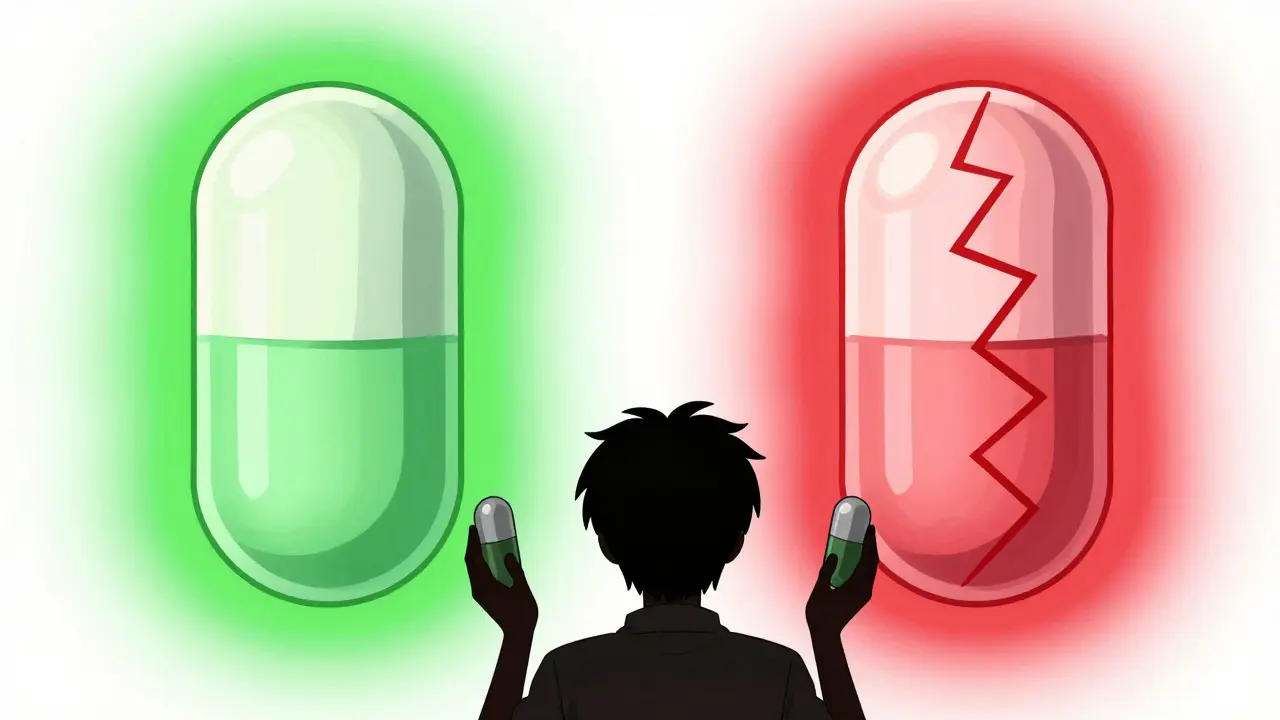
The Hidden Cost of Switching Brands
When insurance companies force a switch from a brand-name drug to a generic, or even from one generic manufacturer to another, patients sometimes report a return of symptoms. Is it the placebo effect? Or is it real? Data suggests it’s often real. A study published in Harvard Health found that after generic versions of certain blood pressure medications became widely available, adverse event rates increased significantly. For Losartan, adverse events rose by 8%; for Valsartan, nearly 12%; and for Candesartan, 14%.
While researchers debate whether these spikes were due to slight variations in the active ingredient’s dissolution rate or the impact of different excipients, the correlation is undeniable. Patient advocacy groups echo this concern. A survey by MedShadow found that 27% of respondents reported new side effects after switching to generics, with 68% attributing those issues specifically to differences in inactive ingredients. Online pharmacy forums are filled with anecdotes from thyroid patients who developed severe stomach cramps after switching from Synthroid to a generic levothyroxine, only to find relief when returning to the brand name.
Who Is Most at Risk?
If you take a handful of pills every day without issue, you likely fall into the majority group. However, certain populations face higher risks. People with multiple chronic conditions often engage in polypharmacy, taking five or more medications daily. This is common among adults over age 65. When you multiply the number of pills, you multiply the exposure to various fillers and dyes. A small amount of lactose in one pill might be fine, but combined with lactose in three others, it can exceed your tolerance threshold.
Patients with Irritable Bowel Syndrome (IBS) are particularly vulnerable. Research indicates that about 55% of medications contain FODMAP sugars (fermentable oligosaccharides, disaccharides, monosaccharides, and polyols) that can trigger digestive distress. Similarly, those with autoimmune disorders or severe allergies may react to preservatives like bisulfites, which are required to be labeled prominently, unlike many other allergens.

How to Navigate Your Medication Formulation
You cannot avoid inactive ingredients entirely, but you can manage them. The first step is awareness. Don’t assume all generics are created equal. If you experience new side effects after a prescription refill, ask your pharmacist if the manufacturer has changed. Pharmacies often switch suppliers based on cost, meaning you might get a different formulation without realizing it.
Second, utilize available resources. The FDA maintains an Inactive Ingredient Database (IID), though it is technical and not always user-friendly. More importantly, communicate with your healthcare provider. If you know you are sensitive to dyes or lactose, tell your doctor. They can specify "Dispense As Written" (DAW) on the prescription, forcing the pharmacy to provide the specific brand or generic formulation you tolerate best. While this may increase your out-of-pocket cost, it prevents costly emergency room visits or missed work days due to illness.
Finally, check the package insert. Every medication comes with a detailed leaflet listing both active and inactive ingredients. It’s dense reading, but scanning the "Inactive Ingredients" section can reveal hidden triggers. Look for keywords like "lactose," "sulfite," "dye," or "starch." If you see something that concerns you, bring it to your pharmacist immediately before swallowing the first pill.
The Future of Transparency
The conversation around excipients is evolving. Researchers at MIT and the NIH are pushing for better databases and standardized labeling. The goal is to create a system where clinicians and patients can easily identify which formulations avoid specific allergens. Until then, the burden falls on the patient to be an informed advocate for their own health. Generic drugs remain a vital, cost-effective tool for public health, but they are not a one-size-fits-all solution. Understanding the role of inactive ingredients empowers you to make safer, smarter choices about your medication regimen.
Are generic drugs as effective as brand-name drugs?
Yes, for the vast majority of patients. Generics must meet strict bioequivalence standards set by the FDA, meaning they deliver the same active ingredient at the same rate and extent as the brand-name drug. However, individual responses can vary due to differences in inactive ingredients or slight variations in manufacturing processes, which may affect efficacy or tolerability in sensitive individuals.
Can inactive ingredients cause allergic reactions?
Yes. While rare, inactive ingredients like dyes, preservatives (such as sulfites), and fillers (like lactose or gluten) can trigger allergic reactions or intolerances. Symptoms range from mild digestive upset and skin rashes to severe asthma attacks in susceptible individuals.
Why do generic pills look different from brand-name pills?
Generic manufacturers are not allowed to copy the trade dress (color, shape, imprint) of the brand-name drug to avoid consumer confusion. Therefore, they use different dyes and shapes. These visual differences are primarily cosmetic but indicate that different inactive ingredients are likely being used in the formulation.
How can I find out what inactive ingredients are in my medication?
You can check the package insert included in your prescription box, ask your pharmacist directly, or consult the FDA’s Inactive Ingredient Database online. Pharmacists have access to detailed formularies that list the full composition of each specific manufacturer’s product.
Should I stay on brand-name drugs if I have sensitivities?
Not necessarily. You may be able to find a specific generic manufacturer whose formulation you tolerate well. Work with your doctor and pharmacist to test different brands or generics. If no generic works, your doctor can write the prescription with a "Dispense As Written" instruction to ensure you receive the brand-name product consistently.
