Opioid Respiratory Risk Simulator
Simulation Parameters
Patient Status Monitor
You take a pill for pain, or maybe you’re managing chronic discomfort with prescribed medication. Everything seems fine until your breathing slows down without you noticing. This isn’t just fatigue; it is Opioid-Induced Respiratory Depression, also known as OIRD, which is a potentially fatal reduction in respiratory rate and tidal volume caused by opioid administration. It is the primary mechanism of death in opioid overdoses. In 2022 alone, over 107,000 people died from drug overdoses in the United States, and opioids were involved in 80% of those cases according to CDC data.
Understanding OIRD is not just for doctors. If you or someone you love takes opioids, knowing how this condition works can save a life. It’s not always dramatic gasping for air. Often, it’s a quiet slowing down that leads to hypoxic brain injury if untreated. Let’s break down what happens in the body, why it happens, and how we manage it today.
The Science Behind the Slowdown
For centuries, we knew opioids slowed breathing, but we didn’t know exactly how. Recent research has changed that. A landmark 2021 study published in PNAS by Liu et al. identified specific neural pathways responsible for this effect. It’s not just a general "depressant" effect on the whole brain. It targets specific circuits.
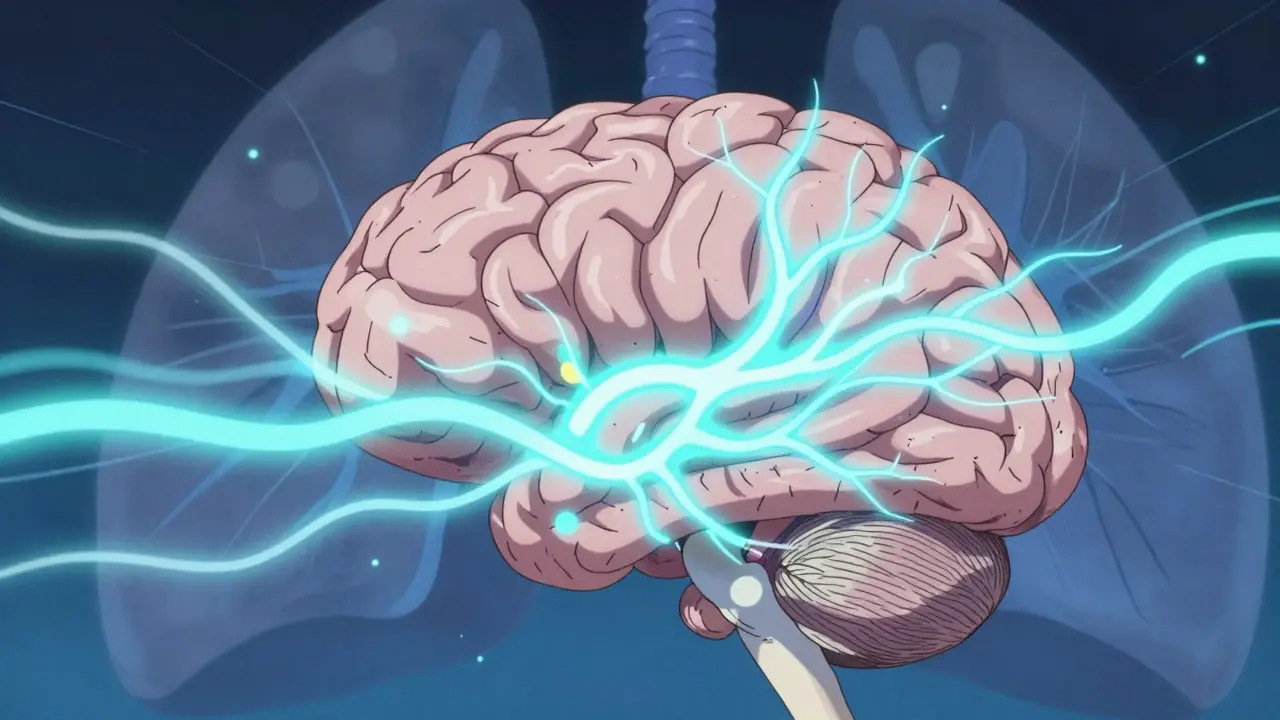
The key players are neurons in the lateral parabrachial nucleus (PBL) that express mu-opioid receptors. These neurons act like a master switch for respiratory rhythm. When opioids bind to these receptors, they hyperpolarize the neurons-essentially making them less likely to fire signals. In baseline conditions, the activity of these neurons correlates tightly with respiratory rate (r=0.87). After morphine injection, that correlation disappears.
At the cellular level, opioids open potassium channels (GIRK conductance), shifting the membrane potential by about -8.2 mV. This makes the neurons sluggish. Simultaneously, in the preBötzinger Complex (preBötC), which generates the basic rhythm of breathing, opioid activation reduces spike counts by over 63% and impairs synaptic transmission by nearly 42%. The result? Your brain forgets to tell your lungs to breathe.
What Does OIRD Actually Look Like?
If you are watching someone experience OIRD, what do you see? The most significant change is not necessarily shallow breaths, but a drastic drop in respiratory rate. Breathing often arrests in the expiratory phase. Studies show that morphine can increase the time spent exhaling from roughly 0.8 seconds to over 2.3 seconds, while inhalation time stays relatively stable. This means fewer breaths per minute.
Here is a quick checklist of signs to watch for:
- Respiratory Rate Below 12: Normal adult breathing is 12-20 breaths per minute. Anything consistently below 12 is a red flag.
- Prolonged Expiratory Pauses: If the person stops breathing between breaths for more than 1.5 seconds, suspect OIRD.
- Pinpoint Pupils: While not exclusive to OIRD, constricted pupils often accompany opioid toxicity.
- Drowsiness or Unresponsiveness: Difficulty waking the person up is a critical sign.
- Blue Lips or Fingernails: This indicates low oxygen saturation, which can drop below 90% within 5-7 minutes of significant depression.
The danger here is speed. Hypoxic brain injury can start quickly once oxygen levels plummet. That’s why early detection matters more than waiting for obvious distress.
Fentanyl vs. Morphine: Why Timing Matters
Not all opioids behave the same way. The type of opioid dictates how fast OIRD hits and how long it lasts. This is crucial for monitoring.
| Opioid Type | Peak Respiratory Depression Time | Duration of Effect | Potency Relative to Morphine |
|---|---|---|---|
| Morphine | 20 ± 5 minutes post-IV | 3-4 hours | 1x (Baseline) |
| Fentanyl | 5 ± 2 minutes post-IV | 30-60 minutes (but redistributes) | ~100x |
| Carfentanil | Within minutes | Variable, often prolonged | ~10,000x |
Fentanyl hits hard and fast. Its respiratory depressant effect peaks in just 5 minutes. However, because it redistributes in the body quickly, patients might seem better after initial treatment, only to crash again later-a phenomenon called re-narcotization. Carfentanil, an elephant tranquilizer now found in street drugs, is so potent that standard doses of reversal agents may not be enough. In 2023, carfentanil was implicated in 14.2% of fatal overdoses, requiring naloxone doses exceeding 10mg, which is beyond the capacity of many auto-injectors.

Monitoring: The Eyes You Can’t See With
Your eyes can miss early OIRD. Novice clinicians miss initial signs in nearly 38% of cases. That’s where technology steps in. The gold standard for early detection is capnography, specifically end-tidal CO2 monitoring.
Capnography detects OIRD approximately 62 seconds before pulse oximetry shows oxygen desaturation. Think about that window. Over a minute of extra time to intervene before the brain starts suffering from lack of oxygen. Despite its effectiveness, adoption has been slow. However, usage among US hospitals jumped from 18.3% in 2018 to 67.5% in 2023, driven partly by CMS reimbursement requirements.
If you are in a clinical setting or caring for someone at home with high-risk factors, consider these monitoring priorities:
- Continuous Capnography: For hospitalized patients, this is non-negotiable for early warning.
- Pulse Oximetry: Essential, but reactive rather than predictive. Use it alongside capnography if possible.
- Visual Checks Every 15 Minutes: Count breaths for a full minute. Don’t estimate.
Reversal Strategies: Beyond Naloxone
Naloxone (Narcan) is the hero of opioid overdose stories, but it’s not a magic bullet. Dr. Jan-Marino Ramirez notes that naloxone reversal requires higher doses than pain reversal because it must overcome both neuronal hyperpolarization and synaptic deficits. Furthermore, current reversal agents address only 60-70% of the respiratory depression mechanism.
This creates a therapeutic dilemma. Administer too much naloxone, and you precipitate acute withdrawal, causing severe distress. Dr. Sarah Wakeman documented that 22% of patients leave against medical advice after naloxone reversal due to withdrawal symptoms. Administer too little, and breathing remains compromised.
The current best practice is titrated administration. The NIH recommends the 4-2-1 rule: 0.4mg IV every 2 minutes until the respiratory rate exceeds 12 breaths per minute. This approach has an 87.3% success rate. Nasal spray formulations like Nyxoid offer 89.2% bioavailability, making them effective for layperson use, though injectable naloxone remains slightly more efficient at 92.5%.
However, with synthetic opioids like fentanyl analogs, single doses are often insufficient. Paramedics report needing continuous monitoring for 4+ hours because "fentanyl overdoses just don’t bounce back like heroin did." Re-administration is required in 41% of cases within 90 minutes.
The Future of Treatment
We are standing on the brink of new therapies. The old model of blunt-force reversal is giving way to targeted interventions. Researchers are developing compounds that target specific neural pathways without triggering full withdrawal.
For example, Brix51, a positive allosteric modulator for GPR83 receptors in the lateral parabrachial nucleus, showed 78.3% respiratory rate recovery in Phase II trials. Another candidate, TAK-861, is a biased mu-opioid receptor agonist that provides 94% analgesia efficacy with only 12.7% respiratory depression at equianalgesic doses. Imagine pain relief without the breathing risk.
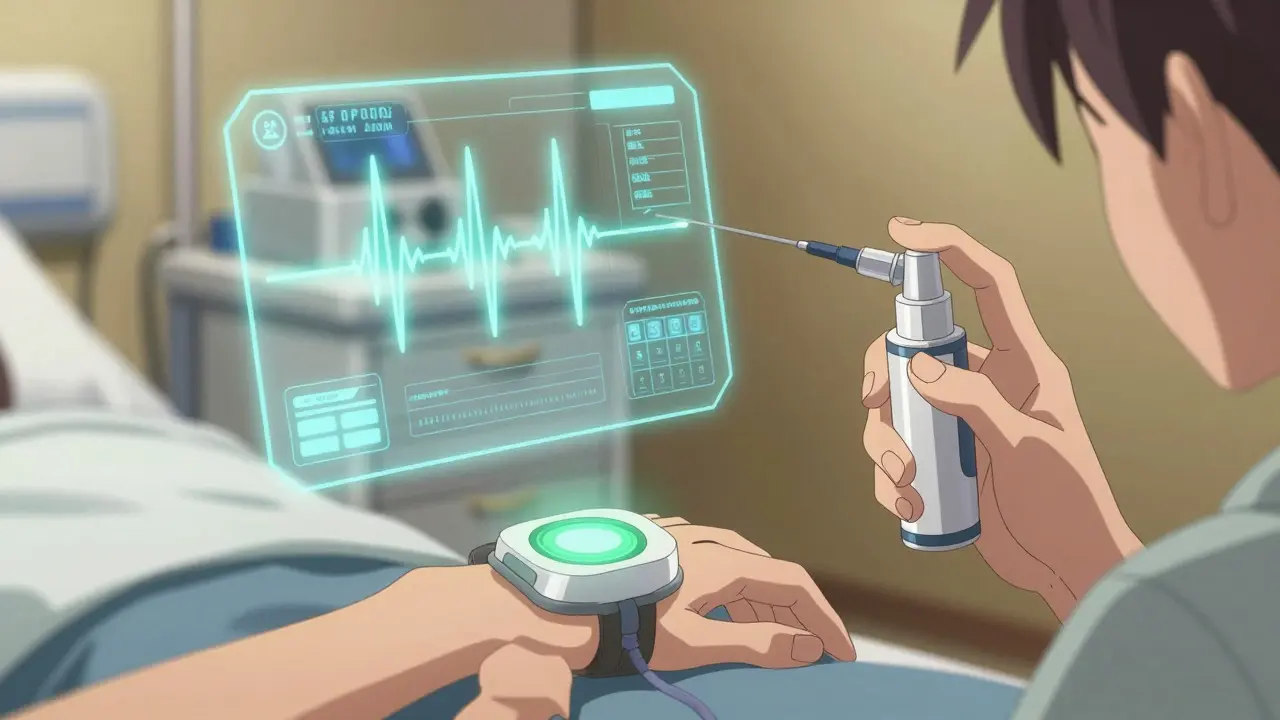
In March 2024, the FDA approved the first OIRD-specific biosensor, the RespiRhythm Monitor. It detects changes in PBL neuron activity via transcutaneous impedance with 92.4% sensitivity, alerting users 83 seconds before respiratory rate drops. This could revolutionize home care for patients on long-term opioid therapy.
The WHO projects that mechanism-specific OIRD treatments could reduce overdose deaths by 63-78% if widely deployed by 2030. But as Dr. Nora Volkow cautions, without addressing the contamination crisis of synthetic opioids, even perfect reversal agents will face challenges as potency continues to skyrocket.
Practical Takeaways for Patients and Caregivers
If you are living with opioid prescriptions or supporting someone who is, knowledge is your best defense. Here is what you need to keep in mind:
- Know the Signs: Watch for slow breathing (below 12/min) and long pauses between breaths.
- Have Naloxone Ready: Keep it accessible. Check expiration dates regularly.
- Don’t Rely on Pulse Ox Alone: If possible, use capnography in clinical settings. At home, visual checks are vital.
- Expect Re-narcotization: Especially with fentanyl, one dose of naloxone may not be enough. Seek emergency help immediately after administering it.
- Communicate with Doctors: Discuss risks of OIRD when starting or changing opioid doses. Ask about monitoring options.
Opioid-Induced Respiratory Depression is serious, but it is predictable and manageable with the right tools and awareness. By understanding the biology and the limitations of current treatments, you can stay ahead of the curve and protect yourself or your loved ones.
How quickly does opioid-induced respiratory depression develop?
The onset depends on the opioid. For IV fentanyl, peak respiratory depression occurs within 5±2 minutes. For IV morphine, it peaks around 20±5 minutes. Oral medications have a delayed onset, often peaking 1-2 hours after ingestion. Early signs include a gradual slowing of breath rate rather than sudden arrest.
Can you recover from opioid-induced respiratory depression without treatment?
In mild cases, yes, as the opioid metabolizes. However, moderate to severe OIRD is life-threatening. Without intervention like naloxone or ventilatory support, arterial oxygen saturation can drop below 90% within 5-7 minutes, leading to hypoxic brain injury or death. Never wait to see if it resolves on its own if breathing is significantly depressed.
Why doesn't naloxone work immediately for everyone?
Naloxone competes with opioids for receptor sites. With highly potent synthetic opioids like fentanyl or carfentanil, the concentration of opioid molecules is so high that standard naloxone doses may not displace them effectively. Additionally, opioids cause dual mechanisms of depression (hyperpolarization and synaptic impairment), requiring higher doses of naloxone to reverse fully compared to reversing pain.
What is the difference between sedation and respiratory depression?
Sedation involves drowsiness but typically maintains adequate breathing patterns. Respiratory depression specifically refers to a pathological reduction in respiratory rate (below 12 breaths/min) and/or tidal volume. The key differentiator in OIRD is often prolonged expiratory pauses exceeding 1.5 seconds, whereas simple sedation usually preserves regular rhythmic breathing.
Are there new treatments coming for OIRD?
Yes. Several novel compounds are in development. Brix51 targets GPR83 receptors to restore respiratory rate without full withdrawal. TAK-861 is a biased agonist offering pain relief with minimal respiratory impact. Additionally, the FDA-approved RespiRhythm Monitor provides early detection of OIRD via biosensors, allowing for preemptive intervention.

14 Comments
naloxone is a bandaid on a bullet hole
People always forget that fentanyl redistributes. You think you saved them because they woke up for five minutes, then they crash again and die in the back of the ambulance. The article mentions re-narcotization but it’s not emphasized enough. It’s a pharmacokinetic trap. If you’re dealing with street stuff now, one dose of Narcan is basically placebo if it’s carfentanil mixed in. You need continuous infusion protocols which most EMS don’t have time for.
Ah yes, the classic 'wake up screaming' scenario. Nothing says 'successful rescue' like precipitating acute withdrawal so severe the patient tries to bite your face off while their heart rate spikes to 160. We treat the breathing but ignore the human suffering entirely. Brilliant system we’ve got here.
It really is a delicate balance. That’s why titration is key. You don’t want to just blast them with full reversal if you can avoid it. The goal is restoring respiration, not necessarily kicking them out of the opioid state completely if they are chronic users. But Marc makes a valid point about the distress. It’s traumatic for everyone involved.
The new biosensor sounds promising 🤞 Hopefully insurance covers it soon
The paradigm shift from general CNS depression to specific PBL neuron hyperpolarization via GIRK conductance is fascinating. Most laypeople view opioids as a blanket suppressant, akin to alcohol, yet the mechanism is far more precise. It targets the lateral parabrachial nucleus specifically. This specificity allows for the development of biased agonists like TAK-861 which dissociate analgesia from respiratory depression. We are moving away from blunt force trauma treatment towards molecular precision medicine. The era of 'just give more narcan' is ending. Embrace the science.
One must question the motives behind the FDA approval of the RespiRhythm Monitor. Is it truly for public safety or merely a revenue stream for pharmaceutical conglomerates? The narrative suggests a technological solution to a societal problem created by over-prescription. While the data regarding capnography adoption is presented objectively, one should remain skeptical of the sudden availability of such devices. History shows that medical technology often serves corporate interests before patient welfare. The contamination crisis mentioned is conveniently ignored in favor of selling sensors.
We have become a society addicted to quick fixes. Opioids were sold to us as pain relief without consequence, and now we are paying the price with our lungs and our lives. It is morally bankrupt that we rely on chemical reversals instead of addressing the root cause of chronic pain management failures. People suffer because the system prioritizes profit over holistic health. We need accountability, not just better sensors.
Veronica raises an important ethical point! However, until we solve the philosophical dilemma of pain versus survival, these tools are necessary. The distinction between sedation and respiratory depression is crucial for caregivers. Many families miss the subtle signs because they assume drowsiness is normal. Education is paramount. We must empower patients to recognize the prolonged expiratory pauses. Knowledge is indeed power in this context!
It is imperative that we consider the physiological implications of mu-opioid receptor binding in the preBötzinger Complex. The reduction of spike counts by over sixty-three percent is not merely a statistic; it represents a fundamental failure of the brainstem's rhythmic generation capability. Therefore, reliance on pulse oximetry alone is scientifically unsound due to its reactive nature. Capnography provides predictive data, offering a temporal advantage of approximately sixty-two seconds. This margin is critical in preventing hypoxic injury. We must advocate for standardized monitoring protocols in all clinical settings involving opioid administration.
capnography is the way to go honestly
I work in hospice care and seeing the difference between natural end-of-life slowing and OIRD is stark. With OIRD, there is often a struggle against the urge to breathe that isn't present in natural death. It’s terrifying for families who aren’t prepared. The checklist provided here is excellent. I print it out and leave it with every family starting morphine pumps. They need to know that blue lips mean call 911 immediately, not wait to see if they wake up. It saves so much panic when they know exactly what to look for.
The data supports the efficacy of targeted interventions. Brix51 results are compelling. Formal adoption of these therapies would likely reduce mortality significantly.
Look, I’m not a doctor but my uncle died from a fentanyl overdose despite having Narcan. The guy who found him said he gave two doses and nothing happened. Turns out it was carfentanil. So yeah, the article is right about the potency issue. Standard auto-injectors are useless against elephant tranquilizer levels of drugs. We need higher dose options available to the public, not just paramedics. It’s ridiculous that civilians are stuck with outdated gear while the drug supply evolves.
Write a comment